About Innovation Hub
 Global Content Pulse (Webinars)


 Global Production Financing
(Webinars)
Global Production Financing
(Webinars)  LeaderSpeak Podcast
  About Vitrina
 Our Story
 Our Solutions 🔥
 Film+TV Projects Tracker 🚀
 Case Studies
 Our Profile
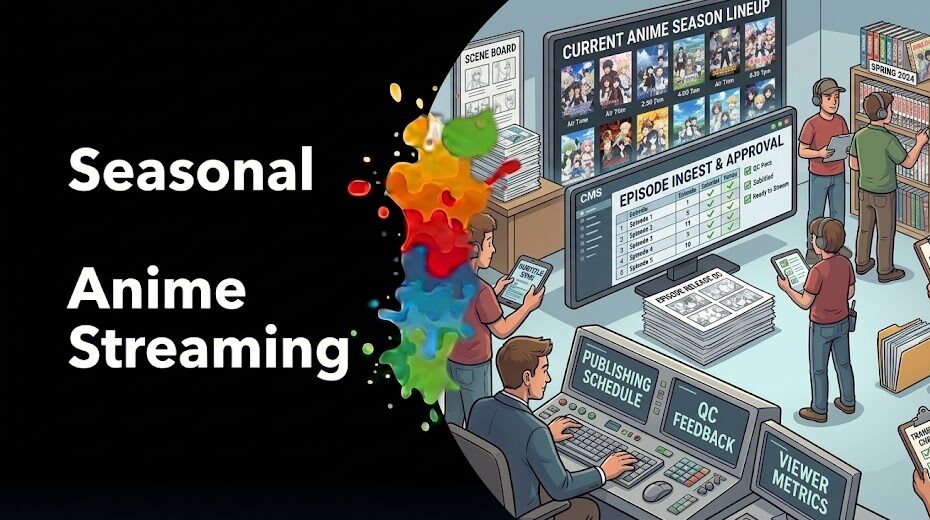
Seasonal anime watching is a completely different sport from binge-watching a finished series. You’re not racing through a back-catalog on your own schedule—you’re synchronized with a global community of viewers, and the episode you missed on Wednesday night is already being discussed, theorized, and spoiled by Thursday morning. If your streaming platform drops episodes late, encodes subtitles poorly, or loses simulcast rights mid-season, it doesn’t just inconvenience you. It breaks your viewing rhythm entirely.
This guide answers the specific question that general anime streaming comparisons miss: which platform is actually best for watching new seasonal anime every week? That means evaluating simulcast speed, episode drop consistency, subtitle quality, seasonal coverage breadth, and the reliability of keeping up with 20+ concurrent series during peak cour seasons. Not just which platform has the biggest library overall—but which one performs when it matters most.
The answers are more nuanced than most guides acknowledge. And the single most important thing shaping which titles land where—and when—is a licensing reality that plays out months before any episode airs.
In This Guide
- What Seasonal Watching Actually Demands From a Platform
- Crunchyroll — The Undisputed Seasonal Streaming King
- HiDive — The Best Seasonal Backup You’re Not Using
- Netflix — Seasonal Outlier With Occasional Must-Watches
- Amazon Prime Video — Selective but Genuinely Relevant
- The Japan Timezone Problem Nobody Talks About Enough
- Subtitle Quality vs. Release Speed: The Seasonal Viewer’s Real Trade-Off
- How to Build Your Optimal Seasonal Watching Stack
- Frequently Asked Questions
- Key Takeaways
Discover Which Studios Are Driving This Season’s Most-Licensed Anime
The titles showing up in your seasonal queue are the downstream result of licensing deals closed weeks or months earlier in Tokyo, Los Angeles, and London. VIQI—Vitrina’s vertical AI—lets you explore how 140,000+ companies across the anime supply chain produce, license, and distribute new titles every cour. Used by acquisition teams at Netflix, Warner Bros, and Paramount to surface intelligence before it hits the trades.
Ask VIQI About Seasonal Anime Licensing →
No credit card required • 200 free credits to start
What Seasonal Watching Actually Demands From a Platform
Most streaming platform reviews assess catalog depth—how many total titles a service carries. For seasonal anime viewers, that metric is nearly useless. What you need from a platform looks completely different.
Five things actually determine whether a platform works for seasonal watching:
- Simulcast volume per cour — A standard anime season (cour) runs 12–13 weeks. In any given cour, 40–60 new titles begin airing in Japan. How many of those does your platform carry as day-of simulcasts? For serious seasonal viewers, the answer needs to be most of them.
- Episode drop consistency — Do new episodes land at a predictable time each week? An episode dropping six hours late doesn’t sound catastrophic—but when you’re watching five concurrent series and trying to stay ahead of social media spoilers, it genuinely is.
- Subtitle quality at speed — Fast simulcast subtitles and accurate subtitles are not always the same thing. Some platforms prioritize speed over localization quality. Others take an extra hour for a better translation. Knowing which you’re getting matters.
- Mid-season reliability — Does the platform lose streaming rights mid-cour? Does it experience regular server outages during high-traffic premiere nights? Reliability is underrated until you’re staring at an error screen on a season finale.
- Seasonal coverage across genres — A platform dominating Shonen Jump simulcasts but missing the majority of isekai, romance, or mecha titles leaves seasonal viewers constantly patching gaps with secondary subscriptions.
The platforms that score well on all five criteria are fewer than most viewers realize. For a fuller picture of how the evolution of anime streaming reshaped which platforms control seasonal rights, the history behind today’s simulcast landscape explains a lot.

Your AI Assistant, Agent, and Analyst for the Business of Entertainment
VIQI AI helps you plan content acquisitions, raise production financing, and find and connect with the right partners worldwide.
- Find active co-producers and financiers for scripted projects
- Find equity and gap financing companies in North America
- Find top film financiers in Europe
- Find production houses that can co-produce or finance unscripted series
- I am looking for production partners for a YA drama set in Brazil
- I am looking for producers with proven track record in mid-budget features
- I am looking for Turkish distributors with successful international sales
- I am looking for OTT platforms actively acquiring finished series for the LATAM region
- I am seeking localization companies offer subtitling services in multiple Asian languages
- I am seeking partners in animation production for children's content
- I am seeking USA based post-production companies with sound facilities
- I am seeking VFX partners to composite background images and AI generated content
- Show me recent drama projects available for pre-buy
- Show me Japanese Anime Distributors
- Show me true-crime buyers from Asia
- Show me documentary pre-buyers
- List the top commissioners at the BBC
- List the post-production and VFX decision-makers at Netflix
- List the development leaders at Sony Pictures
- List the scripted programming heads at HBO
- Who is backing animation projects in Europe right now
- Who is Netflix’s top production partners for Sports Docs
- Who is Commissioning factual content in the NORDICS
- Who is acquiring unscripted formats for the North American market
Crunchyroll — The Undisputed Seasonal Streaming King
There’s no close second for seasonal anime. Crunchyroll carries 50+ new simulcast titles every cour—more than any other licensed streaming platform by a significant margin. With 145 million+ registered users globally and direct licensing relationships built with Japanese studios across 25+ years, it has cornered the simulcast market in a way that’s genuinely difficult for any competitor to replicate at comparable scale.
Crunchyroll’s simulcast infrastructure is fast. Major titles like Jujutsu Kaisen, Bleach: Thousand-Year Blood War, Frieren: Beyond Journey’s End, and Mushoku Tensei landed within 1 hour of their Japanese broadcast during their respective cours. That speed is the product of pre-negotiated delivery pipelines and localization workflows that begin before the episode has even finished airing in Japan. No ad-hoc operation achieves that—it’s the result of infrastructure built over years of prioritizing simulcast as the core product, not an afterthought.
Cross-genre coverage is also where Crunchyroll stands apart. A typical Crunchyroll seasonal lineup in 2025–2026 spans Shonen, Shojo, Isekai, Mecha, Slice of Life, Sports, and Horror simultaneously. You’re not choosing between it and another platform for specific genres. You’re choosing between Crunchyroll and missing half the seasonal conversation entirely.
The Frustrations That Come With the Territory
Crunchyroll is not without real seasonal-watching frustrations. Server load on high-profile premiere nights remains a recurring complaint—the platform experiences meaningful slowdowns when a season-one episode of a major anticipated title drops simultaneously for millions of viewers worldwide. It’s improved, but it hasn’t been solved.
Episode drop times also vary more than they should. While flagship titles drop close to broadcast time, smaller simulcast pickups can slip by 2–4 hours—occasionally longer. For viewers tracking a 12-series seasonal lineup, this inconsistency accumulates into genuine friction over a 13-week cour.
Track Every Seasonal Title’s Rights Position Before It Airs
Which platform lands a new seasonal title depends on licensing deals finalized weeks or months before the cour begins. Vitrina maps 400,000+ projects globally—including seasonal anime titles across their full rights journey from Japanese production committee to streaming destination. Netflix UK surfaced sourcing intelligence in under 48 hours using Vitrina’s platform. Join 140,000+ companies making smarter content decisions.
HiDive — The Best Seasonal Backup You’re Not Using
Here’s the thing about HiDive that most seasonal anime viewers discover the hard way: there are titles every cour that only exist on HiDive. Not on Crunchyroll. Not on Netflix. Specifically on HiDive—because Sentai Filmworks, its parent company, has been aggressively acquiring simulcast rights to 10–20 new titles per season across genres that Crunchyroll either doesn’t bid on or loses in competitive licensing negotiations.
If you’re watching everything available from a given season, you will hit a HiDive-exclusive within the first two weeks. That’s nearly guaranteed in any active cour since 2023. Series like Goblin Slayer II, Ragna Crimson, Shangri-La Frontier (Season 2 split rights), and Dungeon People have all landed at least partial seasonal exclusivity on HiDive.
HiDive’s simulcast episode drop times are competitive for its licensed titles—within 1–2 hours of Japanese broadcast for most series it carries. The 2024 platform redesign also meaningfully improved the “currently airing” browsing experience, making it considerably easier to track your seasonal queue within the app. At $4.99/month, the cost of adding HiDive alongside a Crunchyroll subscription is negligible relative to what it fills in.
Netflix — Seasonal Outlier With Occasional Must-Watches
Netflix’s anime model is structurally incompatible with traditional seasonal watching—and understanding why matters before you get frustrated with it.
Netflix acquires anime primarily through exclusive co-production and licensing deals. It doesn’t operate a general simulcast pipeline for Japanese broadcast titles the way Crunchyroll does. When Netflix releases an anime series, it typically drops all episodes simultaneously as a batch rather than week-by-week—and those episodes often release globally weeks or months after the Japanese broadcast run has concluded. For seasonal viewers, this is nearly the opposite of what you want.
But here’s where it gets complicated. Netflix does occasionally carry high-profile titles with weekly simulcast drops—One Piece (live action and anime), Baki Hanma VS Kengan Ashura, and some exclusive anime originals have received week-by-week treatment. When Netflix commits to weekly drops for a major title, the production quality and subtitle localization are exceptional. The problem is unpredictability: you don’t know going into a new season whether a Netflix anime title will simulcast weekly or batch-release months late.
Netflix invested more than $2.5 billion in anime content between 2019 and 2023 according to reporting in Variety—and that investment produced genuine prestige titles. But the distribution model was built for binge viewing, not weekly community engagement. For seasonal watching specifically, Netflix is a supplementary platform you check occasionally for specific titles, not the foundation of your seasonal setup.
Amazon Prime Video — Selective but Genuinely Relevant
Amazon Prime Video operates in anime the way it operates in most niche verticals: selectively, with occasional surprising commitments to specific titles.
Amazon has held exclusive streaming rights to meaningful seasonal titles across multiple cours. The Rising of the Shield Hero, That Time I Got Reincarnated as a Slime, Vinland Saga (Season 2), and Mashle: Magic and Muscles have all landed on Amazon in various territories—sometimes as simulcasts, sometimes as delayed exclusives. The inconsistency between regions is significant. A title simulcasting on Amazon in Japan may be delayed by weeks on the same platform in North America or Europe.
What Amazon gets right, when it commits: episode drop consistency. Amazon’s delivery infrastructure is robust. When it releases a simulcast episode, it tends to arrive at the scheduled time reliably. What it gets wrong is coverage volume—Amazon carries 5–10 seasonal simulcast titles per cour at most, meaning it works as a tertiary platform for specific exclusives rather than a comprehensive seasonal solution.
As noted in Deadline, Amazon’s anime licensing strategy has shifted noticeably toward exclusive theatrical and premium-window titles since 2024, which signals a continued selective approach rather than a push toward simulcast volume competition with Crunchyroll. For seasonal viewers, that means Amazon remains a check-on-demand platform rather than a cornerstone subscription.
The Japan Timezone Problem Nobody Talks About Enough
This one gets glossed over in almost every platform comparison—but it directly determines your weekly viewing experience.
Most anime broadcasts in Japan in the late-night window: between 11 PM and 3 AM JST (Japan Standard Time). If you’re in North America, that’s roughly 9 AM–1 PM Eastern time, or 6 AM–10 AM Pacific. If you’re in Europe, it’s late afternoon to early evening. The episode exists in Japan. It hits your platform within 30–90 minutes of broadcast. But when that is in your timezone shapes your entire weekly rhythm.
For US Eastern viewers watching a title that airs at 11:30 PM JST, the simulcast episode typically lands around 10:00–10:30 AM Eastern—which means it’s mid-morning, fully before the social media spoiler cycle peaks in the afternoon. That’s actually ideal timing. But a title airing at 1:30 AM JST lands at noon Eastern—and Twitter/X has already been discussing it for an hour by then.
Crunchyroll’s episode scheduling page is genuinely useful here—it shows exact expected drop times per title, adjusted for your local timezone. No other platform offers comparable transparency. That feature alone saves serious seasonal viewers hours of guessing per cour.
Subtitle Quality vs. Release Speed: The Seasonal Viewer’s Real Trade-Off
Fast subtitles and accurate subtitles are not always the same thing—and for seasonal viewers, this tension matters more than any other quality metric.
Crunchyroll’s subtitle speed is unmatched. Its simulcast pipeline has episodes subtitled and delivered in close to real-time for major titles. But speed has historically come at a cost: Crunchyroll’s subtitles have earned consistent criticism from Japanese-fluent viewers for localization shortcuts, inconsistent character name rendering, and occasional translation errors in dialogue-heavy episodes. The quality is functional. It’s not always excellent.
Netflix takes the opposite approach. Its subtitle localizations are among the most polished in streaming—dialogue is adapted for natural English reading, cultural references are handled thoughtfully, and typographic presentation is clean. But you may be waiting weeks or months after Japanese broadcast for those subtitles. For seasonal community engagement, that gap is often fatal.
HiDive occupies interesting middle ground. Its subtitle quality has historically been strong for Sentai-licensed titles—careful localization with attention to dialogue nuance—but its turnaround on simulcast episodes has sometimes lagged by 30–60 minutes beyond Crunchyroll’s delivery times.
The practical advice for seasonal viewers: use Crunchyroll’s subtitles for speed and community synchronization, and accept that the localization occasionally disappoints. If a specific HiDive title matters deeply to you, the slightly slower drop is worth the better translation. The streaming globalization dynamics reshaping anime distribution are also pushing all platforms toward faster, higher-quality localization pipelines—a shift that’s already visible in Crunchyroll’s subtitle consistency improvements since 2023.
Need to Map Who’s Acquiring This Season’s Anime Before It Airs?
Every title in your seasonal queue landed on its platform because of a rights deal negotiated weeks or months before the cour started. Vitrina’s Concierge team helps acquisition professionals trace the anime rights landscape—identifying which studios hold what, which windows are available, and which platforms are actively bidding on specific genres and production committees.
No commitment required • Response within 24 hours
How to Build Your Optimal Seasonal Watching Stack
No single platform covers a full seasonal anime lineup in 2026. Trying to watch exclusively through one subscription will leave gaps every cour. The practical solution is a tiered stack—anchored by one platform, supplemented by one or two others, with a clear rationale for each tier.
Tier 1: Your Seasonal Foundation (Always On)
Crunchyroll at the Fan tier ($7.99/month) or Mega Fan ($9.99/month for offline downloads). This covers 50+ simulcasts per cour, SimulDub access for major ongoing series, and the schedule transparency tools that make week-to-week management practical. Non-negotiable for active seasonal viewing.
Tier 2: The Gap-Filler (Always On)
HiDive at $4.99/month. Adds 10–20 titles per cour that don’t exist on Crunchyroll. At a combined cost of $12.98/month with Crunchyroll, you’re covering the overwhelming majority of every season’s simulcast catalog. This is the smart-pairing approach—minimal overlap, genuine added coverage, low incremental cost.
Tier 3: Contextual Adds (Season-by-Season)
Netflix and Amazon Prime are worth checking at the start of each cour specifically for exclusive seasonal pickups—not as permanent subscriptions driven by anime. If nothing in the new seasonal lineup is a Netflix or Amazon exclusive, there’s no anime-based reason to add them that quarter. Check the seasonal preview articles and subscription accordingly. Many seasonal viewers already have Netflix or Prime for non-anime content, in which case the anime addition is free by default.
Seasonal Stack at a Glance
- Crunchyroll Fan — $7.99/month — 50+ simulcasts, SimulDubs, schedule tools
- HiDive — $4.99/month — 10–20 Sentai-exclusive simulcasts
- Netflix / Amazon — Check per cour — Only if specific exclusives warrant it
- Total core cost — $12.98/month — Covers 95%+ of any seasonal lineup
For a comprehensive look at how the anime exclusives landscape across streaming platforms has shifted since 2022—and what that means for which titles land where each season—the rights fragmentation driving these decisions isn’t accidental. It’s the structural reality of how Japanese production committees license their content internationally.
Frequently Asked Questions
What is the best anime streaming service for watching seasonal anime weekly?
Crunchyroll is the best platform for seasonal anime by a clear margin. It carries 50+ new simulcast titles per cour—more than any other licensed service—and delivers most major episodes within 1 hour of their Japanese broadcast. For complete seasonal coverage, pairing Crunchyroll with HiDive ($4.99/month) covers Sentai Filmworks-licensed exclusives not available on Crunchyroll, bringing combined coverage to approximately 95% of any season’s simulcast lineup for $12.98/month total.
What does “simulcast” mean in anime streaming?
A simulcast is an episode released on a streaming platform simultaneously—or nearly simultaneously—with its original Japanese broadcast, often within 1–2 hours of airing. This is distinct from licensed catalog content, which arrives weeks or months after Japanese broadcast. Simulcasting is the standard delivery model for seasonal anime on Crunchyroll and HiDive. Netflix and Amazon simulcast selectively—most of their anime is released as delayed exclusives rather than true day-of simulcasts.
Why do some seasonal anime titles only appear on one platform?
Anime streaming rights are licensed on a per-title, per-territory basis directly from Japanese production committees—the groups of studios, publishers, and financiers that produce each series. When a production committee negotiates international streaming rights, they typically sign exclusive deals with a single platform per territory. This is why Attack on Titan may be on Crunchyroll while a different title from the same season is a HiDive or Amazon exclusive. No amount of platform investment changes this—it’s structurally built into how Japanese anime IP is licensed.
How many anime series air in a typical seasonal cour?
A standard cour runs approximately 12–13 weeks, with 40–70 new titles beginning in any given season. The four main anime seasons correspond roughly to: Winter (January–March), Spring (April–June), Summer (July–September), and Fall (October–December). Not all titles air for a single cour—some series are two-cour (24–26 episodes) or split-cour (two cours with a gap in between). Crunchyroll typically simulcasts 50+ of those titles; HiDive adds another 10–20 that don’t overlap.
Does Netflix release anime seasonally or as batch drops?
Netflix primarily releases anime as batch drops—all episodes of a season at once, often weeks or months after the Japanese broadcast has ended. This model suits binge-watching but is fundamentally incompatible with seasonal community engagement. Netflix does occasionally release select titles weekly, particularly for high-profile originals or co-productions with major Japanese studios, but this is the exception rather than the standard delivery model.
What time do new simulcast episodes drop on Crunchyroll?
Simulcast timing on Crunchyroll depends on the title’s original Japanese broadcast schedule. Most late-night anime broadcasts in Japan between 11 PM and 3 AM JST, which translates to 9 AM–1 PM Eastern or 2 PM–6 PM UK time the same day. Crunchyroll’s schedule page shows exact expected drop times per title, adjusted for your local timezone—an essential tool for planning your weekly viewing queue and avoiding spoilers.
Is HiDive worth subscribing to just for seasonal anime?
Yes—if you’re an active seasonal viewer watching more than 5 titles per cour. HiDive adds 10–20 simulcast titles per season that don’t exist on Crunchyroll, due to Sentai Filmworks’ exclusive licensing relationships with specific Japanese studios. At $4.99/month, the incremental cost of catching HiDive-exclusive seasonal titles is low relative to the coverage it adds. For casual seasonal viewers following only 2–3 major titles per season, a Crunchyroll subscription alone is likely sufficient.
Key Takeaways
Seasonal anime watching has specific platform requirements that general library-size comparisons completely miss. The right setup isn’t the platform with the most total titles—it’s the combination that delivers episodes fast, consistently, and across the broadest seasonal coverage per cour.
- Crunchyroll is the non-negotiable foundation — 50+ simulcast titles per cour, episodes within 1 hour of Japanese broadcast, SimulDub for major ongoing series, and a scheduling tool that shows exact drop times by timezone. Nothing else comes close for volume and velocity.
- HiDive fills the gaps Crunchyroll can’t — Sentai Filmworks’ exclusive licensing means 10–20 seasonal titles per cour exist only on HiDive. At $4.99/month, it’s the highest-value add-on in seasonal streaming.
- Netflix and Amazon are occasional, not core — Both carry meaningful seasonal exclusives in specific quarters, but their models—batch drops and selective simulcasting—make them supplements to check per cour rather than permanent seasonal foundations.
- The Japan timezone reality shapes your week — Most simulcasts drop between 9 AM and 1 PM Eastern time. Understanding this rhythm—and using Crunchyroll’s schedule tools to map it—is the practical secret to staying ahead of spoilers.
- Rights fragmentation drives all of this — The reason no single platform covers a complete seasonal lineup is structural. Japanese production committees license per-title, per-territory, and those deals determine everything you can find—and where—before any episode airs.
Explore the Anime Rights Market Behind Every Seasonal Lineup
Every title in your seasonal queue landed on its platform because of a rights decision made months earlier. Vitrina tracks 400,000+ projects and 140,000+ companies across the global anime and entertainment supply chain. Get 200 free credits to start mapping the licensing landscape that shapes every cour.
No credit card required • Used by Netflix, Warner Bros, Paramount teams
Find Film+TV Projects, Partners, and Deals – Fast.
VIQI matches you with the right financiers, producers, streamers, and buyers – globally.
Producers Seeking Financing & Partnerships?
Book Your Free Concierge Outreach Consultation
(To know more about Vitrina Concierge Outreach Solutions click here)
Producers Seeking Financing, Co-Pros, or Pre-Buys?
Vitrina Concierge helps producers reach the right financiers, commissioners, distributors, and co-production partners — with precision outreach, not cold pitching.
Join Industry Briefings Trusted by Leaders
Streamers – Netflix vs. Amazon – The 2026 Strategy
How Netflix and Amazon’s content and revenue strategies are diverging ahead of 2026.

Format Adaptations: Global Trends
Where formats are traveling, which adaptations are breaking out, and how streamers are backing remakes in 2025–2026.

Books, Novels & Comics Adaptations: Global Trends
Books, webtoons, and manga driving the next global screen hits. Discover how in this webinar.