About Innovation Hub
 Global Content Pulse (Webinars)


 Global Production Financing
(Webinars)
Global Production Financing
(Webinars)  LeaderSpeak Podcast
  About Vitrina
 Our Story
 Our Solutions 🔥
 Film+TV Projects Tracker 🚀
 Case Studies
 Our Profile
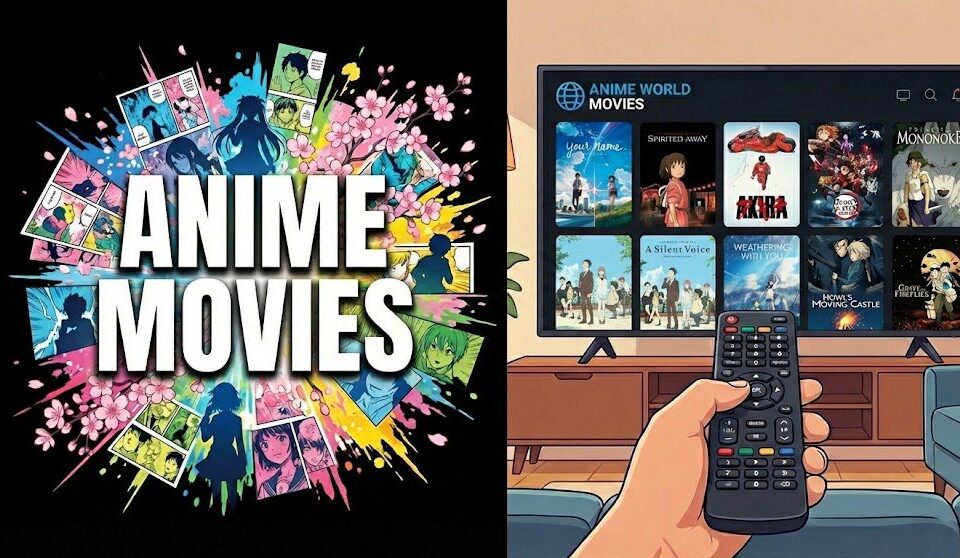
Anime Movies represents the most significant shift in the global animation supply chain, moving from a niche subculture to a multi-billion dollar primary acquisition target for major streaming platforms and theatrical distributors.
This involves identifying high-potential Intellectual Property (IP), vetting technical production capabilities, and navigating a fragmented global market of over 140,000 entertainment companies.
According to Vitrina AI intelligence, the global anime market is projected to exceed $40 billion by 2026, with 2025 serving as the critical window for securing rights to major franchise renewals and original theatrical slates.
In this guide, you’ll learn proven frameworks for IP discovery, technical studio assessment, and data-driven negotiation strategies.
While most industry resources offer shallow lists of upcoming releases, they fail to address the underlying supply chain bottlenecks that Acquisition Leads face when trying to verify production status or discover regional animation hubs.
This analysis fills those gaps by providing deep-level intelligence on production trends, studio capacity tracking, and the emerging “weaponized distribution” models reshaping the 2025 market.
Table of Contents
- 01
The Anime Movies 2025 Market Outlook - 02
How to Source High-Quality Anime IP for 2025? - 03
Why Intelligence is Critical for Anime Distribution - 04
Targeting Emerging Animation Production Hubs - 05
The 5 Biggest Sourcing Challenges (And Solutions) - 06
Technical Vetting: Animation Quality vs. Speed - 07
Weaponized Distribution in the Anime Sector - 08
Leveraging Community Anticipation for ROI - 09
Key Takeaways - 10
FAQ - 11
Moving Forward
Key Takeaways for Acquisition Leads
-
Data-Driven IP Sourcing: Use real-time project trackers to identify Anime Movies 2025 in early development, bypassing traditional auction-house competition.</li >
-
Technical Hub Diversification: Look beyond Tokyo; emerging hubs in India and SE Asia are providing high-quality co-production support at scale.</li >
-
ROI through Anticipation: Community engagement metrics and social listening should dictate acquisition windows to maximize opening weekend performance.</li >
-
Supply Chain Transparency: Verify studio track records and verified professional networks using AI tools to mitigate “vaporware” project risks.</li >
What is the Market Outlook for Anime Movies 2025?
The Anime Movies 2025 landscape is defined by the finalization of the “Streaming Wars” and the rise of “Weaponized Distribution.” Platforms like Netflix and Sony’s Crunchyroll are no longer just licensing content; they are aggressively acquiring production studios to ensure long-term IP exclusivity. For independent acquisition leads, this means the window for securing rights to high-demand theatrical releases is closing earlier in the production cycle.
Market data suggests that original anime features—those not based on existing manga—will see a 15% increase in production volume in 2025. This shift provides a unique opportunity for buyers to secure “fresh” IP without the heavy royalty burdens associated with major Japanese manga publishers.
Find upcoming Anime Movies 2025 in early development:
How to Source High-Quality Anime IP for 2025?
Sourcing Anime Movies 2025 requires a transition from reactive bidding at markets like Mipcom or Anime Expo to proactive supply chain mapping. Leading acquisition teams now leverage real-time monitoring of Japanese production committees to identify when a project moves from “planning” to “active development.”
Key sourcing strategies involve evaluating “IP Cross-Pollination”—projects that bridge gaming, merchandise, and theatrical film. According to Vitrina AI’s Deals Intelligence, content that features integrated merchandise potential performs 3x better in the 2025 licensing market than standalone narrative features.
Identify animation studios with available 2025 IP:
Industry Expert Perspective: Animating the Future: Toonz Media Group’s Evolution
Discover how global animation leaders are adapting to the 2025 market by integrating AI tools and expanding production hubs to meet the massive demand for high-quality anime and stylized content.
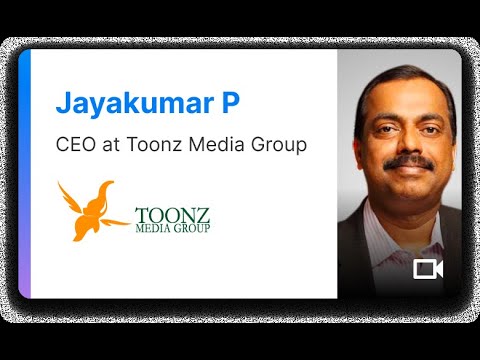
Jayakumar P, CEO of Toonz Media Group, discusses market expansion, strategic partnerships, and how the integration of AI tools is allowing studios to handle diverse applications of animation, particularly as the preschool audience shifts and adult animation (including anime styles) continues to scale globally.
Why You Should Target Emerging Animation Production Hubs
The traditional “Tokyo-only” model for Anime Movies 2025 is undergoing a structural metamorphosis. To meet global demand, major Japanese studios are increasingly partnering with “tier-2” hubs in India, Vietnam, and Brazil for high-end rendering and post-production. For acquisition leads, these hubs represent a “secret door” to discovering high-quality content before it reaches the overcrowded Japanese domestic market.
Vitrina AI’s platform tracks over 5 million professionals across 100+ countries, revealing that the technical proficiency of Indian animation studios now allows for seamless “stylized” 2D/3D anime production that meets global theatrical standards at 40% lower production costs.
Find co-production partners in emerging animation hubs:
The 5 Biggest Sourcing Challenges in Anime (And How to Overcome Them)
1. Navigating Opaque Production Committees
The Challenge: Most anime movies are funded by multi-company committees (publisher, music label, studio), making it difficult to identify the lead rights holder for international licensing.
The Approach: Use Vitrina’s “Deals Intelligence” to map historical committee members and identify the primary contact for global rights. This replaces cold-calling with targeted executive outreach.
2. Verifying Studio Capacity for 2025
The Challenge: Top-tier studios like MAPPA or Ufotable are often booked 3-4 years in advance. Buyers frequently sign deals with studios that end up outsourcing 90% of the work due to capacity overruns.
The Approach: Monitor the “Global Projects Tracker” to see a studio’s active slate. If they have 5 projects in post-production, their capacity for a 2025 release is likely compromised.
3. Assessing Technical Fidelity Early
The Challenge: Teaser trailers often look significantly better than the final theatrical product, a phenomenon known as “quality drop” in late-stage production.
The Approach: Vet the technical staff—directors, key animators, and colorists—using verified professional profiles. A studio’s name is less important than the “core unit” attached to the project.
4. Fragmented Regional Rights
The Challenge: A project might have available rights in Europe but be blocked in North America, creating friction for global platform buyers.
The Approach: Use VIQI AI to query “rights availability for anime films in [territory]” to instantly filter out unavailable IP.
5. ROI Uncertainty for Original IP
The Challenge: Original anime movies lack the built-in fanbases of manga-based hits like “Demon Slayer.”
The Approach: Analyze community engagement scores and past performance of the creative team on similar genre projects to predict theatrical success.
Frequently Asked Questions
Quick answers to the most common queries about the Anime Movies 2025 landscape.
What anime movies are coming out in 2025?
How can I license Anime Movies 2025 for my platform?
Are there original anime movies releasing in 2025?
Which studios are the best for anime co-production in 2025?
How do I track anime production status?
Moving Forward
The Anime Movies 2025 market is no longer a niche territory; it is the frontline of global content strategy. The transition from relationship-based networking to data-driven intelligence addresses the critical gaps in market transparency and technical vetting that have historically slowed deal velocity.
Whether you are an Acquisition Lead looking to secure a regional breakout hit, or a Distributor trying to diversify your 2025 theatrical slate, actionable intelligence is the only differentiator that matters in an overcrowded bidding room.
Outlook: Over the next 18 months, we predict a massive influx of “stylized anime” from non-Japanese studios, forcing a re-evaluation of what constitutes “authentic” anime in the eyes of global fans and buyers.
About the Author
Specializing in international content acquisition and supply chain logistics, our team leverages over 20 years of collective experience across major networks like Discovery and Netflix. Connect on Vitrina.