About Innovation Hub
 Global Content Pulse (Webinars)


 Global Production Financing
(Webinars)
Global Production Financing
(Webinars)  LeaderSpeak Podcast
  About Vitrina
 Our Story
 Our Solutions 🔥
 Film+TV Projects Tracker 🚀
 Case Studies
 Our Profile
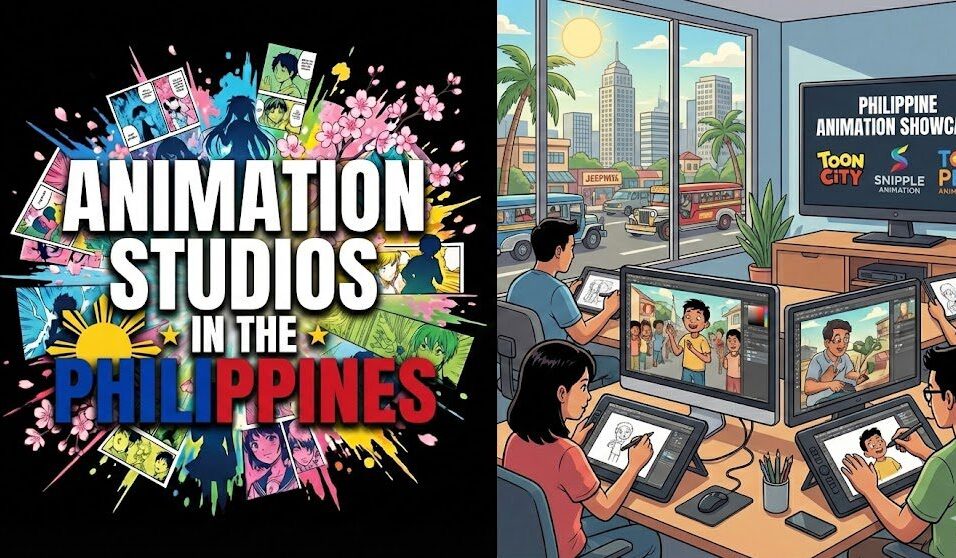
Animation studios in the Philippines are specialized service providers offering end-to-end 2D, 3D, and VFX production services for global entertainment networks.
This involves leveraging a highly skilled, English-proficient workforce to execute complex animation pipelines, from pre-visualization to final render, at high efficiency.
Industry data indicates that the Philippines continues to hold a 10% share of the global animation outsourcing market, driven by competitive labor costs and deep historical ties to major Hollywood studios.
In this guide, you’ll learn the technical frameworks for studio selection, pipeline compatibility analysis, and how to leverage supply chain intelligence to identify the right production partners.
While most resources provide broad lists of “top studios,” they often fail to address the technical nuances of software compatibility, project-specific testimonials, and the authoritative data required for executive-level due diligence.
This comprehensive guide fills those gaps by combining first-hand industry insights with data-driven frameworks to transform your studio sourcing from speculation into a technical science.
Table of Contents
Key Takeaways for Technical Leads
-
Infrastructure Verification: Always vet studios for hardware redundancy and secure data pipelines to prevent production bottlenecks during high-volume deliverables.
-
Software Pipeline Alignment: Ensure studio proficiency in industry-standard tools like Toon Boom Harmony, Maya, and Unreal Engine to maintain seamless file exchange.
-
EEAT-Backed Sourcing: Leverage verified project trackers to confirm a studio’s historical track record with major networks before signing co-production agreements.
What defines the current animation industry in the Philippines?
The animation industry in the Philippines has transitioned from being a purely labor-driven outsourcing hub to a strategic creative partner. Historically, studios were primary service providers for ink-and-paint tasks for major American studios. However, the current landscape features full-service studios capable of high-end character design, storyboarding, and sophisticated 3D modeling for episodic streaming content.
This shift is characterized by a “weaponized distribution” mindset, where studios are no longer just vendors but integral components of the global content supply chain. By integrating earlier in the production lifecycle—often at the pre-visualization stage—Philippines-based studios are providing the “insider advantage” required to compress production timelines and optimize budgets for global networks.
Find verified animation studios in the Philippines with specific 3D expertise
How do technical animation pipelines in the Philippines compare globally?
Technical precision is the hallmark of modern Philippines animation studios. Most leading studios have adopted standardized pipelines that mirror major Western houses, utilizing Toon Boom Harmony for 2D rigged animation and Autodesk Maya or Blender for 3D workflows. This standardization allows for seamless “plug-and-play” collaboration where local teams can pick up scene files from overseas leads without data corruption or re-rigging needs.
Furthermore, studios are increasingly investing in real-time rendering technologies like Unreal Engine to support the growing demand for interactive and episodic content. According to industry insights, this technical evolution has reduced rendering times by up to 40% for certain projects, allowing technical leads to iterate faster and improve visual quality within the same budget constraints.
Industry Expert Perspective: Animating the Future: Toonz Media Group’s Evolution
In this conversation, Jayakumar P discusses how strategic partnerships and the integration of AI tools are transforming animation workflows across global hubs, including those in Southeast Asia.
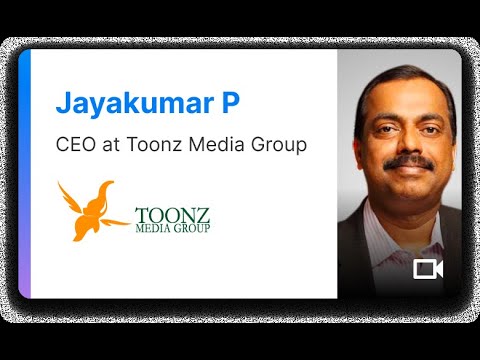
Jayakumar P, CEO at Toonz Media Group, explores market expansion, strategic adaptations for preschool audiences, and the critical role of AI tools in maintaining competitive production speeds.
How should acquisition leads vet animation studios in the Philippines?
Vetting in a fragmented market requires moving beyond “highlight reels” to deep due diligence. Acquisition leads should focus on four critical pillars: Pipeline Scalability, Security Protocols, Historical Performance, and Financial Stability. In a market where M&A activity is high—like Netflix’s $72 billion studio acquisition—the stability of your production partner is paramount to project health.
- Technical Due Diligence: Request a breakdown of their current server capacity and backup power systems. The Philippines can experience infrastructure volatility; ensuring your partner has T3-level data centers is a non-negotiable requirement.
- Portfolio Verification: Use a global supply chain platform to cross-verify the studio’s credits against actual project releases. This prevents the common issue of studios overstating their contribution to large-scale IP.
- Reputation Scores: Analyze historical relationships. Studios with multi-year renewals with global streamers like Disney or Netflix demonstrate high reliability and process maturity.
Vetting checklist for offshore animation partners
Real Success Stories: Global Impact of Philippines Studios
The true power of the Philippines animation sector is visible through successful global partnerships verified via the Vitrina platform. These success stories highlight the transition from service provider to strategic collaborator.
Case Study: Globalizing Adult Animation IP
The Situation: A specialized Korean animation studio with high-quality adult animation IP struggled to penetrate Western markets. Despite superior technical skills, they lacked the “insider intelligence” to identify and engage with the correct decision-makers at US-based streaming platforms.
The Solution: Leveraging Vitrina’s Concierge Service and Vertical AI, the studio mapped historical commissioning patterns for adult animation. They identified high-probability targets based on genre appetite and regional investment trends, moving beyond general submissions to precision outreach.
The Result: Within the first week of outreach, the studio was successfully connected to Netflix’s Adult Animation department. This connection bypassed months of traditional networking and travel, demonstrating the efficiency of data-driven partner discovery in Southeast Asian hubs.
Moving Forward
The Philippines animation landscape has evolved into a sophisticated technical hub essential for the modern global supply chain. This transformation addresses the critical gaps of technical depth and authoritative data, offering technical leads a reliable roadmap for offshore production.
Whether you are an acquisition lead looking to source high-volume episodic content, or a technical supervisor trying to integrate external pipelines, the principle remains: actionable intelligence drives production velocity.
Outlook: Over the next 12-18 months, real-time rendering and AI-assisted animation will become standard in the Philippines, further compressing production cycles and creating new opportunities for global co-productions.
Frequently Asked Questions
Quick answers to the most common technical queries about the Philippines animation market.
Which software is standard in Philippines animation studios?
How do I verify a studio’s historical track record?
What are the typical labor cost savings compared to US studios?
Are Philippines studios compliant with international data security?
About the Author
A Content Strategist with over 15 years of experience in the entertainment supply chain, specializing in global production intelligence and technical vetting for media networks. Connect on Vitrina.