About Innovation Hub
 Global Content Pulse (Webinars)


 Global Production Financing
(Webinars)
Global Production Financing
(Webinars)  LeaderSpeak Podcast
  About Vitrina
 Our Story
 Our Solutions 🔥
 Film+TV Projects Tracker 🚀
 Case Studies
 Our Profile

Amazon Prime Video’s co-production strategy is a “co-opetition” model that prioritizes local-language hits, collaborative licensing with rivals, and hybrid IP ownership to maximize global ROI.
This involves leveraging Amazon MGM Studios’ massive library while simultaneously partnering with competitors—such as the “Frenemy Pact” with Netflix—to programmatic access ad inventory and expand reach.
According to the Vitrina Brief, the media supply chain now tracks over 600,000 companies, a scale that has forced Amazon to pivot toward “Weaponized Distribution” to monetize sunk assets.
In this guide, you’ll learn how to identify Amazon-friendly production hubs, negotiate rights within co-opetition frameworks, and use data intelligence to find active commissioning editors.
While most resources focus on Amazon’s billion-dollar “Lord of the Rings” investments, they fail to address the practical mechanics of regional co-productions that independent creators actually need to survive.
This comprehensive analysis fills that gap by providing a data-backed roadmap—from vetting regional partners to tracking the impact of the latest Amazon-Netflix collaborations.

Your AI Assistant, Agent, and Analyst for the Business of Entertainment
VIQI AI helps you plan content acquisitions, raise production financing, and find and connect with the right partners worldwide.
- Find active co-producers and financiers for scripted projects
- Find equity and gap financing companies in North America
- Find top film financiers in Europe
- Find production houses that can co-produce or finance unscripted series
- I am looking for production partners for a YA drama set in Brazil
- I am looking for producers with proven track record in mid-budget features
- I am looking for Turkish distributors with successful international sales
- I am looking for OTT platforms actively acquiring finished series for the LATAM region
- I am seeking localization companies offer subtitling services in multiple Asian languages
- I am seeking partners in animation production for children's content
- I am seeking USA based post-production companies with sound facilities
- I am seeking VFX partners to composite background images and AI generated content
- Show me recent drama projects available for pre-buy
- Show me Japanese Anime Distributors
- Show me true-crime buyers from Asia
- Show me documentary pre-buyers
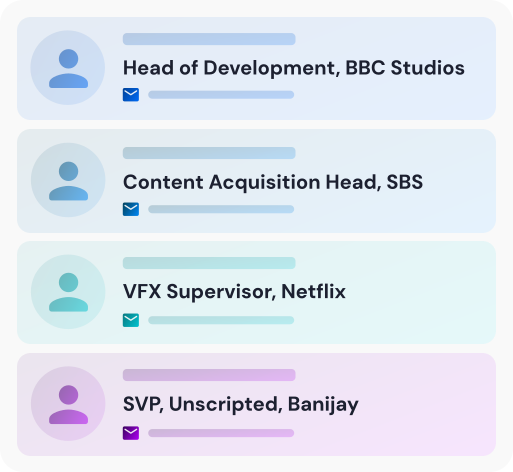
- List the top commissioners at the BBC
- List the post-production and VFX decision-makers at Netflix
- List the development leaders at Sony Pictures
- List the scripted programming heads at HBO
- Who is backing animation projects in Europe right now
- Who is Netflix’s top production partners for Sports Docs
- Who is Commissioning factual content in the NORDICS
- Who is acquiring unscripted formats for the North American market
Table of Contents
- 01
What is Amazon’s Co-Production Strategy? - 02
The “Frenemy Pact”: Amazon and Netflix - 03
Why Producers Target Amazon Deals - 04
Mapping Regional Hit Potential - 05
Using Supply Chain Intel for Outreach - 06
The Role of Ad-Tech in Content Deals - 07
Negotiating Rights in a Hybrid World - 08
Scaling Deals with AI Intelligence - 09
Key Takeaways - 10
FAQ - 11
Moving Forward
Key Takeaways for Producers
-
Co-opetition Wins: Producers must adapt to the “frenemy” era where Amazon MGM Studio content may be licensed to Netflix 18 months post-release.
-
Regional Hit Focus: Amazon is aggressively investing in local-language content in MENA, SE Asia, and Latin America to drive international ARPU.
-
Supply Chain Mapping: Using platforms like Vitrina to monitor 1.6 million titles allows producers to identify the right commissioning editors 5x faster.
What is Amazon’s Co-Production Strategy?
Amazon Prime Video has strategically moved away from the “walled garden” era of strict exclusivity. Today, the platform employs a hybrid co-production framework that balances massive global franchise IP (like “James Bond”) with localized regional series. This strategy relies on sharing production costs with local partners while retaining the streaming rights across its 240+ countries and territories.
The core mechanism involves “Weaponized Distribution”—a concept detailed in the Vitrina Brief—where high-value content is licensed to rival platforms post-release to maximize the ROI on sunk production costs. For producers, this means understanding that a deal with Amazon MGM Studios might now involve secondary windows on Netflix or regional broadcasters, creating a more complex rights-management landscape.
Find active Amazon co-production partners in Europe:
The “Frenemy Pact”: Amazon and Netflix
The most significant shift in Amazon’s strategy is the December 2025 “Frenemy Pact.” This dual-front collaboration involves Amazon MGM Studios licensing iconic IP like four “James Bond” films and “The Man in the High Castle” to Netflix. Simultaneously, Amazon Ads has integrated its DSP to give advertisers programmatic access to Netflix’s ad inventory.
For producers, this signals a market where market efficiency and ARPU now outweigh platform ego. A project co-produced with Amazon now has a higher probability of secondary life on rival platforms, which impacts how producers should negotiate back-end residuals and profit participation. This “Co-opetition” model is transforming the entertainment supply chain into a more fluid and integrated ecosystem.
Industry Expert Perspective: My Entertainment’s Strategic Acquisitions
Shawn Moffatt, CEO of My Entertainment, discusses how independent producers are successfully navigating the co-production landscape by leveraging diversified portfolios and strategic acquisitions in the evolving media market.
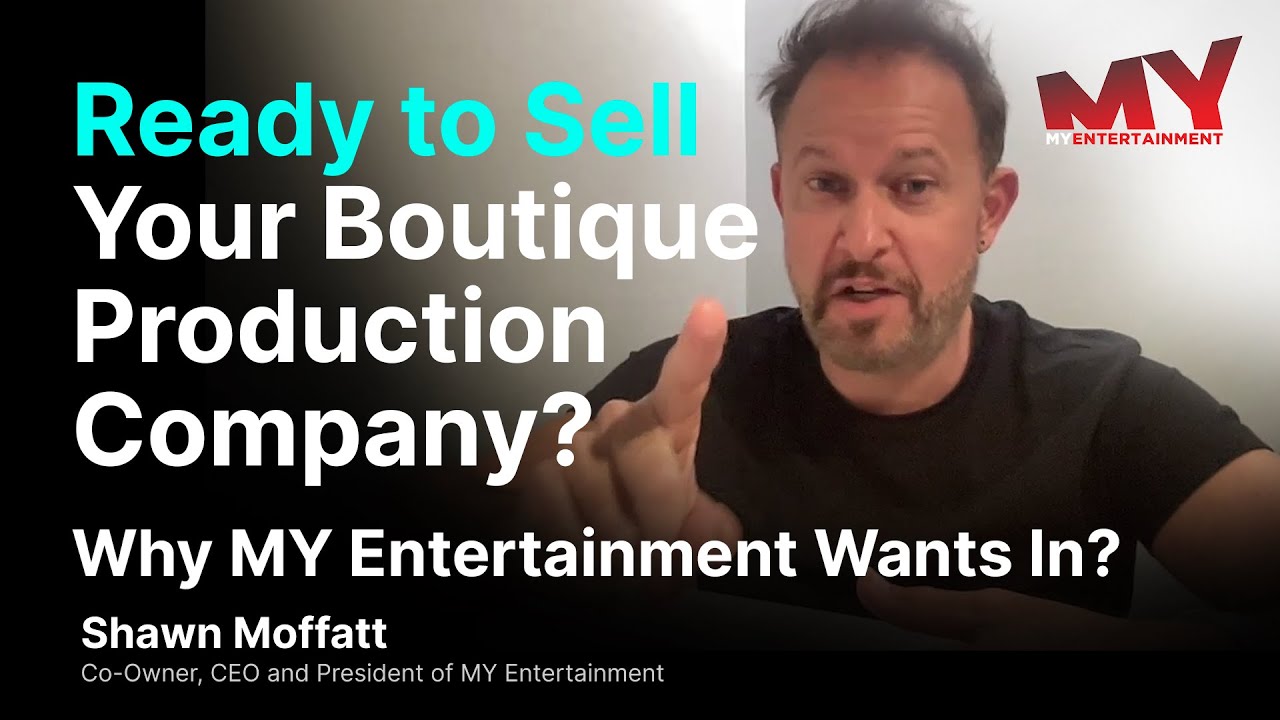
Key Insights
Shawn Moffatt shares insights on navigating independent production, leveraging co-productions, and adapting to global trends to thrive in the fragmented and rapidly evolving entertainment supply chain.
Mapping Regional Hit Potential
Amazon’s growth is now concentrated in regional hubs. According to case studies in the Vitrina Brief, companies like Getty Images and GoogleTV are using supply-chain mapping to drive expansion in the Middle East and Southeast Asia. Amazon is mirroring this by seeking co-production partners who can deliver culturally nuanced “local” content that has the technical polish to travel globally.
Producers in these regions who use “Vertical AI” like VIQI can map historical collaborations and track shifts in commissioning behavior. This allows them to identify exactly which genres—from epic dramas in Nigeria to thriller series in South Korea—are currently being greenlit by Amazon’s regional commissioning teams, bypassing months of opaque networking.
“The Amazon-Netflix pact is the definitive signal that the ‘Streaming Wars’ have evolved into a ‘Weaponized Distribution’ era. For producers, this means their content is no longer bound to a single platform, but rather to a sophisticated data network that prioritizes ROI and market efficiency over strict exclusivity.”
Moving Forward
Amazon Prime Video’s co-production strategy is no longer a localized experiment; it is a global blueprint for market efficiency. By integrating ad-tech DSPs with rivals and “weaponizing” its distribution through licensing pacts, Amazon has created a more porous and profitable supply chain.
Whether you are an independent producer in Lagos looking to scale regional epics, or a strategy lead in Los Angeles managing legacy IP, the unified solution remains the same: data-driven intelligence. Understanding who is acquiring, who is licensing, and who is financing transforms co-production from a high-risk gamble into a strategic science.
Outlook: Over the next 12-18 months, we expect to see Amazon double down on “Authorized Generative AI” deals to further automate localization and dubbing for these regional hits, compressing the time-to-market for international co-productions.
Frequently Asked Questions
What is Amazon’s co-production strategy?
How does the Amazon-Netflix pact affect producers?
Which regions are Amazon targeting for co-production?
How can I find Amazon commissioning editors?
About the Author
Written by the Vitrina Strategy Team, leveraging proprietary data from our global entertainment supply chain platform. Our mission is to transform partner discovery from a manual art into a data-driven science. Connect with us on Vitrina.
Find Film+TV Projects, Partners, and Deals – Fast.
VIQI matches you with the right financiers, producers, streamers, and buyers – globally.
Producers Seeking Financing, Co-Pros, or Pre-Buys?
Vitrina Concierge helps producers reach the right financiers, commissioners, distributors, and co-production partners — with precision outreach, not cold pitching.
Join Industry Briefings Trusted by Leaders
Format Adaptations: Global Trends
Where formats are traveling, which adaptations are breaking out, and how streamers are backing remakes in 2025–2026.

Books, Novels & Comics Adaptations: Global Trends
Books, webtoons, and manga driving the next global screen hits. Discover how in this webinar.

Micro-Dramas & Mobile-First Storytelling
Micro-dramas are building real audiences and revenue. Understand the platforms, buyers, and economics behind the growth.

Navigating Global Content Licensing Trends
How global content licensing is shifting beyond flat fees to flexible, deal-driven models.