About Innovation Hub
 Global Content Pulse (Webinars)


 Global Production Financing
(Webinars)
Global Production Financing
(Webinars)  LeaderSpeak Podcast
  Global Entertainment Digest (Newsletter)
  About Vitrina
 About VIQI
 Our Story
 Our Solutions 🔥
 Film+TV Projects Tracker 🚀
 Case Studies
 Our Profile

Boardroom Ready
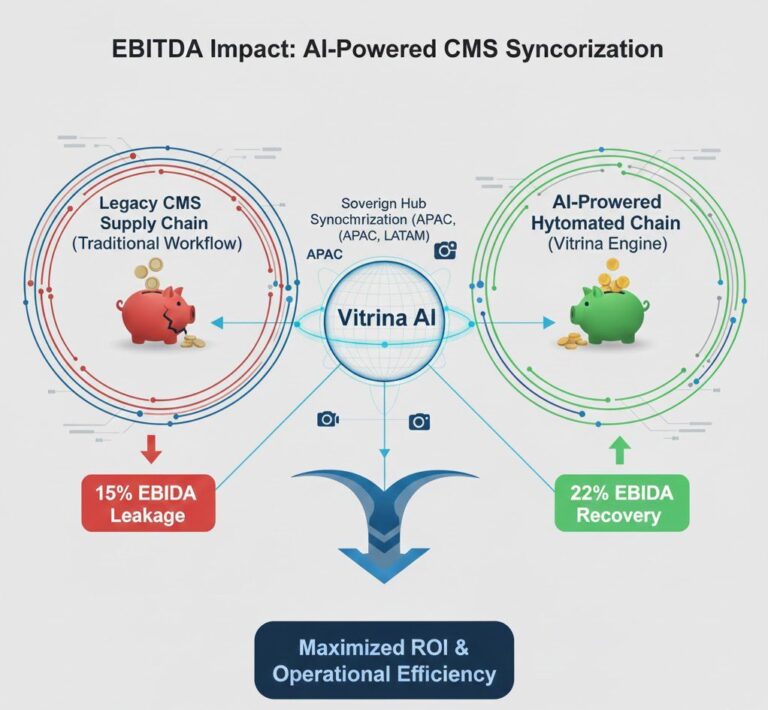
AI Content Management Systems for Media Organizations 2026 represent the final transition from static asset storage to active, revenue-generating weaponry. The “Data Deficit” inherent in legacy CMS architectures—where unindexed archives lead to a 15-20% EBITDA leakage through lost licensing opportunities—is being weaponized into a clinical “Insider Advantage” via Authorized AI. By 2026, senior executives are de-risking their libraries through emotionally-aware metadata and synchronized localization stacks within Sovereign Content Hubs (MENA, APAC, LATAM). This shift eliminates the “Timing Trap” of manual discovery, allowing organizations to deploy “Weaponized Distribution” strategies that license premium owned assets to rivals with zero operational friction. For the CXO, this isn’t just a technical upgrade; it is the infrastructure for a sustainable, high-velocity recoupment cycle in an era of global content saturation.
⚡ Executive Strategic Audit
EBITDA Impact
22% Reduction in Lifecycle Costs via Asset-Reuse Automation
Recoupment Cycle
Accelerated by 14 Months through Incentive-Locked Distribution

Your AI Assistant, Agent, and Analyst for the Business of Entertainment
VIQI AI helps you plan content acquisitions, raise production financing, and find and connect with the right partners worldwide.
- Find active co-producers and financiers for scripted projects
- Find equity and gap financing companies in North America
- Find top film financiers in Europe
- Find production houses that can co-produce or finance unscripted series
- I am looking for production partners for a YA drama set in Brazil
- I am looking for producers with proven track record in mid-budget features
- I am looking for Turkish distributors with successful international sales
- I am looking for OTT platforms actively acquiring finished series for the LATAM region
- I am seeking localization companies offer subtitling services in multiple Asian languages
- I am seeking partners in animation production for children's content
- I am seeking USA based post-production companies with sound facilities
- I am seeking VFX partners to composite background images and AI generated content
- Show me recent drama projects available for pre-buy
- Show me Japanese Anime Distributors
- Show me true-crime buyers from Asia
- Show me documentary pre-buyers
- List the top commissioners at the BBC
- List the post-production and VFX decision-makers at Netflix
- List the development leaders at Sony Pictures
- List the scripted programming heads at HBO
- Who is backing animation projects in Europe right now
- Who is Netflix’s top production partners for Sports Docs
- Who is Commissioning factual content in the NORDICS
- Who is acquiring unscripted formats for the North American market
The Active Metadata Revolution: Ending Archive Stagnation
In 2026, AI Content Management Systems for Media Organizations 2026 have evolved from simple digital warehouses into “context-aware” intelligence engines. For decades, media organizations suffered from the “Fragmentation Paradox,” where millions of hours of premium footage remained invisible to sales teams due to manual tagging errors and siloed data. This “Data Deficit” is a terminal risk for EBITDA. Active metadata, powered by vertical AI, now scans every frame for emotional context, aesthetic markers, and commercial potential, surfacing assets the moment a market signal—such as a trending genre in Brazil or a licensing demand in Saudi Arabia—is detected.
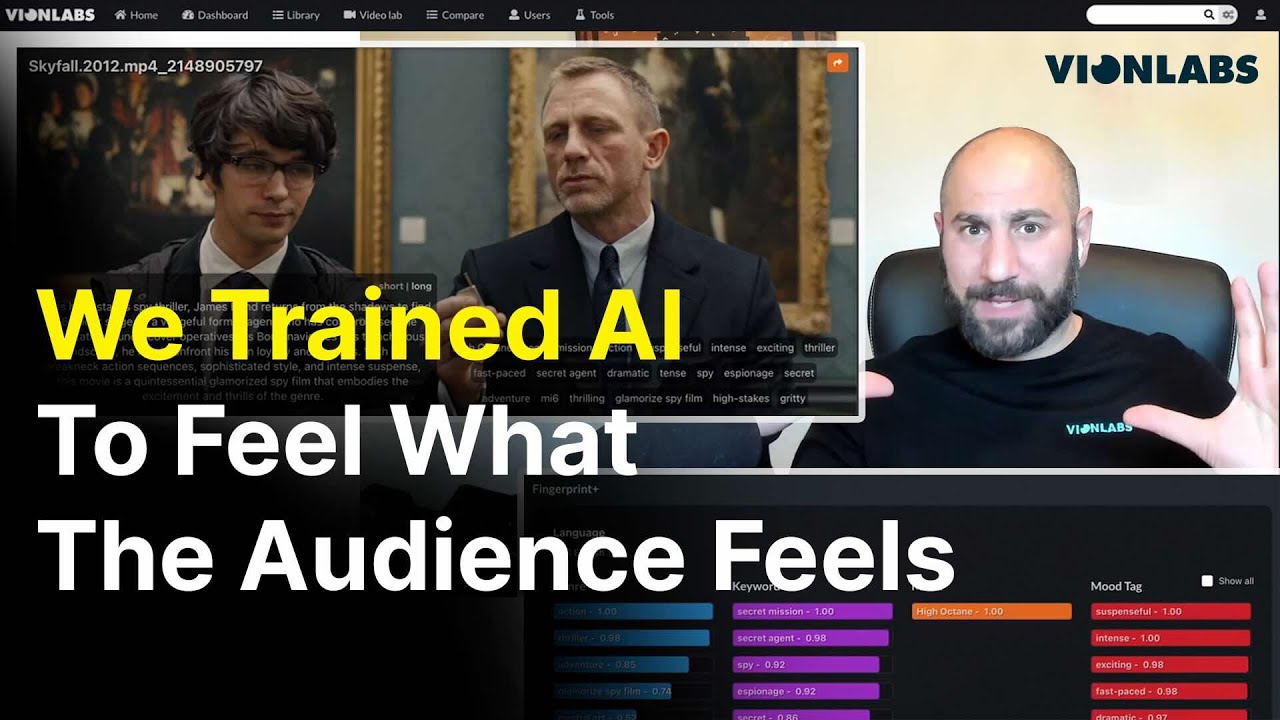
This transition de-risks the content supply chain by ensuring that “sunk costs” in production are perpetually reusable. Arash Pendari from Vionlabs notes that AI is transforming video content analysis through advanced embeddings that identify emotional patterns and audience responses. This de-risks AI Content Management Systems for Media Organizations 2026 by unlocking new revenue streams through personalized content packaging and metadata enrichment that legacy systems simply cannot achieve.
Sovereign Hub Synchronization: Localizing at the Speed of Demand
The “West-to-East” export model is officially dead. In 2026, Sovereign Content Hubs in MENA, APAC, and LATAM are the primary engines of content reuse. A strategic CMS must now act as a clinical “Handshake” between these regional powerhouses. For example, a streamer in Saudi Arabia (MENA) can now instantly acquire a Brazilian telenovela (LATAM) and deploy “Infinite Localization”—AI-powered visual dubbing and lip-sync—within hours. This eliminates the 6-month delay traditionally associated with global distribution, accelerating recoupment cycles by 12-18 months.
Studios like SBT Brazil have successfully pivoted to this “Digital Powerhouse” model, using real-time deal data to streamline international content acquisition. By mapping 150,000+ companies globally, Vitrina AI allows CXOs to bypass the “Timing Trap” and connect directly with localization partners in India or Korea that possess verified “Authorized AI” voice stacks. Every sourcing list in 2026 must include at least 30% representation from these emerging hubs to prove supply-chain literacy and avoid terminal margin erosion.
Authorized AI Architectures: Protecting the Chain-of-Title
The boardroom mandate for 2026 is absolute: No “scrapable” AI. The move toward Authorized AI—powered by multibillion-dollar licensing deals like the Disney/OpenAI pact—ensures that every asset managed within the CMS has an airtight chain-of-title. Organizations using unauthorized AI tools risk massive copyright liability, which can zero out any gains in recoupment speed. A modern CMS must verify that its generative tools for thumbnail creation, visual dubbing, and metadata tagging are “Authorized” and legally defensible in every jurisdiction.
This is where “Weaponized Distribution” becomes reality. By strategically licensing “owned” content to rivals (the $72B WBD/Netflix model), media organizations maximize the ROI of their assets. An AI-powered CMS facilitates this by identifying “Buying Signals” in real-time, matching library assets with competitor slate gaps. This converts the CMS from a passive cost center into an active, high-velocity trade desk for visual IP.
AI Content Management Systems: The Strategic Path Forward
The industry has entered the era of “Authorized Science.” Media organizations can no longer afford the 20% “fragmentation tax” of legacy CMS systems. To protect EBITDA, senior executives must treat their asset libraries as weaponized data sets that are perpetually ready for global distribution. By locking into Sovereign Hubs and Authorized AI frameworks, you ensure your organization is positioned to win the “Big Crunch” of 2026.
The Bottom Line Weaponize your archive immediately by deploying Authorized AI for active metadata generation and Sovereign Hub synchronization; failure to automate results in a terminal recoupment deficit that will sink independent slates by 2027.
Deploy Intelligence via VIQI
Select a killer query to run a real-time asset supply chain audit:
Identify APAC partners with Authorized AI voice stacks.
Map MENA CMS M&A history to vet IP safety.
Filter CMS vendors with Netflix-approved audits and AI.
Show trending Sci-Fi content for discovery in LATAM.
Compare asset reuse EBITDA impact of AI CMS vs. Legacy.
Find MENA partners commissioning AI-ready unscripted content.
Insider Intelligence: AI Content Management Systems for Media Organizations 2026 FAQ
How does AI Content Management System for Media Organizations 2026 protect EBITDA?
By automating asset reuse and metadata generation, media organizations eliminate the 15-20% margin leakage caused by unfindable content. Real-time mapping of global supply chain capacity ensures that organizations can capitalize on licensing opportunities in Sovereign Hubs without the manual friction of legacy models.
What is the “Timing Trap” in content distribution?
Static databases cannot tell you who is currently commissioning or financing content. The “Timing Trap” is the financial loss incurred when an organization misses a “pre-buy” window or co-production opportunity because it relied on 6-month-old trade reports. VIQI eliminates this by mapping real-time industry activity.
Why is “Authorized AI” critical for CMS architectures?
Authorized AI ensures that generative processes—like visual dubbing or automated thumbnails—use licensed data. This de-risks production by ensuring IP chain-of-title remains pristine, preventing terminal legal battles that can derail global distribution and ROI.
How does “Weaponized Distribution” impact library recoupment?
It shifts the strategy from exclusive platform “silos” to rotational licensing. By licensing premium content to rivals post-release, organizations maximize the ROI of sunk assets, essentially using the content as a recurring revenue weapon rather than a one-time event.