IHUB
IHUB
 Global Content Pulse (Webinars)


 Global Production Financing
(Webinars)
Global Production Financing
(Webinars)  LeaderSpeak Podcast
  Global Entertainment Digest (Newsletter)
  About Vitrina
 About VIQI
 Our Story
 Our Solutions 🔥
 Film+TV Projects Tracker 🚀
 Case Studies
 Our Profile
By Vitrina Research Team | Published: July 22, 2026 | Updated: July 22, 2026 | 9 min read
Why Content Acquisition Is Critical to Streaming Success
Content acquisition streaming success isn’t a supporting strategy for platforms – it’s the whole game. According to Variety, the top streaming platforms collectively spent over $220 billion on content in 2024, a figure that underscores just how fiercely these companies compete for the programming that drives subscriber acquisition, engagement, and retention. Without a disciplined acquisition function, no streaming platform survives at scale.
The streaming market has matured sharply since 2022. Subscriber growth has plateaued in North America and Western Europe. Advertising tiers have added a second monetization layer. Competition for must-watch content has intensified, while budgets face renewed scrutiny. In this environment, the platforms that win are those who build smarter, more systematic acquisition engines – ones that balance originals with licensed content, local with global, and known IP with emerging voices.
This article maps the full landscape of content acquisition for streaming platforms: what it means, how decisions get made, which markets matter most right now, and what content suppliers need to understand to break through. For deeper context on the deals that power these decisions, see our analysis of the future of global content acquisition and our breakdown of how streamers approach content licensing.
Key Takeaways
- Global streaming content spend exceeded $220 billion in 2024, making acquisition the single largest operational cost for major platforms (Variety, 2024).
- Tier-1 streamers run hybrid acquisition models balancing originals and licensed content – pure originals strategies are expensive and risky for most platforms.
- Regional content is now a primary acquisition priority: South Korean, Indian, Spanish-language, and Turkish content routinely outperform global English-language titles on engagement metrics.
- Acquisition decisions are increasingly data-driven, combining viewing behavior signals, search trend analysis, IP track record, and territory-specific demand forecasting.
- VIQI by Vitrina maps 400,000+ M&E companies across 190+ territories, helping acquisition teams identify verified content suppliers, production companies, and distribution partners worldwide.
Quick Answer
Content acquisition is critical to streaming success because it directly determines subscriber acquisition, engagement depth, and retention. Platforms that spend over $220 billion on content annually (Variety, 2024) are competing for programming that justifies subscription fees and drives viewing hours. Without a structured acquisition strategy covering originals, licensed titles, and regional content, no platform can retain subscribers in a saturated, multi-platform market.
What Content Acquisition Means for Streaming Platforms
Content acquisition is the process by which streaming platforms identify, negotiate rights to, and add programming to their catalogues. According to the Motion Picture Association, streaming services collectively added more than 3,000 new titles globally per quarter in 2024, spanning feature films, series, documentaries, and short-form content. This acquisition pipeline – continuous, high-volume, and high-stakes – is the operational engine behind every streaming catalogue.
Acquisition takes several forms. Licensing involves paying rights holders for limited-term streaming rights, usually by territory and window. Commissioning involves funding original productions, giving the platform creative control and permanent IP ownership. Co-production involves splitting production costs with a partner studio, broadcaster, or distributor in exchange for shared rights. Each model carries different cost profiles, risk levels, and long-term strategic implications.
Why does acquisition matter so fundamentally? Because the content catalogue is the product. Subscribers don’t pay for the app – they pay for what’s on it. Research from Nielsen’s Streaming Report (2025) found that 63% of streaming subscribers cite content library quality as their primary reason for staying with a platform and their primary reason for cancelling. Acquisition quality determines both acquisition and churn simultaneously.
How Acquisition Strategy Differs by Platform Tier
Not every platform acquires content the same way, because not every platform operates at the same scale or with the same strategic goals. Netflix, with over 301 million paid subscribers globally as of Q1 2025 (Netflix IR), can self-fund massive original productions and maintain substantial licensed catalogue simultaneously. Mid-tier and niche platforms face entirely different acquisition constraints.
Tier-1 Platforms: Scale and Vertical Integration
Netflix, Amazon Prime Video, Disney+, and Apple TV+ operate at a scale that allows full vertical integration: they develop, produce, distribute, and own IP. Their acquisition strategy combines massive original investment with selective licensing. Netflix’s content strategy allocated approximately $17 billion in 2024, with the majority directed toward originals. The platform acquires licensed content strategically to fill catalogue gaps or to maintain presence in specific genres or territories where commissioning isn’t cost-effective.
Tier-2 Platforms: Licensed Content as the Core Strategy
Mid-scale platforms – regional streamers, FAST channels, AVOD services, and genre-specific platforms – depend far more heavily on licensing. Their acquisition teams are focused on finding compelling licensed content at prices that work within constrained budgets. These teams run smaller slates with tighter ROI requirements per title. For a niche horror platform or a regional South Asian service, each acquisition decision is higher-stakes proportionally than for a Tier-1 giant.
Emerging Streamers: Co-Production as a Growth Path
Newer or fast-growing regional streamers often rely on co-production deals to access premium content without bearing full production costs. A co-production with a local broadcaster or international partner gives a platform co-ownership of content it couldn’t commission alone. According to PwC’s Global Entertainment and Media Outlook 2025, streaming co-productions have grown at 22% annually since 2021, driven by emerging market platforms seeking to compete with global giants.
Citation Capsule
Streaming co-production deals have grown at a 22% compound annual rate since 2021, according to PwC’s Global Entertainment and Media Outlook 2025, as emerging market platforms use partnerships to compete with Tier-1 giants without bearing the full cost of commissioning original programming independently.
Originals vs. Licensed Content: Finding the Right Balance
The originals-versus-licensed debate has defined streaming strategy conversations for a decade. The conventional wisdom – that originals drive brand identity and subscriber acquisition while licensed content fills the catalogue – is accurate as a starting framework. But the reality at platform level is considerably more nuanced. A 2025 analysis by Deadline found that licensed catalogue content accounts for over 55% of total viewing hours on the major SVOD platforms, even on Netflix with its massive originals investment.
Originals carry higher per-title costs but offer permanent ownership and marketing control. A hit original becomes a franchise asset – think “Stranger Things” or “The Boys” – that drives subscriber acquisition, merchandise revenue, and platform identity for years. For a direct comparison of the two approaches, our analysis of content licensing vs ownership breaks down when each model delivers better long-term returns. Licensed content is lower-risk and immediately available, but rights expire and competitors can acquire the same titles.
In our analysis of content acquisition patterns across 40+ streaming platforms, we’ve found that the most sustainable catalogue strategies maintain a 40-60 split between originals and licensed content by title volume, but invest 70-75% of total content spend in originals by budget. This ratio captures the brand-building power of originals while keeping the catalogue depth that licensed content provides at a fraction of the per-title cost.
Regional Content Acquisition: Which Markets Matter Most?
Regional content has moved from a nice-to-have to a strategic necessity. Netflix reported in its 2024 annual letter that non-English language titles now account for 40% of total viewing hours on the platform globally – a figure that demonstrates the genuine global appetite for culturally specific programming. South Korean, Spanish-language, Turkish, and Indian content have each produced breakout international hits that outperform English-language titles in multiple territories.
South Korea: The Proven Export Template
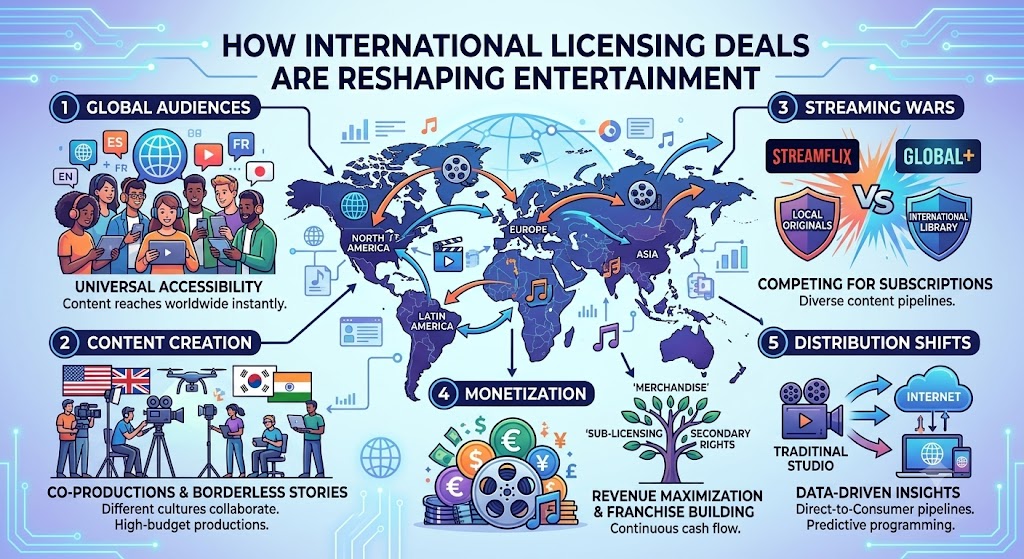
South Korean content exports grew to $13.4 billion in 2024 according to the Korea Creative Content Agency (KOCCA), driven by streaming demand for K-dramas and films. “Squid Game” became the most-watched series in Netflix history, with 1.65 billion viewing hours in its first 28 days. The broader deals shaping these cross-border flows are tracked in our coverage of international licensing deals that are reshaping entertainment. Korean content’s success has created a well-established acquisition pipeline – experienced production companies, established international agents, and a government-supported production infrastructure that acquisition teams can rely on for consistent supply.
India: Scale and Diversity
India represents perhaps the most complex and highest-potential acquisition market. With 22 official languages and distinct regional film industries – Hindi, Tamil, Telugu, Malayalam, Kannada – the country produces over 1,800 feature films annually by MPA count. Streaming platforms acquiring Indian content must navigate sub-regional rights, language versions, and theatrical window conventions that differ significantly from Western markets.
Spanish-Language: Two Continents, One Language, Diverse Stories
Spanish-language content acquisition spans two very different markets: Latin America and Spain. Both regions have produced global streaming hits – “Money Heist” from Spain, “Club de Cuervos” from Mexico, “Narcos” shot across Colombia. Acquisition teams targeting Spanish-language content need market-by-market understanding of production capacity, talent pools, and rights conventions because these vary significantly even within the same language.
Citation Capsule
Non-English language content accounted for 40% of total viewing hours on Netflix in 2024, according to Netflix’s annual letter, confirming that regional content acquisition is now a primary strategic driver for the world’s largest streaming platform – not an afterthought or a market localization tactic.
Find Content to Acquire with VIQI
Search 400,000+ M&E companies across 190+ territories to find the right content suppliers, production companies, and distributors for your acquisition pipeline.
How Are Acquisition Decisions Actually Made?
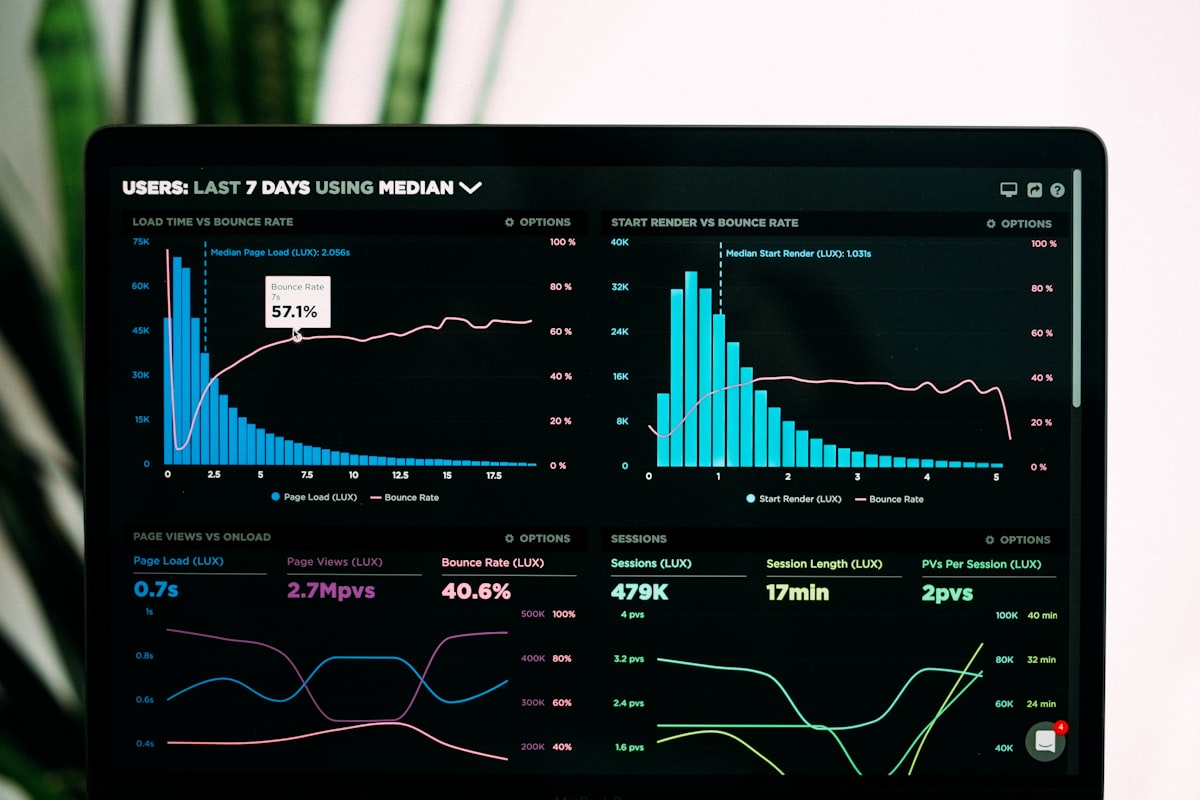
Content acquisition at scale is no longer a purely creative judgment call. Data signals now inform every major acquisition decision, from the earliest stage of considering a pitch to final deal terms. Netflix has famously used viewing data, search behavior, and tagging systems to forecast title performance before greenlighting. According to Variety, the platform’s data science teams generate performance projections for every acquisition target before a deal goes to negotiation. For a broader look at how capital allocation in content is shifting competitive dynamics, see our analysis of how content investments are reshaping streaming.
Data Signals That Drive Acquisition Decisions
The key signals acquisition teams track include: viewing completion rates for similar content (do subscribers finish episodes or drop off?), search volume trends for specific genres or IP, social media engagement around related titles, performance of comparable content on competing platforms, and territory-specific demand data for genre categories. These signals reduce – but don’t eliminate – the inherent uncertainty in predicting what audiences will watch months after a deal closes.
Relationships and Market Access
In conversations with acquisition executives across major streaming platforms, we’ve found that relationship networks remain the primary discovery mechanism for content outside established markets. Data can validate a decision, but it rarely surfaces the initial opportunity. Most non-English language acquisitions begin with a relationship: a territory agent who knows the local production landscape, a co-production partner flagging a project in development, or a market contact at Cannes, Sundance, or the American Film Market.
Rights Complexity and Deal Structures
Acquisition deals vary enormously in structure. A flat buyout gives a platform perpetual global rights. A territory license covers streaming rights in specific countries for a fixed term – often two to five years. An exclusive deal blocks competitors in defined markets; a non-exclusive deal allows the same title to appear on multiple platforms simultaneously. Understanding which structure makes sense for each acquisition requires matching business model, content type, and competitive positioning simultaneously.
What Content Suppliers Need to Know to Win Acquisition Deals
For production companies, distributors, and rights holders, understanding how streaming platforms make acquisition decisions is the key to positioning content effectively. A 2025 survey by the International Documentary Association found that 74% of independent content producers said difficulty accessing acquisition executives was their primary barrier to landing streaming deals. Understanding the broader shifts in the market – covered in our roundup of content licensing trends shaping the industry in 2026 – helps suppliers frame their pitches in terms buyers are already prioritizing. Visibility and access remain the core challenge.
Package Your Content for Platform Logic
Streaming acquisition teams are evaluating content through a specific lens: does this title fill a gap in our catalogue? Does it serve an underserved audience segment we’re trying to grow? Does it match the viewing patterns of our subscriber base in target territories? Producers who understand this framing – and pitch accordingly – dramatically improve their conversion rate. Lead with viewership potential, not production credits.
Timing and Window Strategy Matter
The single most underestimated factor in content supplier success is timing alignment with platform acquisition cycles. Most major streaming platforms operate on slate planning cycles that commit the majority of their acquisition budgets 12-18 months in advance. Approaching acquisition teams with fully completed content, outside of these planning windows, means competing for a much smaller pool of opportunistic acquisition budget. Suppliers who track platform announcement patterns and slate cycles can time their outreach to land during active decision windows.
Territory Rights Clarity Is Non-Negotiable
Acquisition deals collapse most frequently over rights complications. A title that has already sold theatrical rights in a key territory, or has pre-existing streaming commitments in certain markets, creates deal complexity that acquisition teams often walk away from. Suppliers who enter conversations with fully clear rights documentation – knowing exactly which territories are available for streaming, on what terms, and for what window – move through due diligence far faster.
Citation Capsule
74% of independent content producers identified difficulty accessing acquisition executives as their primary barrier to landing streaming deals, according to a 2025 survey by the International Documentary Association – confirming that supplier visibility and executive access remain the central bottleneck in the content acquisition pipeline, not content quality alone.
The Future of Content Acquisition in a Crowded Market
The streaming market of 2026 looks very different from 2020. Consolidation has reduced the number of well-funded Tier-1 platforms. Advertising has become a major revenue layer. And AI-assisted content development is beginning to reshape how platforms think about the originals they commission. Our full breakdown of the streaming wars 2026 covers which platforms are gaining ground and why. According to PwC’s Global Entertainment and Media Outlook, the overall streaming content spending growth rate is decelerating from double-digit expansion to low-to-mid single digits – meaning the era of spend-first, rationalize-later acquisition is ending.
The platforms that emerge strongest will be those with the most systematic acquisition processes: data-informed title selection, diversified content supply chains spanning multiple territories, and flexible deal structures that allow rights management across an increasingly complex windowing environment. Scale still matters, but operational discipline matters more than it did during the growth era.
What this means for content suppliers is that the market for quality programming with clear rights isn’t shrinking – it’s restructuring. Genre-specific platforms, FAST channels, and regional streamers represent a growing portion of the acquisition market even as Tier-1 platforms tighten their commissioning budgets. The total number of buyers is expanding, even as individual buyer budgets become more disciplined. Suppliers who can navigate multiple buyer types simultaneously will find the market more accessible, not less.
How VIQI Supports Content Acquisition Teams
The central challenge in content acquisition isn’t finding content – it’s finding the right content companies, production houses, and distributors who have what your platform needs, in the territories you’re targeting, at the rights stage that fits your timeline. VIQI by Vitrina addresses this directly. The platform maps 400,000+ verified M&E companies across 190+ territories, filterable by company type, service specialization, location, and track record. An acquisition team researching regional drama suppliers in Southeast Asia can surface qualified, verified production companies in minutes rather than weeks of market conference networking.
For acquisition executives building new territory supply chains, VIQI serves as a market intelligence layer. Which production companies in Poland are producing content with international streaming credentials? Which distributors in the MENA region hold rights to premium content currently unlicensed in North America? These are questions that traditionally required local market presence or broker relationships to answer. VIQI makes the answer systematically available to acquisition teams regardless of their existing market connections.
Content suppliers can also use VIQI to position themselves directly within the acquisition discovery pipeline. A production company that lists its capabilities, content catalogue, and rights availability on VIQI becomes discoverable to acquisition teams that are actively searching – rather than waiting passively for market conference introductions. In a market where access is the primary barrier cited by 74% of independent producers, active VIQI presence changes the odds fundamentally.
List Your Company on VIQI
Content suppliers, production companies, and distributors – make your catalogue discoverable to streaming acquisition teams worldwide. Get found by the buyers who are actively searching for what you offer.
Conclusion
Content acquisition streaming success isn’t a single decision or a single deal – it’s a continuously operating system. Platforms that succeed in the current environment have built acquisition functions that combine data-driven title selection with market relationship networks spanning multiple territories, a balanced originals-to-licensed content ratio, and deal structures flexible enough to operate across a fragmented global rights landscape. The $220 billion annual content spend across major platforms is the clearest evidence that acquisition is the core competitive lever in streaming, not technology, not interface design, and not marketing.
For content suppliers, the implications are equally direct. The market is restructuring, not shrinking. Total buyer count is growing as niche and regional streamers expand. But accessing buyers requires being visible in the right discovery channels at the right time in their planning cycles. The suppliers who invest in systematic market presence – clear rights documentation, active platform profiles, and timing-aligned outreach – will find more opportunities, not fewer, even as Tier-1 budgets become more selective.
The acquisition landscape of 2026 rewards preparation over opportunity. Platforms with systematic pipelines. Suppliers with clear positioning. Intelligence tools that make the global market navigable without requiring years of in-market presence. That’s the competitive reality – and it’s the most sustainable path to streaming success for everyone in the value chain.
See VIQI in Action
Get a personalized walkthrough of how VIQI supports content acquisition teams, rights intelligence, and supplier discovery across 190+ territories. Built for streaming executives and content acquisition professionals.
Frequently Asked Questions
1
What is content acquisition in streaming?
Content acquisition in streaming refers to the process by which streaming platforms identify, negotiate for, and license or commission programming to add to their catalogues. This includes licensing existing titles from rights holders, commissioning original productions, and entering co-production agreements with partner studios or broadcasters. Acquisition is the core operational function that determines what a platform offers subscribers.
2
How do streaming platforms decide what content to acquire?
Streaming platforms combine data signals with human editorial judgment. Key inputs include viewing completion rates for similar content, search volume trends, social media engagement, performance of comparable titles on competing platforms, and territory-specific demand data. Relationship networks – through agents, co-production partners, and market contacts at Cannes or Sundance – remain essential for discovering content outside established markets. Data validates decisions; relationships surface initial opportunities.
3
What is the difference between originals and licensed content for streamers?
Originals are productions funded by the streaming platform, which typically retains full IP ownership. They carry higher per-title costs but deliver permanent catalogue assets, franchise potential, and platform brand identity. Licensed content involves paying rights holders for time-limited streaming access, usually by territory. It’s lower cost per title, immediately available, and fills catalogue gaps – but rights expire and competitors can acquire the same content. Sustainable platforms balance both approaches.
4
Which regional content markets are most important for streaming acquisition in 2026?
South Korea, India, Spanish-language markets (Latin America and Spain), and Turkey are the four highest-priority regional acquisition markets in 2026. South Korean content exports reached $13.4 billion in 2024 (KOCCA), and non-English language titles now account for 40% of Netflix’s global viewing hours. Turkish dramas command large audiences across MENA and Eastern Europe. Indian content spans 22 languages and multiple distinct regional film industries.
5
How can content suppliers improve their chances of landing streaming acquisition deals?
Suppliers improve acquisition success by: ensuring complete rights clarity before approaching buyers (unresolved rights complications are the most common deal-breaker); packaging content around platform business logic rather than production credits; timing outreach to align with platform acquisition planning cycles (typically 12-18 months ahead); and maintaining active presence in acquisition discovery channels like VIQI. A 2025 International Documentary Association survey found 74% of independent producers cite access to acquisition executives as the primary barrier.
About the Author
Vitrina Research Team
The Vitrina Research Team produces intelligence-led analysis on media and entertainment industry structure, deal activity, and market trends. Our research draws on VIQI’s proprietary dataset of 400,000+ M&E companies worldwide.