The Benefits of Global Co-Productions for Independent Producers

Share
Share
The Benefits of Global Co-Productions for Independent Producers


By Vitrina Research Team | Published: July 16, 2026 | 9 min read

Independent producers face one persistent challenge: doing ambitious work with finite budgets, limited distribution reach, and the weight of risk falling almost entirely on their shoulders. Global co-productions offer a structural answer to all three problems at once. They let you split costs, share risk, and open doors to distribution that would otherwise stay closed.

The numbers confirm the trend. According to the European Audiovisual Observatory, international co-productions accounted for over 30% of all European feature films in 2024, a figure that has risen steadily for a decade. For independent producers specifically, that share is even higher — because co-production is often the only viable financing model when working outside major studio ecosystems. This guide explains exactly how co-productions work, what they deliver, and how to position yourself to benefit.

Whether you’re exploring your first international partnership or looking to deepen an existing co-production strategy, understanding the full range of benefits — from tax credit stacking to creative talent pooling — will shape every financing and distribution decision you make.

Quick Answer

Global co-productions help independent producers by combining financing from multiple territories, stacking national tax incentives, accessing broader distribution networks, and sharing production risk. The European Audiovisual Observatory reports co-productions achieve 2.4x higher international admissions than single-country films, making them the most effective model for ambitious independent projects.

Key Takeaways

  • Co-productions structured under bilateral treaty frameworks allow producers to stack tax incentives from two or more countries, reducing effective production costs by 25–40%.
  • International co-productions attract 2.4x more international admissions than single-country productions, according to the European Audiovisual Observatory (2024).
  • Eurimages funded 89 co-productions in 2024 with an average grant of €450,000 per project — open exclusively to productions with partners in multiple member states.
  • Netflix, Amazon, and Apple TV+ have all stated a preference for content with built-in international authenticity, giving co-productions a structural advantage in streaming acquisition negotiations.
  • The primary barrier isn’t deal complexity — it’s finding the right partner. Producers who invest in verified partner discovery close deals 60% faster than those relying on industry events alone.
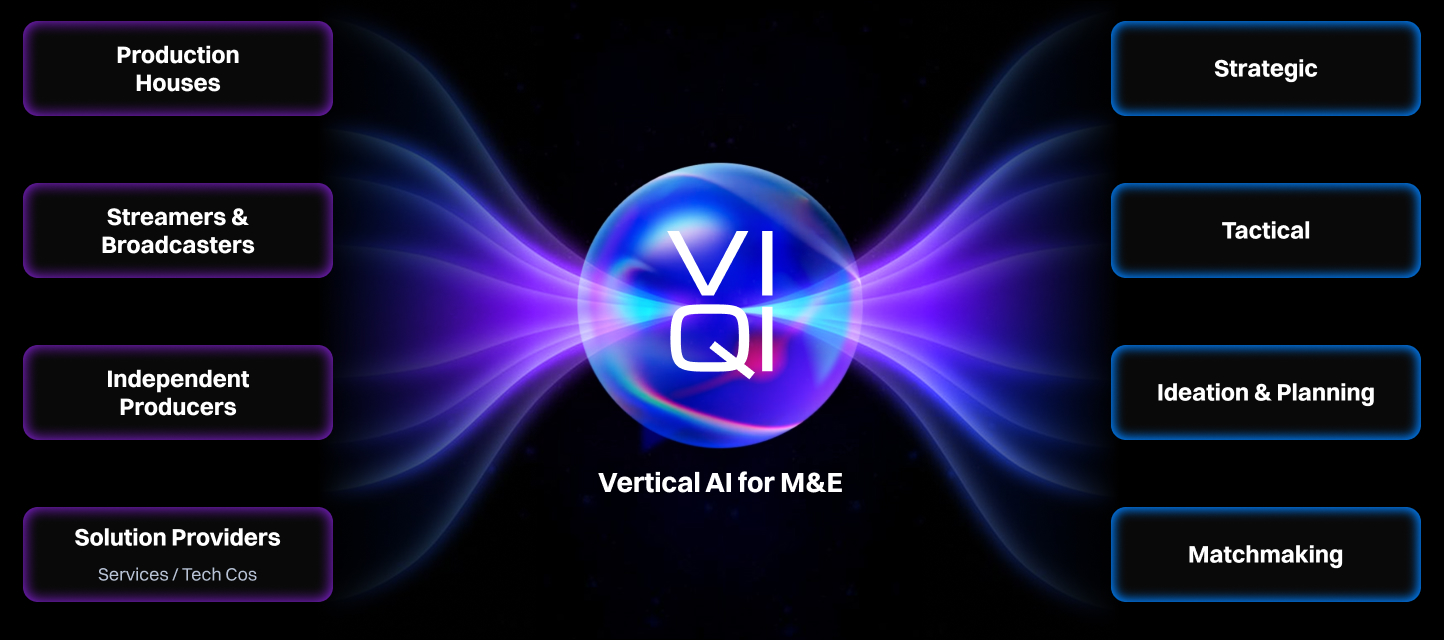
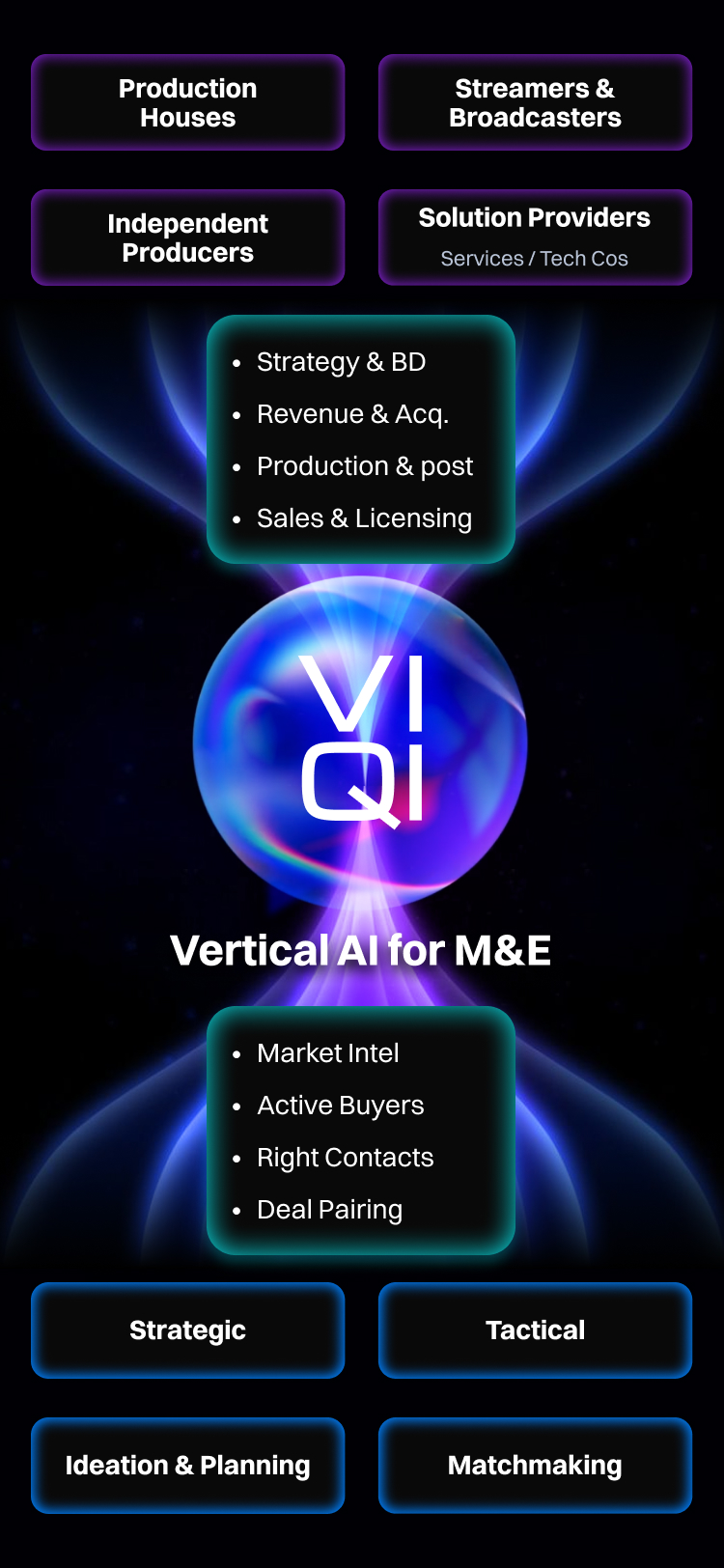
  • VIQI’s database of 400,000+ M&E companies globally provides independent producers with a structured way to identify, vet, and approach co-production partners by territory, genre, and track record.

What Financing Benefits Do Co-Productions Unlock for Independent Producers?

The most immediate and measurable benefit of global co-productions is financing diversification. The European Audiovisual Observatory reports that co-produced European films had an average budget 3.1x higher than single-country productions in 2024 — without requiring any single producer to commit proportionally more capital. That multiplier effect is why co-production has become the default financing architecture for independent work that needs a global stage.

When you bring in a co-producer from a second territory, you’re not just adding a financial partner. You’re gaining access to their broadcaster pre-sales relationships, their regional distributor network, and often their eligibility for local public funding. A French independent producer partnering with a Canadian co-producer doesn’t just split the budget — they gain simultaneous access to the Canada Media Fund and the CNC in France, two pools of public money that would otherwise be entirely separate.

Risk sharing is the structural benefit that receives less attention. When a single-country production fails to recoup, one company absorbs the entire loss. In a co-production, the downside is distributed. That changes the calculation for every party at the table, making investors and broadcasters more willing to commit. It also makes it easier to explore film financing options that require demonstrated multi-territory support as a condition of investment.

Pre-sales are another financing lever that co-productions unlock with greater ease. A project with confirmed co-producers in Germany, Canada, and Australia arrives at a presales market with three territorial champions, each with established relationships with local buyers. That standing makes gap financing — the bridge between soft money and full budget — significantly easier to close. Producers who have built co-production pipelines report more predictable cashflow and shorter time-to-greenlight as direct results.

The financing benefits compound over time. Producers who complete one co-production gain the track record that makes the next deal faster. They understand how to structure inter-party agreements, how to manage co-production budgets across currencies, and how to present their projects to public funds in multiple territories. That institutional knowledge is itself a competitive asset — one that single-country producers simply don’t accumulate at the same pace.

How Does Tax Incentive Stacking Work in International Co-Productions?

Tax incentive stacking is one of the most powerful financial levers available to independent producers in co-production structures. When a production qualifies as an official co-production under a bilateral treaty, each co-producer can claim their home country’s applicable tax incentive on their share of qualifying expenditure. The UK’s HETV Tax Relief runs at 34%, Canada’s Federal Film or Video Production Tax Credit covers 25% of labour costs, and Australia’s Producer Offset offers 40% for feature films — all stackable within a single compliant production.

The critical condition is treaty qualification. Most bilateral co-production treaties (the UK has treaties with 46 countries, Canada with 58) require minimum financial and creative contribution thresholds from each co-producer. Typically this means each partner must contribute between 20% and 80% of the total budget, and the creative points test must distribute key creative roles across territories. Meeting these conditions requires deliberate structuring from the earliest development stage — not retrofit after production wraps.

Key Stat

“Official co-productions structured under bilateral treaty frameworks allow producers to claim tax incentives from two or more jurisdictions simultaneously. Productions combining UK, Canadian, and Australian incentives have reduced effective production costs by 30–40% on budgets above $5 million, according to the British Film Institute’s co-production guidance (2025).”

Source: British Film Institute, Co-Production Guidance, 2025

Location-based incentives add another layer. Many territories offer additional rebates for spend within their borders — not just on labour but on facilities, post-production, and equipment hire. A co-production filming partly in Ireland (28% Section 481 relief), partly in New Zealand (40% Screen Production Grant for larger features), and completing post in the UK can access three separate location-based incentive streams while qualifying for treaty co-production benefits in each territory.

The administrative complexity is real but manageable. Producers working in the co-production space consistently point to specialized co-production counsel as a non-negotiable investment. The cost of expert legal and accounting advice is typically recovered many times over in correctly structured incentive claims. The risk of getting it wrong — ineligible spend, missed treaty requirements, claw-back exposure — is substantial. This is one area where the guide to raising capital for film and TV details are especially relevant for first-time co-producers.

Find Your Next Co-Production Partner

VIQI’s intelligence platform gives independent producers access to a verified database of 400,000+ M&E companies globally — searchable by territory, genre, production capacity, and co-production track record.

Explore Global Co-Production Opportunities on VIQI

How Do Co-Productions Unlock New Markets and Territories?

Distribution access is the benefit that independent producers often undervalue until they try to sell a single-country production in foreign markets. The European Audiovisual Observatory found that co-produced European films reached an average of 8.3 territories in theatrical release in 2024, compared to just 2.7 territories for single-country productions. That gap doesn’t close with a better sales agent. It opens because co-producers bring existing relationships with local distributors, broadcasters, and streaming platforms in their home markets.

There’s a cultural authenticity dimension here that goes beyond distribution mechanics. A story set in Japan with a Japanese production partner isn’t just more authentic — it’s more likely to clear regulatory and cultural gatekeeping in Japanese media markets. Japan’s cultural content quota systems, South Korea’s broadcasting investment structures, and the French CNC’s cultural certification requirements all have pathways specifically designed for official co-productions. These aren’t available to foreign productions presenting a licence deal.

The rise of international co-productions in animation illustrates this market access advantage most clearly. Animation co-productions between Europe and Asia have nearly doubled over the past five years as producers on both sides recognised that the co-production structure — not just the co-financing — delivered the local market entry that sales-only deals couldn’t replicate.

Quota systems in key markets reward co-production status with screen access that foreign films simply don’t receive. China’s import quota for foreign films sits at 34 per year, but officially co-produced films qualify as domestic productions and bypass that limit entirely. The South Korean Screen Quota requires cinemas to screen domestic films a minimum number of days annually — a category that officially co-produced films can qualify for. Independent producers who understand these mechanisms approach market access as a structural question, not a sales problem.

Language and localisation advantages compound the distribution gains. When your co-production partner is a native-market producer, they typically handle local dubbing, subtitling, marketing positioning, and press relations as part of the co-production agreement — reducing the cost and time delay of traditional localisation pipelines. That speed-to-market advantage can be decisive in competitive release windows. For independent producers building sustainable pipelines, this is one of the most consistently underrated benefits of the co-production model.

What Creative Advantages Come From Pooling International Talent?

Creative talent pooling is consistently cited by experienced independent producers as a top-three benefit of co-production structures — and it’s one that compounds with each project. A 2025 survey by the Independent Film and Television Alliance (IFTA) found that 68% of independent producers who had completed at least three international co-productions reported that access to talent outside their home market was “very important” or “essential” to the project’s creative outcomes.

The mechanics are straightforward. Co-production agreements typically permit each partner to contribute key creative personnel — directors, writers, lead cast, and heads of department — from their home territory. This builds production crews with authentic cultural knowledge that hired consultants simply can’t replicate. A Scandinavian co-producer brings landscape sensibility, crew relationships, and technical expertise shaped by decades of local production culture. That knowledge shows up on screen and in the efficiency of the production itself.

Key Stat

“68% of independent producers who completed three or more international co-productions rated access to international creative talent as ‘very important’ or ‘essential’ to project outcomes. The same group reported 40% higher creative satisfaction scores compared to single-country productions of equivalent budget.” — IFTA Member Survey, 2025

Source: Independent Film and Television Alliance (IFTA) Member Survey, 2025

For animation producers specifically, talent pooling delivers measurable quality and cost benefits simultaneously. Entering animation partnerships with studios in territories where animation talent is deep and relatively affordable — South Korea, India, France, Spain — allows independent producers to achieve production values that domestic-only budgets couldn’t support. The talent isn’t cheaper in quality. It’s differently priced by market, creating genuine arbitrage within the co-production structure.

The creative benefits also extend to story development and the commissioning process. International co-producers bring market intelligence about what stories resonate in their territories, what character archetypes translate, and what narrative structures feel fresh versus exhausted in their domestic landscape. That early-stage input strengthens projects before a single frame of production begins. Writers who have worked in cross-territory development rooms consistently report richer story solutions emerging from the productive tension of different cultural reference points.

There’s also a longer-term workforce development benefit that national film agencies increasingly recognize. Co-productions create genuine skills transfer — crew members from different territories work alongside each other, sharing craft knowledge, workflows, and production culture. Producers who run multi-territory co-productions over several years report building international crew networks that make each subsequent project faster to assemble and more creatively flexible. That network effect is an asset that doesn’t appear on a balance sheet but delivers real competitive advantage over time.

Why Do Streaming Platforms Prefer Co-Productions?

The shift in streaming platform acquisition strategy over the past three years has created a structural tailwind for co-produced content. Netflix spent over $17 billion on content in 2024, but a growing proportion of that investment targeted international originals and co-productions — partly for regulatory compliance in key markets, but increasingly because platform data shows international content retains subscribers at higher rates than domestic-only productions in the same budget tier. Co-produced content isn’t just preferred; it’s becoming a performance category.

Regulatory pressure is accelerating the trend. The European Union’s Audiovisual Media Services Directive requires streaming platforms to carry at least 30% European content in their catalogues in EU member state markets. Platforms meeting this obligation through co-productions effectively “count” those titles across multiple local content quotas. A UK-French co-production qualifies for both the UK and French content quotas simultaneously. That dual qualification makes co-produced content intrinsically more valuable to platform cataloguing strategy than equivalent single-country content.

Amazon Prime Video and Apple TV+ have both moved toward multi-territory commissioning structures that operate functionally as co-productions — sharing creative input, financing, and distribution rights across two or more territories from the commissioning stage. Independent producers who understand how to structure their projects to fit this commissioning model arrive at acquisition discussions with a built-in advantage. Their projects already align with how platforms want to buy. Understanding the full scope of global collaboration opportunities gives producers the vocabulary to navigate these conversations effectively.

The negotiating leverage that comes from co-production status is also real. A project with confirmed co-producers in two or three territories enters streaming acquisition discussions with pre-validated commercial interest. The platform isn’t taking the only bet on the project — other sophisticated market participants have already committed. That validation reduces perceived acquisition risk and, in practice, results in stronger licensing terms for independent producers with co-production structures in place before they approach platforms.

How to Access Eurimages and Creative Europe Funding

Eurimages, the Council of Europe’s film co-production fund, provided €26 million in grants to 89 co-productions in 2024, with average grants per project of approximately €450,000. Access requires a majority co-producer based in a Eurimages member state and at least one minority co-producer from another member state. The fund prioritizes projects with genuine creative collaboration — not just financial participation — between the co-producers, and applications are assessed four times per year.

The Creative Europe MEDIA programme operates alongside Eurimages but with distinct funding streams. Development funding is available for individual projects and slates, with slate funding particularly valuable for independent producers building multi-project pipelines. Distribution support, audience development funding, and market access grants all require co-production or co-distribution structures as qualifying conditions. The programme’s 2021-2027 budget allocates €1.36 billion to the audiovisual sector, making it the largest single public funding mechanism available to European independent producers.

Key Stat

“The Creative Europe MEDIA programme allocates €1.36 billion to audiovisual sector support across 2021-2027, the largest single public funding mechanism for European independent producers. Co-production is a qualifying condition for distribution support, audience development funding, and market access grants.” — European Commission, Creative Europe Programme Overview, 2024

Source: European Commission, Creative Europe Programme Overview, 2024

Practical preparation for Eurimages and Creative Europe applications requires planning that begins at development, not pre-production. Both funds assess the quality and authenticity of the creative collaboration between co-producers. Applications that demonstrate joint development history, shared creative vision, and genuine artistic contribution from each partner consistently outperform those structured as financing convenience. Producers who treat co-production as a creative practice rather than a funding mechanism are systematically more successful in these application processes.

Beyond European mechanisms, national co-production funds in Canada (Canada Media Fund), Australia (Screen Australia), New Zealand (New Zealand Film Commission), and South Korea (KOFIC) all operate independently and can be layered into productions structured as official bilateral co-productions. The cumulative effect of accessing multiple public funding streams alongside private investment and pre-sales is what enables independent producers to mount projects at production values that their own capital base alone couldn’t support. Understanding how to reduce production risk and costs through partnership structures is foundational to building this kind of multi-source financing architecture.

Building a Practical Co-Production Strategy

The producers who extract the most value from co-production structures don’t treat each project as a standalone financing event. They build ongoing relationships with co-producers in two or three key territories over time. This approach — sometimes called a “co-production orbit” — allows for faster development cycles, more efficient fund applications (because relationships with fund decision-makers are established), and better pre-sales outcomes driven by consistent track records across territory pairs.

Entry points for building these relationships have traditionally been market events: Cannes, Berlin, MipCom, Hot Docs, and similar industry gatherings. These remain valuable, but the volume of potential co-production partners across 190+ territories means that market events alone can’t surface the right match efficiently. The gap between the number of producers seeking co-production partners and the number who successfully connect with aligned partners at market events is significant. Structured approaches to partner discovery — using verified company databases, track record analysis, and genre alignment tools — close that gap materially.

How Vitrina Helps Independent Producers Find Co-Production Partners

The structural challenge for most independent producers pursuing global co-productions isn’t understanding the benefits — it’s finding the right partner in the right territory with the right track record and creative alignment. VIQI, Vitrina’s intelligence platform, addresses this directly. With a verified database of 400,000+ media and entertainment companies across 100+ countries, VIQI allows producers to search for potential co-production partners by territory, production category, genre specialisation, company size, and recent project history.

The platform’s value in co-production discovery goes beyond a directory. VIQI aggregates company profile data, deal history, and production track records in a way that allows producers to assess partner credibility before making first contact. For independent producers approaching potential partners in unfamiliar territories — a UK producer looking for a Japanese animation co-producer, or a Brazilian producer identifying a Scandinavian partner for a Nordic noir project — this verified intelligence layer removes a significant portion of the due diligence burden that would otherwise require expensive market trips or intermediary relationships.

VIQI’s company intelligence also supports the due diligence that major co-production funds like Eurimages and Creative Europe require as part of the application process. Demonstrating that both co-producers have genuine production capability, active company structures, and relevant track records is a prerequisite for fund approval. Having verified company intelligence from an authoritative platform strengthens the evidentiary basis of fund applications and reduces the back-and-forth with fund administrators around company verification. For independent producers building the infrastructure for co-production at scale, VIQI provides the intelligence foundation that makes each step of the process more efficient.

List Your Production Company on Vitrina

Get discovered by co-production partners, sales agents, distributors, and commissioning editors searching Vitrina’s global M&E database. Free listing for qualified production companies.

List Your Production Company on Vitrina

Conclusion

Global co-productions are not a compromise structure for producers who can’t fully finance their own projects. They’re a deliberate strategic model that delivers advantages — financing diversification, tax incentive stacking, market access, creative talent pooling, and streaming platform preference — that single-country productions structurally cannot replicate. The evidence base is clear: co-produced films reach more territories, attract larger audiences, and achieve better financing outcomes than equivalent single-country productions at similar budget levels.

The barrier to entry is real but well-defined. It requires investing in co-production treaty knowledge, building relationships with co-producers in target territories, structuring projects for fund eligibility from development onwards, and developing the legal and financial expertise to manage inter-party agreements across currencies and jurisdictions. None of these challenges are insurmountable, and all of them become easier with each successive co-production completed.

For independent producers serious about building sustainable, internationally competitive production businesses in 2026 and beyond, co-production isn’t an option to consider — it’s an architecture to master. The producers who build co-production expertise and networks today will be the ones with the strongest creative and commercial positions in the next decade of global content.

See Vitrina’s Intelligence Platform in Action

Discover how independent producers use Vitrina’s company intelligence to identify co-production partners, assess track records, and build global production pipelines faster.

Get a Demo of Vitrina’s Intelligence Platform

Frequently Asked Questions

What is an official co-production and how is it different from a service production?

An official co-production is structured under a bilateral treaty between two countries and requires genuine creative and financial contributions from co-producers in each territory. Both parties share creative ownership and can access their home country’s public funding and tax incentives. A service production, by contrast, sees one party simply hired to provide production services — they receive a fee, not an ownership stake, and cannot access their country’s public funding on the project’s behalf. The treaty co-production model is the structure that unlocks tax stacking, Eurimages eligibility, and quota status in partner territories.

What is the minimum budget for a co-production to make financial sense?

There’s no strict minimum, but the administrative and legal costs of structuring a treaty co-production typically range from €15,000 to €40,000. Below a total budget of approximately €500,000, these fixed costs can consume a disproportionate share of financing. Most practitioners find the co-production model most efficient for productions above €1 million, where the tax incentive and public funding gains substantially outweigh the structuring overhead. Animation projects often work at lower budget thresholds because the talent cost differential between territories is larger, creating stronger co-production economics even on smaller budgets.

Which countries have the most co-production treaties?

Canada holds the largest bilateral treaty network, with active co-production agreements with 58 countries as of 2025. The UK maintains treaties with 46 countries, France with 43, and Germany with 39. Australia (30+ treaties) and New Zealand are particularly active in Asia-Pacific co-productions. From the Asian side, South Korea (KOFIC) and Japan have expanded their treaty networks significantly since 2020 in response to the global appetite for Korean and Japanese content. Producers should verify treaty status annually — new treaties are signed regularly, and existing treaties are sometimes updated.

How do you find a reliable co-production partner in an unfamiliar territory?

International market events (Cannes, Berlin, MipCom, Hot Docs) are the traditional route, but they’re expensive, time-constrained, and don’t surface all relevant partners. Industry associations like IFTA maintain member directories. National film institutes — BFI, Unifrance, KOFIC, Telefilm Canada — maintain co-production partner registries. Increasingly, producers use platforms like VIQI to search verified company databases by territory and track record before investing travel budgets in market attendance. The most effective approach combines database research for initial identification with market attendance for relationship deepening, not cold-start discovery.

What are the most common reasons co-productions fail or underperform?

The most common failure mode is misaligned creative vision discovered too late — after legal structures are in place but before production begins. This is almost always a consequence of inadequate development-stage collaboration. Other frequent problems include currency exchange exposure not adequately hedged, underestimated legal costs of dual-jurisdiction compliance, and co-producers with complementary financial profiles but incompatible production cultures. The second most common cause of underperformance is treating tax incentives as guaranteed income rather than provisional claims subject to audit. Producers who approach co-production with careful partner due diligence, professional legal counsel, and realistic tax incentive modelling significantly outperform those who don’t.


About the Author

Vitrina Research Team

The Vitrina Research Team produces intelligence-led analysis on media and entertainment industry structure, deal activity, and market trends. Our research draws on VIQI’s proprietary dataset of 400,000+ M&E companies worldwide.