About Innovation Hub
 Global Content Pulse (Webinars)


 Global Production Financing
(Webinars)
Global Production Financing
(Webinars)  LeaderSpeak Podcast
  Global Entertainment Digest (Newsletter)
  About Vitrina
 About VIQI
 Our Story
 Our Solutions 🔥
 Film+TV Projects Tracker 🚀
 Case Studies
 Our Profile
You’ve got a series ready to launch across six territories. Your delivery window is tight. And you’re staring at a shortlist of dubbing and localization vendors you’ve never worked with — some with slick websites, others with impressive client logos, and a few using AI to promise things that sound almost too good to be true.
Here’s the thing: picking the wrong vendor doesn’t just cost money. It costs release windows, platform relationships, and — in the worst cases — audience trust built across years of careful positioning. The $6.5 billion video localization market is now flooded with providers ranging from boutique studios with 30 years of dubbing craft to AI-first startups that launched 18 months ago. Telling them apart from a pitch deck? Near impossible.
This checklist gives you the criteria that actually matter — drawn from interviews with industry executives across the global entertainment supply chain, combined with Vitrina’s database of 140,000+ companies tracked across territories. Use it before you sign anything.
Table of Contents
- Why the $6.5B Localization Market Demands Better Vendor Vetting
- The 7-Point Checklist for Evaluating Dubbing Vendors
- Red Flags to Catch During Vendor Evaluation
- Traditional vs. AI Dubbing Vendors: Key 2026 Differences
- Evaluating Localization Vendors Across Multiple Territories
- The Fragmentation Paradox in Localization Sourcing
- Using Vitrina to De-Risk Your Evaluation
- FAQ
- Conclusion
Ask VIQI: Which Dubbing Vendors Are Active in Your Target Territory?
VIQI is Vitrina’s AI assistant — trained on 1.6 million titles, 360,000 companies, and 5 million entertainment professionals. Surface verified dubbing and localization vendors by territory, language pair, and project type in seconds.
✔ Included with 200 free credits | ✔ No credit card needed
Why the $6.5B Localization Market Demands Better Vendor Vetting
The numbers don’t lie. Anton Dvorkovich, CEO of Dubformer, puts the global video localization market at $6.5 billion — with the bulk concentrated in media and entertainment, gaming, and corporate video. And the market’s growing faster than the infrastructure to support it.
What’s actually happening behind closed doors? Streaming platforms are commissioning local-language originals across 50+ territories simultaneously. That’s creating intense, simultaneous demand on dubbing capacity — especially for Arabic, Portuguese, Turkish, and Korean language pairs, where qualified voice talent and experienced directors are genuinely scarce. Vendors overpromise. Timelines slip. Quality varies wildly across episodes.
Meanwhile, as we covered in our strategic guide to dubbing studios in the global supply chain, the rise of AI-powered localization has added a new layer of complexity. It’s not that AI dubbing is bad — it’s that buyers often don’t know what they’re actually purchasing until the first QC pass comes back broken.
The stakes? On a mid-budget streaming series with 10 episodes, 45 minutes each, across 5 language versions, a vendor failure can cost you three to four weeks of re-dubbing at 20-40% premium rates. That’s before you factor the delay penalty on your distribution agreement.

Your AI Assistant, Agent, and Analyst for the Business of Entertainment
VIQI AI helps you plan content acquisitions, raise production financing, and find and connect with the right partners worldwide.
- Find active co-producers and financiers for scripted projects
- Find equity and gap financing companies in North America
- Find top film financiers in Europe
- Find production houses that can co-produce or finance unscripted series
- I am looking for production partners for a YA drama set in Brazil
- I am looking for producers with proven track record in mid-budget features
- I am looking for Turkish distributors with successful international sales
- I am looking for OTT platforms actively acquiring finished series for the LATAM region
- I am seeking localization companies offer subtitling services in multiple Asian languages
- I am seeking partners in animation production for children's content
- I am seeking USA based post-production companies with sound facilities
- I am seeking VFX partners to composite background images and AI generated content
- Show me recent drama projects available for pre-buy
- Show me Japanese Anime Distributors
- Show me true-crime buyers from Asia
- Show me documentary pre-buyers
- List the top commissioners at the BBC
- List the post-production and VFX decision-makers at Netflix
- List the development leaders at Sony Pictures
- List the scripted programming heads at HBO
- Who is backing animation projects in Europe right now
- Who is Netflix’s top production partners for Sports Docs
- Who is Commissioning factual content in the NORDICS
- Who is acquiring unscripted formats for the North American market
The 7-Point Checklist for Evaluating Dubbing and Localization Vendors
Work through these criteria in sequence. Don’t skip ahead to pricing until you’ve cleared the first four.
1. Verified Language Pair Capacity
Not “do they offer Spanish dubbing” — but which variety of Spanish, with how many experienced directors on staff, and what’s their current pipeline load. A vendor with 3 active feature projects in Latin American Spanish while quoting you a 4-week turnaround on a 10-episode series is a vendor who’ll miss your deadline. Ask for crew rosters and current capacity, not just a language menu.
2. Hero Projects with Comparable Specs
You need to see evidence of projects with comparable technical demands — not just “we’ve worked with major platforms.” Did they deliver Dolby Atmos mixes for a streaming original? Have they handled content with complex cultural adaptation requirements (reality formats, comedy, or branded content)? Ask for titles. Verify them. If they won’t share verifiable credits, that tells you everything.
3. QC Process and Revision Protocol
How many QC passes are standard? Who owns the lip-sync review — the director or a separate QC team? What happens when you flag a lip-sync error on episode 7 while episode 8 is still in record? The answer to that last question tells you whether you’re dealing with a vendor who’s actually planned for your production or one who’s improvising. Get the revision protocol in writing before you sign.
4. Technical Delivery Specifications
Can they deliver to your platform’s exact spec sheet? Netflix IMF requirements differ from traditional broadcast deliverables. Amazon Prime has its own audio spec variations. If your vendor has never delivered to your specific platform before, you’re their learning experience. Ask directly: “Have you delivered to [Platform] before, and can you provide a sample of the delivery manifest?”
5. Pricing Structure and Change Order Transparency
The headline rate is rarely the all-in cost. Budget for script adaptation fees, casting fees, mixing charges, and re-record costs separately from the per-minute dubbing rate. A vendor quoting $60/minute who charges separately for script adaptation and final mix can end up 40% more expensive than one quoting $85/minute all-in. Get an itemized quote for a sample episode before comparing across vendors.
6. Cultural Adaptation Expertise
This is where vendors separate. Does the adaptation writer understand your format’s humor? Can they handle idiomatic dialogue without losing character voice? Asher Loy, Chief Business Officer at TransPerfect APAC, has noted that cultural nuance in streaming content — particularly for comedy and reality formats — is one of the hardest things to standardize at scale. The vendor’s adaptation writer matters as much as the voice cast.
7. Contingency and Force Majeure Planning
What happens if your lead voice actor falls ill on day three of a two-week record? Does the vendor carry a backup roster for key roles? In markets with smaller talent pools — Arabic, Hebrew, Greek — this is a genuine risk that most buyers discover only when it’s already a crisis. Ask for the contingency protocol. If there isn’t one, that’s your answer.
Find Verified Dubbing Vendors Across 50+ Languages in Minutes
Trusted by Netflix, Warner Bros, and Paramount. Join 140,000+ companies tracking the global entertainment supply chain — filter dubbing and localization vendors by language pair, territory, and delivery spec.
✔ 200 free credits | ✔ No credit card required | ✔ Full platform access
Red Flags to Catch During Vendor Evaluation
Insiders recognize these warning signs. Don’t rationalize them away once you’ve found a vendor you like.
- Vague capacity claims: “We can handle any volume” is not a capacity statement. Press for actual studio booth counts, number of full-time directors, and current project load.
- No named references from comparable projects: If a vendor can’t give you a name at a network or studio who can speak to the working relationship, treat the credit as unverified.
- AI upsell without specification: If a vendor is pitching AI dubbing without explaining exactly which pipeline they’re using, what the human review layer looks like, and how they handle voice matching, you’re being sold on a buzzword.
- Pricing that seems 30%+ below market: For most language pairs, the fully-loaded cost of professional dubbing falls within a knowable range. Vendors pricing significantly below that are cutting corners somewhere — usually on adaptation quality or QC depth.
- Slow response to technical questions: If you’ve been waiting 72 hours for an answer to a spec question during the pitch phase, that’s a preview of your production relationship.
Traditional vs. AI Dubbing Vendors: Key 2026 Differences
The real question isn’t whether you should use AI dubbing. It’s whether you know what you’re actually getting. The market looks something like this:
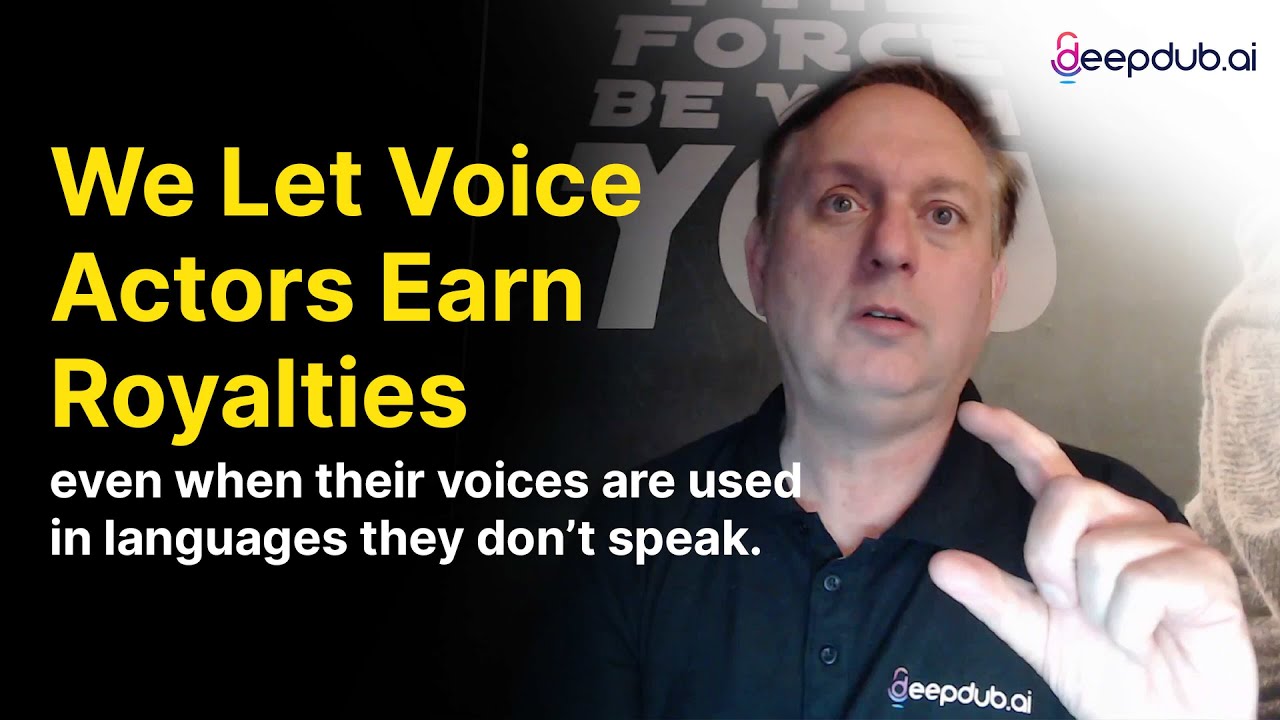
Ofir Krakowski, CEO and Co-Founder of DeepDub, has built an entire pipeline around emotional AI voice technology — one of the first to model not just linguistic accuracy but the emotional register of the original performance. That’s a meaningful technical differentiator. But not every vendor claiming “AI dubbing” has that level of sophistication. Ask to see the pipeline spec sheet, not just a sample reel.
Ofir Krakowski (CEO & Co-Founder, DeepDub) breaks down how emotional AI voice technology is reshaping dubbing evaluation criteria for entertainment buyers:
Evaluating Localization Vendors Across Multiple Territories
Most buyers running a multi-territory slate face a structural choice: one global LSP who handles all languages under one contract, or regional specialists engaged territory by territory. Neither model is inherently better. Both carry specific risks.
The global LSP approach compresses your contracts and simplifies billing. But global providers often subcontract regional languages to smaller studios — studios you haven’t vetted, whose QC standards may not match the parent company’s pitch. Ask specifically: “Who will be doing the actual record for the Turkish and Polish versions?” Get the subcontractor names.
The regional specialist approach gives you deeper expertise per territory and often better cultural adaptation quality. But coordinating 6 or 8 vendors across simultaneous delivery windows is a project management challenge most teams underestimate. You need a dedicated localization coordinator, a shared asset pipeline, and clear escalation paths. Budget for that overhead.
For a full strategic framework on sourcing across territories, see our executive guide to global localization sourcing.
The Fragmentation Paradox™ in Localization Sourcing
Here’s what’s actually happening in vendor discovery. The Fragmentation Paradox™ — Vitrina’s term for the structural information problem in the entertainment supply chain — hits localization harder than almost any other production service category.
There are thousands of dubbing and localization vendors active globally. Most buyers know 5 to 10 names. Those are either the companies they’ve worked with before, the companies with the biggest trade presence, or the names that come up in casual referrals at markets. The other 990+ verified providers? Invisible by default.
This matters because your best-fit vendor for a particular language pair and budget range may not be one of the names you already know. According to the data Vitrina tracks across 140,000+ active supply chain companies, the localization category alone contains hundreds of mid-tier and specialist vendors with strong regional credits and real capacity — but no trade advertising budget to surface themselves to buyers.
Strategic players understand this asymmetry and de-risk their sourcing by deliberately expanding their vendor pool before each commissioning cycle. That’s not extra work — it’s margin protection.
Using Vitrina to De-Risk Your Dubbing Vendor Evaluation
Vitrina tracks dubbing studios and localization service providers across 80+ territories — verified by project history, not self-reported capability claims. When a media company in Australia needed to expand its localization vendor network across Southeast Asia, they used Vitrina to surface 14 qualified vendors in 6 territories within a single research cycle, rather than running 6 separate market inquiries over 3 months.
The platform lets you search by language pair, territory, delivery spec compatibility, and platform experience — and cross-reference against hero projects that are independently verified rather than vendor-declared. It’s the difference between a pitch deck and an actual production track record.
According to Deadline, streaming platforms are accelerating original commissioning in non-English markets, with major players including Netflix, Apple TV+, and Amazon Prime Video all expanding non-English language originals as a percentage of total content spend. That demand pressure makes vendor pre-qualification — done before the brief, not after — a core operational discipline rather than a nice-to-have.
You can also explore how to pre-vet production service vendors in emerging markets using the same Vitrina framework applied to localization sourcing.
Need the Right Dubbing Vendor Now? We’ll Find Them for You.
Vitrina Concierge is your Virtual Agent. We don’t give you a list — we make warm introductions directly to verified localization vendors with confirmed availability for your language pair, budget, and timeline.
- LA producer → Netflix UK, Fifth Season, Fox Entertainment (48 hours)
- Korean animation studio → Netflix Adult Animation (week one)
- Middle Eastern studio → Legendary Pictures (direct access)
Frequently Asked Questions
What should I prioritize when evaluating dubbing and localization vendors?
Start with verified capacity for your specific language pairs and delivery specs. A vendor’s hero project portfolio — independently confirmed, not self-reported — tells you more than their client list. Then QC process, cultural adaptation credentials, and contingency planning. Price comes last in the evaluation, not first. A $15/minute AI dubbing quote that requires full human re-record costs you more than a $90/minute traditional dub delivered clean on day one.
How is AI dubbing different from traditional dubbing in 2026?
The best AI dubbing platforms — including DeepDub and Dubformer — now model emotional prosody, not just linguistic accuracy. Turnaround is significantly faster (days vs. weeks), and cost is 30–60% lower per minute. But platform acceptance varies: some major streamers still require human-performed dubs for premium originals. Always verify platform spec requirements before choosing an AI-led pipeline.
What is the typical cost range for professional dubbing services?
Traditional professional dubbing typically runs $60–$120 per finished minute depending on language pair, adaptation complexity, and mixing requirements. AI-assisted dubbing with human QC overlay runs $15–$45 per minute. Both ranges exclude script adaptation fees, which can add 10–25% to the base cost. Always request an itemized quote against a sample episode, not just a per-minute headline rate.
How do I verify a localization vendor’s track record without a personal referral?
Ask for verifiable project credits — titles you can cross-reference against platform catalogues and trade reports. Vitrina’s platform tracks hero projects and delivery history for thousands of localization vendors globally, independent of what vendors self-report. For markets where you don’t have an existing network, structured database research is faster and more reliable than trade referrals alone.
Should I use one global LSP or multiple regional localization specialists?
It depends on your production structure and internal capacity. A single global LSP simplifies contracts and billing but often subcontracts regional languages — which means you’re not getting the same quality control oversight you negotiated. Regional specialists offer deeper expertise but require coordinated management across simultaneous deliveries. For slate-level commissioning, a hybrid model — one primary vendor for core languages, specialists for complex markets — is often the most effective approach.
What certifications should localization vendors have for major platform deliveries?
For major streaming platform deliveries, look for vendors on the platform’s approved vendor list (Netflix, Amazon, and Apple all maintain these). ISO certification for localization quality management is an additional signal of process maturity. TPN (Trusted Partner Network) certification matters if your content has any security requirements around pre-release assets, which most premium originals do.
How long does a typical dubbing project take from brief to delivery?
For a standard scripted episode (45 minutes runtime, traditional dubbing), budget 3–6 weeks per episode from script lock to final mix, assuming no re-records. For a 10-episode series with parallel language production, experienced vendors can compress this through parallel studio bookings. AI-assisted workflows can cut this to 5–10 days per episode for certain content types, with human review adding 5–7 business days on top.
How can I find dubbing and localization vendors I haven’t worked with before?
Beyond trade market referrals — which reflect the same 5–10 names most buyers already know — structured database platforms like Vitrina track 140,000+ companies including hundreds of verified localization vendors across 80+ territories. You can filter by language pair, platform experience, territory, and project type. VIQI, Vitrina’s AI assistant, can surface a qualified vendor shortlist in minutes, with hero project history verified independently rather than self-reported.
Conclusion: Better Vendor Evaluation Protects Margin and Release Windows
Evaluating dubbing and localization vendors is not a procurement exercise — it’s a risk management decision that directly affects your content’s market performance. The checklist above gives you the criteria that separate reliable partners from costly surprises. Work through it systematically, and you’ll spend less time managing vendor failures and more time hitting windows.
Key Takeaways:
- Market scale demands rigor: The $6.5B localization market is crowded with providers at every quality tier. Structured evaluation — not reputation alone — protects your deliveries.
- Capacity verification is non-negotiable: Ask for current pipeline load and crew rosters, not just language coverage claims. Vendors who can’t answer clearly are overbooked or undersized.
- AI dubbing requires pipeline specification: Not all AI dubbing is equal. DeepDub’s emotional voice modeling, Dubformer’s enterprise pipeline, and generic AI tools are three very different things at very different quality levels.
- The Fragmentation Paradox™ costs you options: The vendors you already know represent a fraction of qualified providers. Systematic discovery expands your competitive pool and compresses per-unit costs over time.
- Pre-qualification before the brief is the discipline: The time to build your vendor shortlist is not when you have a project under contract and a 6-week delivery window. It’s now.
Track What’s Getting Greenlit Before It Hits the Trades
Trusted by Netflix, Warner Bros, and Paramount. Join 140,000+ companies tracking the global entertainment supply chain — including verified dubbing and localization vendors across 80+ territories.
✔ 200 free credits | ✔ No credit card required | ✔ Full platform access
Need direct vendor introductions? Explore Concierge Service →
Find Film+TV Projects, Partners, and Deals – Fast.
VIQI matches you with the right financiers, producers, streamers, and buyers – globally.
Producers Seeking Financing, Co-Pros, or Pre-Buys?
Vitrina Concierge helps producers reach the right financiers, commissioners, distributors, and co-production partners — with precision outreach, not cold pitching.
Join Industry Briefings Trusted by Leaders

Format Adaptations: Global Trends
Where formats are traveling, which adaptations are breaking out, and how streamers are backing remakes in 2025–2026.

Books, Novels & Comics Adaptations: Global Trends
Books, webtoons, and manga driving the next global screen hits. Discover how in this webinar.

Micro-Dramas & Mobile-First Storytelling
Micro-dramas are building real audiences and revenue. Understand the platforms, buyers, and economics behind the growth.

Navigating Global Content Licensing Trends
How global content licensing is shifting beyond flat fees to flexible, deal-driven models.