About Innovation Hub
 Global Content Pulse (Webinars)


 Global Production Financing
(Webinars)
Global Production Financing
(Webinars)  LeaderSpeak Podcast
  About Vitrina
 Our Story
 Our Solutions 🔥
 Film+TV Projects Tracker 🚀
 Case Studies
 Our Profile
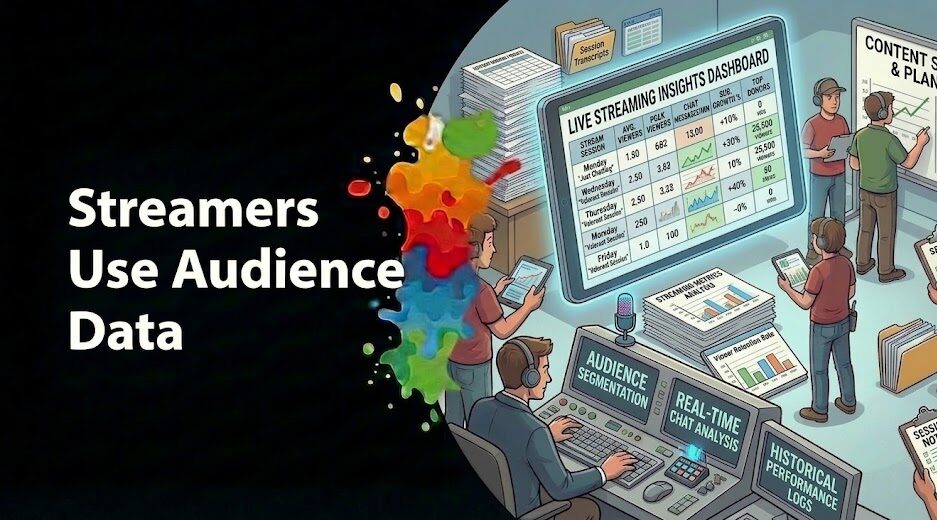
Every commissioning decision at a major streaming platform in 2026 runs through a data layer that didn’t exist five years ago. That’s not an exaggeration. The data stack platforms use today—behavioral signals from hundreds of millions of subscribers, AI-driven content analysis, real-time territory performance tracking—has structurally changed what gets greenlit, what gets passed on, and what makes a project worth its budget at each tier.
But here’s what most coverage misses: the data doesn’t make the decision. People do. What audience data actually does is change who gets to speak in the commissioning room, how arguments get resolved when creative instincts conflict, and which projects clear the internal threshold before the acquisition team even picks up the phone. Understanding that process—not just that data exists—is what gives producers, sellers, and acquisition executives a real edge in 2026.
This guide is about the operational reality of audience data in commissioning. Not the theory. The mechanics—who builds the models, how the data enters the room, where platforms disagree about what the data means, and what it costs you when you’re on the wrong side of the algorithm. Let’s get into it.
Table of Contents
What’s Inside This Guide
- Data vs. Gut: What Actually Changed in Streaming Commissioning
- The Streaming Data Stack: What Platforms Are Actually Measuring
- How Audience Data Enters the Commissioning Room
- Platform by Platform: How the Data Philosophy Differs
- The Regional Reality: Audience Data at Smaller Platforms
- The Tools Platforms Use: Streaming Analytics in Practice
- What This Means for Producers Pitching in a Data-Driven Market
- Where Audience Data Gets Commissioning Wrong
- Frequently Asked Questions
- The Bottom Line
Know What Platforms Are Commissioning—6 Weeks Before the Brief Hits the Market
Vitrina tracks live commissioning signals across 140,000+ companies and 400,000+ projects. Netflix, Amazon, Apple, OSN—see exactly what’s in active demand by genre, territory, and format right now.
Trusted by acquisition executives at Google TV, OSN, and independent production companies across 100+ countries.
Ask VIQI What Streamers Are Buying Now →
No credit card required. 200 free credits to start.
Data vs. Gut: What Actually Changed in Streaming Commissioning
Let’s be honest about the history here. Network television commissioning was never purely intuitive—it ran on focus groups, ratings projections, and advertiser research that was rudimentary by today’s standards. What changed with streaming wasn’t the introduction of data. It was the shift from aggregate audience data collected days or weeks after broadcast to individual behavioral data collected in milliseconds, at the subscriber level, continuously.
That shift is fundamental. When a traditional broadcaster commissioned a new drama, it was working from Nielsen ratings that told it what audiences had watched in the past—not what a specific subscriber did last Tuesday at 9pm, what they searched for afterward, how far into an episode they got before stopping, and whether they came back the next day. Streaming platforms have all of that data. For every piece of content on the platform. Across every subscriber in every territory. Updated in real time.
But the data advantage isn’t uniformly distributed. Netflix has been collecting this behavioral data since 2011. Amazon since 2013. A platform that launched in 2020 has 5 years of behavioral history. One that launched in 2022 has 3. The model gets more accurate with more data—which means the commissioning intelligence advantage at Netflix or Amazon is compounding. The gap between their decision quality and that of newer entrants widens every year, not because of budget but because of data depth.
Phil Hunt, founder and CEO of Head Gear Films—which has financed 550+ films over 25 years—has spoken directly to how this market reality has changed what projects get funded. The data-informed buyers have become risk-averse in ways that make the independent market progressively harder: action, thriller, and horror genres dominate because those are the content types where behavioral data across platforms shows reliable performance signals. Drama and cross-genre projects—where the data signal is murkier—get passed on far more often than their creative quality would justify. The data, in effect, has made the market safer for platforms and harder for producers working outside the high-signal genres.

Your AI Assistant, Agent, and Analyst for the Business of Entertainment
VIQI AI helps you plan content acquisitions, raise production financing, and find and connect with the right partners worldwide.
- Find active co-producers and financiers for scripted projects
- Find equity and gap financing companies in North America
- Find top film financiers in Europe
- Find production houses that can co-produce or finance unscripted series
- I am looking for production partners for a YA drama set in Brazil
- I am looking for producers with proven track record in mid-budget features
- I am looking for Turkish distributors with successful international sales
- I am looking for OTT platforms actively acquiring finished series for the LATAM region
- I am seeking localization companies offer subtitling services in multiple Asian languages
- I am seeking partners in animation production for children's content
- I am seeking USA based post-production companies with sound facilities
- I am seeking VFX partners to composite background images and AI generated content
- Show me recent drama projects available for pre-buy
- Show me Japanese Anime Distributors
- Show me true-crime buyers from Asia
- Show me documentary pre-buyers
- List the top commissioners at the BBC
- List the post-production and VFX decision-makers at Netflix
- List the development leaders at Sony Pictures
- List the scripted programming heads at HBO
- Who is backing animation projects in Europe right now
- Who is Netflix’s top production partners for Sports Docs
- Who is Commissioning factual content in the NORDICS
- Who is acquiring unscripted formats for the North American market
The Streaming Data Stack: What Platforms Are Actually Measuring
Platform commissioning data runs across four distinct layers—and each one feeds into decisions differently.
Layer 1: Behavioral engagement data. This is the primary layer. It captures watch time, episode-to-episode progression, completion rates, pause and rewind behavior, and the time gap between episodes in a series (a strong predictor of series-level commitment). At Netflix, the internal benchmark for a successful series isn’t raw viewing hours—it’s what percentage of subscribers who start the series complete it, weighted by territory. A 68% series completion rate in Brazil and Mexico counts as a stronger signal than 52% in the United States, because Latin America is a high-growth market where Netflix’s subscriber acquisition cost is rising and churn management is a strategic priority.
Layer 2: Discovery and search data. How subscribers find content—whether through the recommendation algorithm, direct search, or external links from social media—tells platforms what’s driving awareness versus what’s generating organic demand. Browse abandonment data is particularly valuable: it shows what subscribers searched for and didn’t find. That gap data is a direct demand brief. If 400,000 subscribers per month search for “crime drama Egypt” and the platform has zero titles matching that query, the acquisition team has a quantified audience size attached to a content category gap.
Layer 3: Subscriber lifecycle data. Platforms model how content interacts with the subscriber’s full lifecycle—acquisition, activation, engagement, retention, and cancellation. The key metric here is “save rate”: did a subscriber who was at churn risk cancel in the 30 days following their engagement with a piece of content, or did they stay? Content that saves subscribers at elevated rates gets flagged as high-retention IP—and those titles drive very different commissioning conversations than content that drives high initial viewership but doesn’t move the churn needle.
Layer 4: External and comparative data. Platforms don’t operate in information vacuums. They monitor publicly available streaming metrics, social sentiment volume around IP categories, book sales that indicate literary IP with pre-existing audiences, and performance data from comparable content on competitive platforms when it surfaces through third-party analytics firms. This external layer helps platforms calibrate their internal models—and it’s where third-party streaming analytics tools create genuine value by aggregating signals that no single platform can generate on its own.
How Audience Data Enters the Commissioning Room
The data stack described above doesn’t walk into a commissioning meeting and make a decision. It gets translated by people at three specific decision points—each of which has a different relationship with the data and a different appetite for what it says.
The Pre-Pitch Filter
Before your project reaches the commissioning executive’s desk, it’s already been through a preliminary data filter. Every acquisition team at a major streamer has a running brief—updated quarterly or semi-annually—that reflects the platform’s current data-driven priority list: which genres are underperforming relative to subscriber demand, which territories are flagged for content investment, and which audience segments are being underserved.
This brief shapes which pitches get taken at all. An acquisition executive who knows their platform’s data team has flagged “unmet demand for South Korean thriller content in MENA” is actively looking for projects that match. A producer who happens to walk in with exactly that project—without knowing the brief exists—either gets lucky or gets passed, depending on whether the project lands in the right week. This is the Data Deficit in action: the information asymmetry between what platforms know about their own demand and what producers know about platform priorities is responsible for a staggering number of avoidable mismatches.
Inside the Greenlight Meeting
At the greenlight stage, the data enters the room formally. Most major platforms require a demand projection alongside the creative and financial case for any project above a defined budget threshold—typically $5M+ at streaming platforms and $15M+ at traditional studios operating hybrid models.
The demand projection includes: estimated reach within defined subscriber segments, projected completion rate based on comparable title benchmarks, expected subscriber save rate impact, and territory-by-territory ROI against the content’s acquisition or production cost. At Netflix and Amazon, these projections are produced by a dedicated data science team that sits separate from the content team—which matters, because it means the data analysis is structurally insulated from the creative enthusiasm that can distort commissioning judgment.
And here’s where the human dynamics get interesting. The creative executive who loves a project and the data scientist who projects its subscriber impact are often in disagreement. A project that reads brilliantly in the room—well-packaged, strong talent, genuine creative vision—might have a data projection that doesn’t hit the threshold for its budget tier. The commissioning conversation at that point becomes a negotiation about whether the creative case justifies a lower ROI projection, whether the budget can be reduced to meet the data threshold, or whether the territory focus can be narrowed to a market where the demand signal is stronger.
This is the negotiation you want to be prepared for. The producer who can engage with the ROI projection—rather than simply making the creative case—is the producer who walks out with a deal.
Renewal and Cancellation Decisions
This is where audience data is most absolute and least negotiable. Renewal decisions at streaming platforms are now driven almost entirely by a combination of completion rate, save rate, and cost-per-engaged-subscriber metrics calculated 30–60 days after a series premiere.
The 30-day window is critical. Most platforms complete their renewal analysis within 30–45 days of a season premiere, before any of the traditional critical response metrics have fully settled. This means a show can receive universally glowing reviews and still get cancelled if its save rate and completion data don’t hit the required threshold. It also means a critically dismissed show can get renewed if its data shows that a specific subscriber segment—say, 45–55-year-old subscribers in Germany—is watching at exceptionally high completion rates and not cancelling afterward.
Andrea Scarso, Managing Partner of IPR VC, has noted in the context of equity investment that understanding the audiences a production company is serving has become “incredibly important”—not just for creative reasons, but because downstream commissioning and renewal decisions now run entirely on whether that audience relationship is real and measurable. A production company that knows its subscriber segment deeply, and can demonstrate that depth with data, is a fundamentally lower-risk partner than one whose creative track record doesn’t translate into quantifiable audience relationships.
Match Your Project to Active Platform Demand—Not Last Quarter’s Wishlist
Vitrina’s Smart Pairing engine maps your project’s content profile against live acquisition signals from 140,000+ global companies—showing you which platforms have data-confirmed demand for your specific content type right now.
Netflix UK connected with target production partners through Vitrina intelligence within 48 hours of deal signals being tracked on the platform.
No credit card required. Cancel anytime.
Platform by Platform: How the Data Philosophy Differs
The four largest commissioning platforms in 2026 use audience data in structurally different ways—and those differences have direct implications for how you pitch to each.
Netflix treats audience data as the primary commissioning filter. Creative intuition can override data signals for projects in a limited “high-risk, high-reward” budget band (typically 2–3 projects per quarter globally), but everything else requires a data projection that meets defined thresholds by budget tier. Netflix’s model is the most mature—10+ years of continuous behavioral data collection—and its commissioning team is the most fluent in speaking data language in pitch conversations. If you’re pitching Netflix, know your comparable content performance data before you walk in.
Amazon Prime Video runs a hybrid model where content ROI is evaluated across the full Amazon basket—not just streaming metrics. This means a project that scores mediocre on completion rate but drives measurably higher Prime membership upgrade rates in a key market (India, Japan, Brazil) can still get greenlit. Amazon’s commissioning conversations are more complex than Netflix’s because the data inputs span multiple business lines. But that complexity creates opportunity: a project that doesn’t fit Netflix’s streaming-only ROI model might fit Amazon’s basket economics perfectly.
Apple TV+ is the outlier. Apple’s commissioning model is built around prestige signal—award recognition, cultural conversation, critical positioning—rather than raw engagement metrics. This doesn’t mean Apple ignores data, but the data signals it cares about are different: device attachment rates correlated with content availability, Apple One bundle retention in the premium subscriber segment, and “awareness lift” (the percentage of non-Apple device owners who become aware of Apple TV+ content through media coverage). If you’re pitching Apple, the ROI story is about brand elevation, not completion rates.
Regional platforms—OSN across 23 MENA countries, Viu across Southeast Asia and the Middle East, JioCinema in India—operate with far more limited first-party behavioral datasets. Their commissioning decisions lean more heavily on cultural and market intelligence than on behavioral modeling. This creates a different pitch dynamic: data fluency matters less than cultural authenticity and demonstrated understanding of the specific regional audience. Rolla Karam at OSN has been clear that Saudi Arabia—representing 60–65% of OSN’s subscriber base—wants US scripted crime, thriller, and drama, Turkish long-form series, and regionally authentic Arabic originals. That brief comes from platform viewing data, but it’s communicated in content terms, not data terms. The acquisition conversation at OSN is a different language than at Netflix.
The Regional Reality: Audience Data at Smaller Platforms
The data asymmetry between global and regional platforms creates one of the most persistent structural challenges in the content supply chain. And it cuts both ways.
Regional platforms don’t have the first-party behavioral datasets to run the same commissioning models as Netflix. But they also don’t have the same commissioning mistake tolerance. Netflix can absorb 30 expensive misses per year because it has 300M subscribers globally and each individual commissioning failure is a rounding error at the portfolio level. A platform with 8M subscribers can’t absorb 5 expensive misses—each one is a material budget event and potentially a subscriber impact event.
This means smaller platforms’ commissioning decisions are simultaneously less data-driven and higher-stakes per decision. They rely more on content genre intelligence (what’s performing on comparable platforms), cultural expertise (what their specific subscriber base responds to, which the algorithm alone can’t decode), and relationship networks that give them visibility into what’s coming from the markets that feed their content pipeline.
You can see how OTT platforms approach content sourcing differently based on their data maturity—the approach at a global platform versus a regional operator is operationally distinct, even when they’re competing for the same content.
For producers targeting regional platforms, the practical implication is this: don’t lead with data arguments you’d use in a Netflix pitch. Lead with content intelligence about what’s working in the genre and market you’re serving, why your specific project fits the platform’s known audience profile, and how your project’s production background demonstrates you understand the territory. That’s the commissioning conversation those platforms need to have.
The Tools Platforms Use: Streaming Analytics in Practice
The platforms themselves aren’t the only ones with data capability. A layer of third-party streaming analytics companies has built tools that provide behavioral and performance intelligence to platforms, production companies, and distributors who don’t have first-party data at scale.
Carol Hanley, CEO of Whip Media, has built a platform specifically for this use case—providing streaming analytics covering royalties, revenue tracking, and audience insights across FAST, SVoD, TVoD, and AVOD models. As Hanley has described, the value proposition is about streamlining content performance reporting for platforms that need to track content ROI across multiple distribution windows simultaneously. A regional broadcaster managing both a linear schedule and an OTT streaming product needs to see how the same piece of content performs across both windows—and that reporting complexity is exactly what streaming analytics platforms are built to handle.
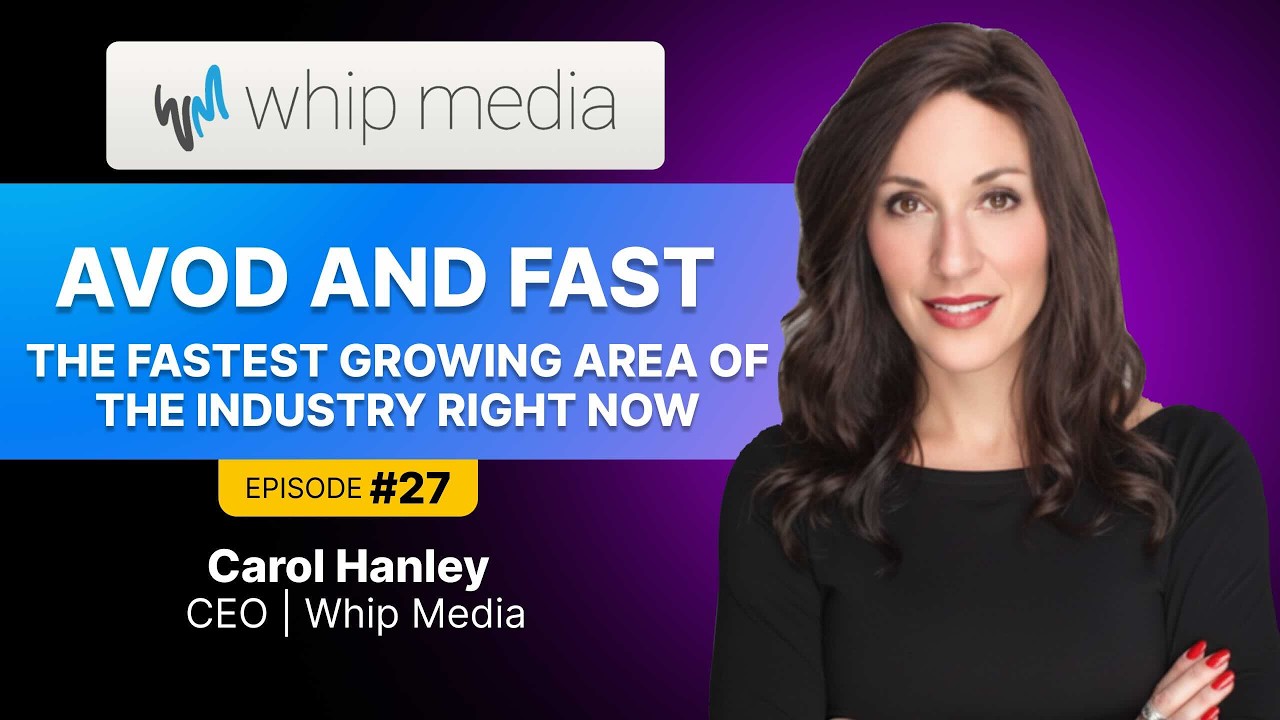
Carol Hanley (CEO, Whip Media) on streaming analytics, audience insights, and how platforms track content performance across FAST, SVoD, and AVoD models. Via Vitrina LeaderSpeak.
Beyond analytics platforms like Whip Media, the commissioning intelligence stack now includes:
Social listening tools that track IP-level conversation volume, sentiment, and cross-platform audience clustering before and after commissioning announcements. Platforms use these to calibrate the external demand signal for specific genres and IP types, particularly for content categories where their own first-party data has limited history.
Parrot Analytics and similar demand measurement services that quantify content “demand expressions”—a composite metric drawing on streaming activity, social media engagement, piracy data, and search volume to create a cross-platform audience demand score. These scores inform acquisition pricing at platforms that compete for the same licensed content windows.
Metadata enrichment platforms that use AI to tag content at granular levels—emotional tone, thematic elements, narrative structure, pacing—enabling platforms to find genuinely comparable content for their demand projections rather than relying on broad genre labels. A “crime drama” tag covers vastly different audience experiences; AI metadata tagging can distinguish a slow-burn psychological thriller from a procedural action series in ways that make the comparable-title analysis meaningfully more accurate.
This tools ecosystem is reshaping content acquisition strategy at platforms of all sizes—bringing data capability to mid-tier operators that couldn’t previously afford to build it in-house.
What This Means for Producers Pitching in a Data-Driven Market
Four direct implications for how you approach commissioning conversations in 2026:
Know the platform’s current data brief before you pitch. Every major platform has a data-informed acquisition priority list. It’s not always published—but it leaks through the patterns of what’s getting greenlit, what’s getting passed on, and what commissioning executives ask about in pitch meetings. Tracking that pattern intelligence—which is what deal intelligence platforms like Vitrina’s are built to do—gives you the context to position your project against current demand rather than last quarter’s wishlist.
Build a comparable content performance case. The data conversation in a commissioning meeting starts with comparable titles. The platform’s data team will run your project against a basket of comparables to generate its demand projection. If you do that analysis first—and bring specific comparable title performance data to the meeting—you’re shaping which comparables get used and how your project gets benchmarked. That’s a meaningful positioning advantage. Letting the platform’s data team choose its own comparables often means the project gets benchmarked against titles with surface-level genre similarity but very different audience dynamics.
Lead with territory over format. Platforms’ most acute audience data-driven needs in 2026 are territorial—specific subscriber segments in specific growth markets are underserved, and the data makes that visible. A project positioned as “a crime drama” is generic. The same project positioned as “a crime drama built for the 25–40 subscriber segment in Saudi Arabia and the GCC, where OSN and Netflix both show rising demand and limited supply in Arabic-language crime content” is a data-informed pitch that speaks to a specific commissioning gap. Territory-first framing connects your project to the demand signal the platform is actually trying to address.
Quantify what “exceptional” actually means for your target buyer. Phil Hunt’s observation—that in today’s market your project has to be “completely exceptional” because there’s no room for anything less—is true. But “exceptional” means different things to different platforms’ data models. At Netflix, exceptional means top-25% completion rate in 2+ priority territories. At Apple, it means critical recognition that drives media coverage above a defined threshold. At OSN, it means same-minute availability for premium Western content and genuine cultural authenticity for Arabic originals. Know what exceptional looks like in your buyer’s data model. Then make the case that your project delivers it.
De-Risk Your Next Commissioning Pitch with Live Acquisition Intelligence
Vitrina Concierge gives you active commissioning priorities by platform, current genre demand signals by territory, and comparative project positioning—6 weeks before any of it becomes public knowledge.
Used by senior content executives tracking 400,000+ projects globally across Netflix, Amazon, Apple, OSN, and 100+ other platforms.
Where Audience Data Gets Commissioning Wrong
The data model has consistent failure modes. Knowing them protects you from both misreading a rejection and from over-trusting data in your own project evaluation.
It confuses discoverability failures with demand failures. A project that didn’t perform on a platform because the recommendation algorithm never surfaced it to the right subscriber segment gets recorded as low-demand content—and that false signal enters the model as evidence against similar future projects. This is particularly damaging for content that serves specific niche audiences who aren’t well-represented in the platform’s dominant subscriber cluster. The data says “low performance.” The correct interpretation is “wrong audience routing.” These look identical from the outside.
It creates genre clustering that self-reinforces. When every major platform’s data model says “action, thriller, horror” are the genres with the strongest audience signal—which is accurate—every platform starts commissioning more action, thriller, and horror. Supply in those genres rises. Performance benchmarks get harder to clear as the market saturates. The data-driven strategy that was defensible when supply was limited becomes actively counterproductive when it’s universally adopted. But each individual platform’s model is still pointing in the same direction because its own behavioral data is confirming the genre’s historical performance on its platform. The system is working correctly and producing a suboptimal collective outcome simultaneously.
It systematically undervalues first-mover content. The biggest performance outliers in streaming history—Squid Game, the true crime documentary genre, K-drama crossover—weren’t predicted by any platform’s demand model because there was no comparable behavioral data to generate the projection from. The data model cannot predict what it has never seen. The commissioning decisions that generate the industry’s biggest wins are almost always the ones made against the data, not with it. Every major platform knows this. And most of them still commission conservatively, because the data model makes conservative decisions easier to defend internally even when they’re strategically wrong.
You can track how streaming platforms’ content preferences are evolving—including where the data-driven consensus is creating the blind spots that generate the next generation of outlier hits.
Frequently Asked Questions About How Streamers Use Audience Data
How do streaming platforms use audience data to make commissioning decisions?
Streaming platforms use audience data across four layers: behavioral engagement data (completion rates, episode-to-episode progression, pause behavior), discovery and search data (including browse abandonment showing what subscribers searched for but didn’t find), subscriber lifecycle data (how content affects churn risk and retention), and external comparative data from third-party analytics. These four layers feed into formal demand projections that are presented at greenlight meetings alongside the creative and financial case, with minimum ROI thresholds by budget tier at most major platforms.
What streaming data does Netflix use to decide what to commission?
Netflix uses completion rate and subscriber save rate as its primary commissioning metrics. Internally, viewing hours are adjusted by subscriber value score (how likely a subscriber is to cancel) and territory strategic priority—meaning performance in high-growth markets like Brazil, Mexico, and India is weighted differently than performance in saturated markets. Netflix also tracks title awareness versus click-through to distinguish marketing failures from content failures, and uses comparable title performance to benchmark demand projections for new projects under consideration.
What is a subscriber save rate in streaming commissioning?
Subscriber save rate measures whether a subscriber who was at elevated churn risk cancelled their subscription in the 30 days following their engagement with a specific piece of content. Content with a high save rate—meaning at-risk subscribers who watched it and then didn’t cancel—is classified as high-retention IP and given preferential treatment in commissioning and renewal decisions. Save rate is often a more important metric than raw viewership because it directly measures the content’s impact on the platform’s revenue retention, not just its audience size.
How does audience data affect series renewal decisions at streaming platforms?
Renewal decisions at major streaming platforms are driven primarily by completion rate, save rate, and cost-per-engaged-subscriber metrics calculated 30–60 days after a season premiere. Most platforms complete their renewal analysis within 30–45 days. A show can receive critical acclaim and still get cancelled if its data doesn’t meet defined thresholds. Conversely, shows with limited critical recognition get renewed if their behavioral data shows strong performance in a specific high-value subscriber segment. The data analysis is typically conducted by a team structurally separate from the content team, insulating it from the creative enthusiasm that can distort judgment.
How do regional streaming platforms like OSN use audience data differently from Netflix?
Regional platforms like OSN—covering 23 countries across MENA—operate with much smaller behavioral datasets than Netflix. Their commissioning decisions rely more on cultural market intelligence and genre performance patterns from comparable platforms than on sophisticated behavioral modeling. OSN’s commissioning priorities, for example, are built around knowledge that Saudi Arabia (60–65% of their subscriber base) responds strongly to US scripted crime, thriller, and drama, Turkish long-form series, and regionally authentic Arabic originals. That brief comes from platform viewing data but is communicated and acted on through content expertise rather than algorithmic modeling.
What third-party tools do streamers use for audience intelligence?
Streaming platforms supplement their first-party data with third-party analytics tools. Whip Media provides performance reporting and audience insights across FAST, SVoD, TVoD, and AVOD platforms, helping operators track content ROI across multiple distribution windows. Parrot Analytics measures cross-platform demand expressions combining streaming activity, social engagement, and search volume. Social listening tools track IP-level conversation and sentiment before and after commissioning announcements. AI-powered metadata enrichment platforms tag content at granular emotional and thematic levels to enable more precise comparable-title analysis.
How should producers adjust their pitches to account for data-driven commissioning?
Producers should lead with territory-specific demand framing rather than broad audience appeal claims—positioning a project against a specific platform’s known subscriber gap is more effective than general audience size arguments. Bringing comparable title performance data to the meeting allows producers to shape which benchmarks get used in the platform’s demand projection. And understanding that “exceptional” means different things to different platforms’ data models—completion rate at Netflix, device attachment at Apple, cultural authenticity at regional platforms—lets producers frame their project’s value proposition in language that resonates with each buyer’s actual commissioning criteria.
Why do streamers sometimes pass on projects that performed well on other platforms?
A project’s performance on one platform doesn’t automatically translate to another because demand projections are platform-specific—built around each platform’s subscriber population, territory priorities, and ROI thresholds. A show that excelled on one platform by filling a gap in that platform’s subscriber base may not fill an equivalent gap on a platform with different audience demographics. Budget tier thresholds also vary: a project may have genuine audience demand but fail to meet the subscriber impact required to justify its specific budget level on a different platform’s commissioning model.
The Bottom Line
Audience data has changed the commissioning room permanently. Not by replacing human judgment—but by changing who has the most credible voice when that judgment is exercised. The data scientist’s projection now sits at the table with the creative executive’s enthusiasm, and the most successful pitches are the ones that engage both rather than talking past one.
The producers who navigate this market best in 2026 aren’t the ones with the best scripts. They’re the ones who understand which data signals their target platform is optimizing against—and who build the case for their project in those terms, with comparable content intelligence that positions them on the right side of the demand model before the meeting starts.
Key points that matter most:
- Completion rate and subscriber save rate—not viewing hours—are the metrics that drive most commissioning and renewal decisions at subscription platforms
- Browse abandonment data is a demand brief: it tells platforms exactly what audiences want and can’t find
- The 30–45 day post-premiere window is when renewal data is collected—critical reception doesn’t move that decision
- Regional platforms use audience data differently from global ones—cultural expertise matters more than algorithmic modeling in these conversations
- The data model systematically undervalues novelty, conflates discoverability failures with demand failures, and creates genre clustering that becomes counterproductive at scale
- Producers who bring external comparable content data to commissioning meetings shape the benchmarking conversation rather than being subject to it
Get the Commissioning Intelligence Platforms Have—Without Being Inside One
Vitrina tracks 400,000+ active projects and 140,000+ companies—including active commissioning demand signals across every major platform simultaneously.
Netflix. Amazon. Apple. OSN. Viu. Know what they’re commissioning, what data drives each decision, and where the demand gaps are—6 weeks before any of it reaches the trades.
No credit card required. Cancel anytime.
Find Film+TV Projects, Partners, and Deals – Fast.
VIQI matches you with the right financiers, producers, streamers, and buyers – globally.
Producers Seeking Financing, Co-Pros, or Pre-Buys?
Vitrina Concierge helps producers reach the right financiers, commissioners, distributors, and co-production partners — with precision outreach, not cold pitching.
Join Industry Briefings Trusted by Leaders
Format Adaptations: Global Trends
Where formats are traveling, which adaptations are breaking out, and how streamers are backing remakes in 2025–2026.

Books, Novels & Comics Adaptations: Global Trends
Books, webtoons, and manga driving the next global screen hits. Discover how in this webinar.

Micro-Dramas & Mobile-First Storytelling
Micro-dramas are building real audiences and revenue. Understand the platforms, buyers, and economics behind the growth.

Navigating Global Content Licensing Trends
How global content licensing is shifting beyond flat fees to flexible, deal-driven models.