About Innovation Hub
 Global Content Pulse (Webinars)


 Global Production Financing
(Webinars)
Global Production Financing
(Webinars)  LeaderSpeak Podcast
  Global Entertainment Digest (Newsletter)
  About Vitrina
 About VIQI
 Our Story
 Our Solutions 🔥
 Film+TV Projects Tracker 🚀
 Case Studies
 Our Profile
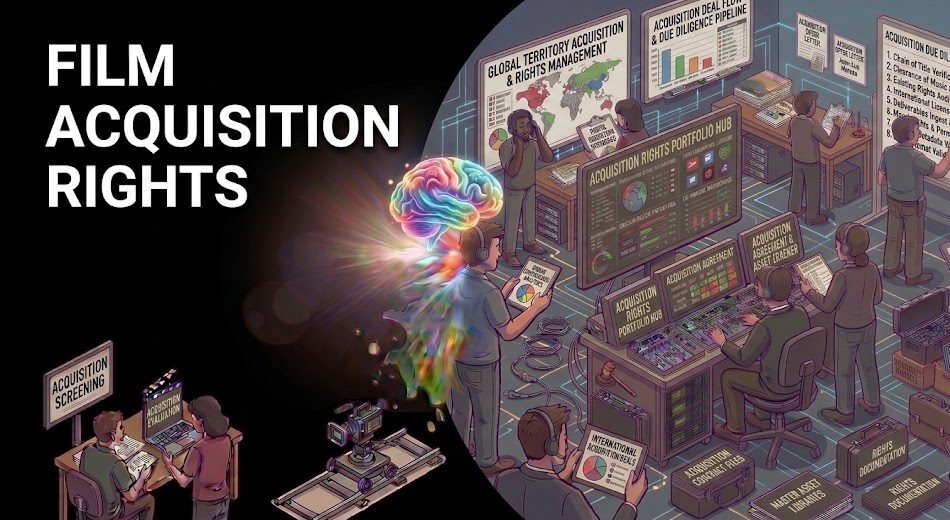
Negotiating film acquisition rights for a small theater isn’t just paperwork—it’s the difference between a profitable programming calendar and a legal exposure you didn’t see coming. Small and independent exhibitors sit in a structurally awkward spot in the rights chain.
You’re not a multiplex with a studio output deal, and you’re not a streaming platform with a $17B content budget. But you need the same foundational licensing agreements that govern every commercial theatrical screening in the world. And you need to negotiate them without the leverage that the big chains bring to the table.
Here’s the thing: leverage isn’t only about size. It’s about intelligence. Knowing who actually controls the rights you need—the distributor, the sales agent, or the rights holder directly—and understanding what deal structure they’ll actually accept for a small venue is where most exhibitors fall short. This guide breaks it down step by step. Use it before you contact a single distributor.
Ask VIQI: Who Holds the Theatrical Rights to the Film You Want to Screen?
VIQI is Vitrina’s AI assistant—trained on 1.6 million titles, 360,000 companies, and 5 million entertainment professionals. Find the right rights holder, contact the right person, and go into your negotiation knowing exactly who you’re dealing with.
✔ Included with 200 free credits | ✔ No credit card needed
Step 1: Understand Who Actually Controls the Rights
Before you negotiate anything, you need to know who you’re negotiating with. And the answer isn’t always obvious. For most theatrical releases, the chain works like this: the producer creates the film, attaches a sales agent, who then licenses territorial theatrical rights to a distributor in your market. That distributor—not the studio, not the producer—is the entity you need to call.
But what happens with independent films that skipped wide theatrical? Or foreign-language films acquired by a small arthouse distributor? Or films that premiered at festivals but haven’t been picked up for commercial distribution at all? In those cases, rights may sit directly with the producer, a sales agent, or an international rights holder. As we break down in our guide to how film acquisition deals work, the rights chain varies enormously by film type, budget tier, and release strategy.
Three common scenarios you’ll encounter as a small exhibitor:
- Studio-backed titles: Go through the studio’s theatrical licensing arm directly (Universal Pictures Content Group, Sony Pictures Releasing, etc.).
- Indie films with distribution: Contact the domestic distributor—companies like A24, Neon, Oscilloscope Laboratories, or Music Box Films for arthouse fare.
- Festival films without US distribution: Reach the international sales agent who packages the film. They control theatrical rights by territory and can license directly to exhibitors.
Don’t waste time chasing the wrong party. Identify the rights holder first—then make contact.

Your AI Assistant, Agent, and Analyst for the Business of Entertainment
VIQI AI helps you plan content acquisitions, raise production financing, and find and connect with the right partners worldwide.
- Find active co-producers and financiers for scripted projects
- Find equity and gap financing companies in North America
- Find top film financiers in Europe
- Find production houses that can co-produce or finance unscripted series
- I am looking for production partners for a YA drama set in Brazil
- I am looking for producers with proven track record in mid-budget features
- I am looking for Turkish distributors with successful international sales
- I am looking for OTT platforms actively acquiring finished series for the LATAM region
- I am seeking localization companies offer subtitling services in multiple Asian languages
- I am seeking partners in animation production for children's content
- I am seeking USA based post-production companies with sound facilities
- I am seeking VFX partners to composite background images and AI generated content
- Show me recent drama projects available for pre-buy
- Show me Japanese Anime Distributors
- Show me true-crime buyers from Asia
- Show me documentary pre-buyers
- List the top commissioners at the BBC
- List the post-production and VFX decision-makers at Netflix
- List the development leaders at Sony Pictures
- List the scripted programming heads at HBO
- Who is backing animation projects in Europe right now
- Who is Netflix’s top production partners for Sports Docs
- Who is Commissioning factual content in the NORDICS
- Who is acquiring unscripted formats for the North American market
Step 2: Know the Three Deal Structures Available to Small Exhibitors
Not all film acquisition rights negotiations work the same way. For small theaters, three deal structures dominate. Understanding which one applies—and which to push for—is the first real leverage point you have.
Flat-Fee Licensing
You pay a fixed amount for the right to screen a film for a defined period—typically 1–4 weeks, sometimes a single event screening. This is the cleanest structure for small venues. You know your cost upfront, there’s no box office reporting obligation, and the rights holder gets guaranteed revenue regardless of your attendance. Expect flat fees to range from $200–$2,000 per screening window for indie titles, more for studio catalog films. Non-exclusive licenses (same film, multiple venues) are far cheaper than exclusive territorial locks.
Revenue Share (Box Office Split)
The traditional model for theatrical distribution. You split gross box office receipts with the distributor—typically 50/50 to 65/35 in the distributor’s favor during the opening window, shifting toward the exhibitor over subsequent weeks. This is standard for studio runs. But here’s the practical problem for small theaters: distributors set weekly reporting requirements and often enforce minimum performance clauses. If your gross falls below a threshold in a given week, the distributor can yank the print. Negotiate those floors aggressively—or push for a flat-fee structure if your audience size is unpredictable.
Per-Screening License
Increasingly common for event screenings and community cinema operators. You pay a set fee per individual screening—sometimes as low as $50–$300 for short-run arthouse or documentary titles through platforms like Oscilloscope’s Community Screenings program or institutions via Criterion’s non-theatrical licensing. This is your lowest-risk entry point. It’s also where the clearest documentation matters most—rights are scoped by specific dates, venues, and screening counts, not open-ended licenses.
Discover Films Available for Small Theater Licensing Right Now
Trusted by Netflix, Warner Bros, and Paramount. Join 140,000+ companies on Vitrina—track which films are in distribution, who holds theatrical rights by territory, and which titles are actively seeking exhibitors.
✔ 200 free credits | ✔ No credit card required | ✔ Full platform access
Step 3: Time Your Approach Around the Theatrical Window
Theatrical rights don’t exist in isolation. They sit within a window structure that determines when a film can be legally shown in cinemas versus digital, home video, or streaming platforms. As Phil Hunt, Founder & CEO of Head Gear Films—one of the UK’s most prolific independent film financiers with 550+ films to his credit—explains in the Vitrina LeaderSpeak series, distributors “piecemeal” films into windows: theatrical first, then pay-one streaming (SVOD), then transactional (TVOD), then free ad-supported platforms.
Why does this matter for your negotiation? Because the theatrical window is time-sensitive and exclusive—meaning no streaming version should be available to your audience during your run. That exclusivity is real leverage. If you’re the only legal way to see the film in your market right now, the rights holder benefits from your programming as much as you do.
Standard theatrical windows in 2025-2026:
- Major studio titles: 45-day exclusive theatrical window before streaming (down from 90 days pre-pandemic).
- Independent films: More variable—often 30-90 days depending on distributor and streaming deal in place.
- Film festival titles without distribution: No defined window yet—negotiate directly and lock in your screening window before they sign a streaming deal.
Don’t program a film that’s already on Netflix. That’s not an exhibitor’s rights violation—it’s just an empty auditorium.
Step 4: The Contract Terms That Actually Matter
Most small theater operators focus on the fee. That’s a mistake. The contract structure around the fee determines whether you’re exposed to claims, holdovers, or unexpected costs that wipe out your margin. Here are the terms worth fighting for—and the ones where you can afford to concede.
Terms to Fight For
- Defined territory and exclusivity scope: Insist on language specifying your geographic territory and whether the license is exclusive for your market. Without this, the distributor can license to another venue two miles away during your run.
- DCP delivery terms and costs: Digital Cinema Package (DCP) delivery can cost $500–$1,500 per title depending on the format. Clarify in writing who bears this cost—you or the distributor. Small venues lose margin here constantly.
- KDM (Key Delivery Message) windows: DCPs are encrypted. The KDM that unlocks the file must cover your full screening period. Get this confirmed in writing before you print tickets. A KDM expiring mid-run is a real problem.
- Marketing materials access: Trailers, stills, and press kits should be included. Many small exhibitors don’t ask—and end up with nothing to promote with.
- Cancellation terms: If the distributor’s national release is pulled (not uncommon with independent films), what recourse do you have? Build in a cancellation clause with adequate notice requirements.
Terms to Concede Strategically
- Revenue reporting frequency: Weekly reporting is standard—don’t fight it. It’s a low-burden requirement and non-compliance risks your exhibitor relationship.
- Opening-week split: On studio titles, the distributor’s opening-week take is non-negotiable. Put your energy into the back-half terms instead.
- Minimum screening commitments: If they require 3 screenings per day, either you can meet that or you can’t. Be honest—overcommitting and underperforming damages your standing for future negotiations.
Phil Hunt (Founder & CEO, Head Gear Films) explains how theatrical distribution actually works for independent films—and why the revenue windows have fundamentally changed what exhibitors can expect from indie titles:

Step 5: Where to Source Films Worth Licensing
You can’t negotiate acquisition rights until you know what’s available. And the options for small theaters have expanded significantly in recent years—in ways that most exhibitors haven’t fully mapped.
Your sourcing channels, ranked by accessibility for small venues:
- Film festival catalogs: Sundance, TIFF, Tribeca, and SXSW all publish acquisition titles. Films that screened but didn’t get wide distribution are often available for limited theatrical licensing at modest rates. Some producers actively seek small-venue runs to build awards eligibility or audience.
- Non-theatrical licensing platforms: Swank Motion Pictures and Criterion Pictures serve the institutional and community cinema market specifically. Their catalogs include studio libraries, classics, and indie fare with streamlined licensing for non-commercial or limited-commercial venues.
- Film sales agent slates: Sales agents representing independent films in the festival circuit are often looking for theatrical exposure. A small-venue run in your city can help them build the release pattern that justifies a wider distribution deal. As we cover in our guide to film acquisition catalogs and festivals, this is one of the most underused channels for independent exhibitors.
- Foreign-language distributors: If your market has an underserved community audience, foreign-language rights holders are often the easiest to negotiate with. According to Variety, the foreign-language theatrical market in the US has grown steadily, driven by demand from diaspora communities and arthouse audiences—creating licensing opportunities that larger chains often overlook.
- Direct producer outreach: For truly independent films without any distribution attached, go straight to the producer. The deal is simpler—often just a flat-fee license agreement—and the producer typically values any theatrical exposure they can get.
Step 6: Legal Due Diligence Before You Sign Anything
This is where small theater operators get burned. Licensing a film from a party who doesn’t actually control the rights—or whose chain of title has problems—can expose you to copyright infringement claims that have nothing to do with your good faith negotiation. Three checks you must run before any film acquisition rights agreement is signed.
Chain of title verification: The party you’re licensing from must demonstrably hold the territorial theatrical rights you need. Ask for documentation. A legitimate distributor can provide their license agreement with the producer or sales agent—or at minimum a letter of authorization. If they can’t produce documentation, walk away.
Music rights: Often overlooked by small exhibitors. Films sometimes contain music cues for which the theatrical synchronization and performance rights haven’t been properly cleared for small-venue exhibition. This is an E&O (errors and omissions) issue that sits with the rights holder, but you want a representation warranty in your contract that all music rights are cleared for theatrical exhibition in your territory.
Screening format clearance: Are you licensed to screen the DCP, the Blu-ray, or both? Some small-venue licenses are format-specific. Showing a commercially purchased Blu-ray in a paid-admission public screening is a copyright violation, even if you’ve separately licensed the title. The license must cover your specific exhibition format. For a deeper look at how these contractual terms are structured, our guide to film acquisition contract legal considerations walks through the key clauses in detail.
Step 7: Build Distributor Relationships That Get You Better Terms Next Time
Here’s the reality of film acquisition rights negotiation for small venues: the first deal is always the hardest. But it’s also the most important—not because of what you pay, but because of the relationship it starts. Distributors work with exhibitors they trust. They hold titles for venues with a track record of performing. They send DCPs early. They extend favorable terms. None of that happens on deal one.
Three ways to accelerate the relationship-building process:
- Report accurately and on time. Box office reporting errors—even minor ones—flag you as an unreliable partner. Distributors track this. Consistent, clean reporting is worth more than a better split on one deal.
- Provide audience data. If you can share post-screening audience demographic data or Q&A feedback from filmmaker events, distributors see value beyond the box office split. You’re giving them market intelligence they don’t get from multiplexes.
- Program strategically, not opportunistically. Don’t license every title that comes across your desk. Specialized venues with a clear programming identity—arthouse, documentary, foreign-language, genre—attract distributors seeking curated audience exposure for their titles. As noted in our dedicated guide to negotiating film rights for small theaters, the most favorable licensing terms go to exhibitors who understand the distributor’s goals, not just their own.
But don’t wait for relationships to build organically if you need to accelerate your programming pipeline. According to Screen International, the most active independent exhibitors now use intelligence platforms to identify which films are entering distribution in their territory months in advance—enabling outreach before the title is fully placed and before competing venues get in the conversation. That’s the intelligence edge that levels the playing field with larger chains.
Need Help Connecting With the Right Rights Holders?
Vitrina Concierge is your Virtual Agent. We don’t give you a list of companies—we make warm introductions directly to the decision-makers who control the theatrical rights you need.
- LA producer → Netflix UK, Fifth Season, Fox Entertainment (48 hours)
- Korean animation studio → Netflix Adult Animation (week one)
- Middle Eastern studio → Legendary Pictures (direct access)
Frequently Asked Questions
How much does it cost to license a film for a small theater?
Costs vary widely by deal structure and film type. Flat-fee licenses for independent or foreign-language titles typically range from $200–$2,000 per screening window. Per-screening licenses through platforms like Swank or Criterion can be as low as $50–$300 for documentary and arthouse titles. Studio films on revenue-share deals typically split box office 50/50 to 65/35 in the distributor’s favor during the opening window, with terms shifting toward the exhibitor in subsequent weeks. DCP delivery costs ($500–$1,500) are an additional expense often not included in the base license fee—clarify this before signing.
What is a theatrical window and why does it matter for small theaters?
A theatrical window is the exclusive period during which a film can only be seen in cinemas—before it becomes available on streaming, home video, or other platforms. Major studio titles typically have a 45-day exclusive theatrical window (shortened from 90 days post-pandemic). Independent films vary between 30–90 days. For small theater operators, the window matters because it defines your audience’s exclusive access point. Once a film hits Netflix or SVOD, theatrical demand drops sharply. Know the window status of any title before you commit to a licensing term.
Can a small theater screen films directly from a Blu-ray or DVD?
No—not for paid-admission public screenings without a separate public performance license. A consumer Blu-ray or DVD purchase grants home-viewing rights only. Screening a commercially purchased copy in a public venue with ticket sales is a copyright violation, regardless of what you paid for the disc. You need a specifically negotiated theatrical exhibition license that covers your exact venue, format, screening dates, and admission structure. Platforms like Swank Motion Pictures, Criterion Pictures, and Kino Lorber Theatrical exist specifically to provide these licenses for institutional and independent exhibitors.
Who do I contact to acquire theatrical rights to an independent film?
It depends on the film’s distribution status. If the film has a US distributor, contact their theatrical booking department directly. For films without US distribution—such as recent festival titles or foreign-language films—the rights holder is typically the international sales agent who packages the project. They control territory-by-territory theatrical rights and can license directly to exhibitors. For fully independent productions with no sales agent attached, reach the producer directly. Identifying the correct party is the critical first step—licensing from a party who doesn’t hold the relevant rights exposes you to legal risk regardless of what you pay.
What is a KDM and why do small theaters need to negotiate it carefully?
A KDM (Key Delivery Message) is the encrypted digital key that unlocks a DCP (Digital Cinema Package) for playback on a specific server. KDMs are time-limited—they have a defined validity window tied to your exhibition dates. If your KDM expires before your final scheduled screening, the DCP will not play. For small theaters negotiating film acquisition rights, it’s critical to confirm in writing that the KDM delivery window covers your complete screening period—plus a buffer of at least 24 hours on each end. Receiving an expired or incorrectly scoped KDM day-of is one of the most common operational failures in independent exhibition.
What does a minimum guarantee (MG) mean in film distribution, and does it apply to small theaters?
A Minimum Guarantee (MG) is a fixed upfront payment a distributor commits to paying a rights holder for a territory—typically in exchange for exclusive distribution rights over a multi-year license period (usually 15–20 years). MGs are primarily relevant at the distributor level, not the exhibitor level. As a small theater operator, you’re not typically paying MGs—you’re paying licensing fees or revenue shares for specific screening windows. But understanding how MGs work upstream tells you something important: distributors who paid a significant MG for a title have financial pressure to maximize theatrical exposure. That pressure is your negotiating advantage when approaching them for a venue run.
Conclusion: Negotiation Is Intelligence Work First
The small theater operators who consistently get better film acquisition rights deals aren’t the ones who negotiate hardest at the table—they’re the ones who show up to the table knowing exactly who controls what, what the rights chain looks like, and why the distributor needs them as much as they need the film. That’s not a size advantage. It’s an intelligence advantage. And it’s available to any exhibitor willing to do the homework before picking up the phone.
Key Takeaways:
- Identify the Rights Holder First: Studio, distributor, sales agent, or producer—get this wrong and your license is worthless regardless of what you pay.
- Three Deal Structures Exist: Flat-fee, revenue share, and per-screening licenses each suit different venue types—flat-fee and per-screening are usually the right fit for small exhibitors.
- The Theatrical Window Is Your Leverage: A 45-day exclusive window for studio titles means you’re the only legal viewing option. Use that.
- KDM and DCP Terms Are Non-Negotiable Checklist Items: Confirm delivery costs, KDM validity windows, and format specifications in writing before signing anything.
- Relationships Compound: Every clean reporting cycle and accurately delivered screening builds the relationship capital that gets you earlier access, better splits, and preferred titles on your next deal.
The independent exhibition space is tighter than it’s been in years—Phil Hunt put it bluntly: “The whole industry has become much, much harder in terms of getting movies off the ground and getting movies sold.” But the same market contraction that’s squeezing distributors creates opportunities for small venues with smart programming and real relationships. Go find them.
Find Which Films Are Available for Theatrical Licensing
Join 140,000+ companies on Vitrina. 200 free credits. No credit card required.
Ask VIQI: Who Holds Theatrical Rights to This Film Right Now?
Trained on 1.6M titles and 360,000 companies. Get your answer in seconds.
Find Film+TV Projects, Partners, and Deals – Fast.
VIQI matches you with the right financiers, producers, streamers, and buyers – globally.
Producers Seeking Financing, Co-Pros, or Pre-Buys?
Vitrina Concierge helps producers reach the right financiers, commissioners, distributors, and co-production partners — with precision outreach, not cold pitching.
Join Industry Briefings Trusted by Leaders

Format Adaptations: Global Trends
Where formats are traveling, which adaptations are breaking out, and how streamers are backing remakes in 2025–2026.

Books, Novels & Comics Adaptations: Global Trends
Books, webtoons, and manga driving the next global screen hits. Discover how in this webinar.

Micro-Dramas & Mobile-First Storytelling
Micro-dramas are building real audiences and revenue. Understand the platforms, buyers, and economics behind the growth.

Navigating Global Content Licensing Trends
How global content licensing is shifting beyond flat fees to flexible, deal-driven models.