About Innovation Hub
 Global Content Pulse (Webinars)


 Global Production Financing
(Webinars)
Global Production Financing
(Webinars)  LeaderSpeak Podcast
  Global Entertainment Digest (Newsletter)
  About Vitrina
 About VIQI
 Our Story
 Our Solutions 🔥
 Film+TV Projects Tracker 🚀
 Case Studies
 Our Profile
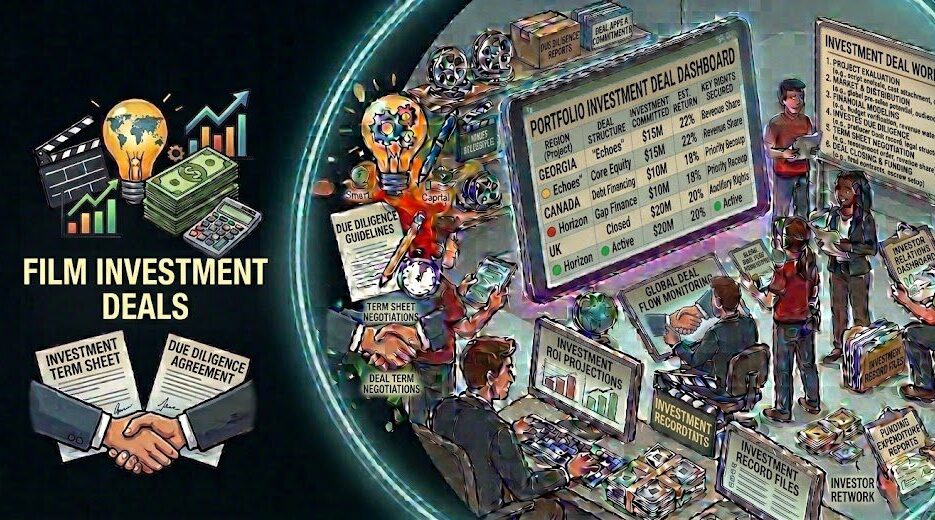
Legal documents for film investment deals are not interchangeable boilerplate — each one performs a specific structural function in the capital stack. Miss one, and you don’t just have a paperwork problem. You have an unfinanceable project, an uninsurable production, or an investor dispute that surfaces at the worst possible moment — usually after you’ve already committed to a start date.
Here’s what most guides leave out: film investment documentation isn’t a single stack of contracts you sign at closing. It’s a layered system — some documents establish the legal entity, some protect the investor’s capital position, some convert rights into bankable collateral, and some govern how every dollar flows from distribution back to the waterfall. Each layer depends on the one beneath it. Your lender won’t advance without a completion bond. Your completion bond company won’t underwrite without clean chain of title. Your presale distributor won’t sign a notice of assignment without confirmed financing. It all connects.
This guide breaks down the 9 essential legal documents you need to close a film investment deal — what each one does, why it matters structurally, and the specific risks it mitigates. Whether you’re bringing in equity through a private placement, structuring debt against presales, or managing a multi-party co-financing arrangement, these are the instruments that make your deal executable. For context on how these documents fit into the broader financing architecture, our film capital stack guide is the right starting point before diving into deal documentation.
In This Guide
Ask VIQI: Which Investors Are Actively Closing Film Deals Right Now?
VIQI is Vitrina’s AI assistant — trained on 1.6 million titles, 360,000+ companies, and 5 million entertainment professionals. Get intelligence on active equity and debt investors before you structure your deal documents.
✓ 200 free credits included | ✓ No credit card required
1. Chain of Title Documents — The Foundation Everything Else Sits On
Chain of title is the unbroken documentary record proving that your production company actually owns — or has the legal right to produce — the intellectual property at the center of your film. Without clean chain of title, nothing else in your legal stack works. Your completion bond is uninsurable. Your errors and omissions (E&O) insurance won’t issue. Your distribution agreements are legally challengeable. And your investors have no security over an asset the producer can’t conclusively prove they own.
Chain of title documentation typically includes an option agreement or outright purchase agreement for the underlying rights (source novel, true story, spec script, IP); all assignment agreements transferring rights from writer to production company; work-for-hire agreements for any writers engaged during development; copyright registration with the US Copyright Office or equivalent; WGA registration where applicable; and the production company’s own corporate formation documents proving it legally exists and can hold rights.
The most common chain of title failure isn’t outright fraud — it’s gaps. A writer sells rights to a producer, the producer assigns to an LLC, but the assignment agreement was never properly executed or recorded. The gap is invisible until someone pulls the thread — usually your E&O insurer, who declines to issue, or your distributor’s legal team, who flags it during delivery. By that point you’ve wrapped production and the cost of retroactively clearing title is enormous. You clear chain of title before your first investor signs, not after your last day of shooting. For a deeper look at what this involves in acquisition contexts, our guide to film acquisition contract legal considerations covers the specific clauses that create exposure.
2. Operating Agreement — The Document That Defines Who Controls What
Most film productions are structured as single-purpose LLCs — a limited liability company created specifically for the project, holding all rights, contracts, and assets related to that one film. The operating agreement is the governing document of that LLC. It defines who owns what percentage, who has decision-making authority over what categories of decisions, how profits are distributed, and under what conditions investors can exercise rights over the production.
For investors, the operating agreement is where the real terms live — not the pitch deck. The waterfall structure (who gets paid in what order and at what rate) must be spelled out here explicitly. Typical equity investor terms include a liquidation preference of 120–125% of invested capital — meaning the investor recoups their principal plus a 20–25% return before the producer sees any profit participation. The operating agreement also defines the investor’s decision-making rights: do they approve budget overruns above a certain threshold? Do they have approval over distribution deal terms? Can they block a creative decision that materially affects market value?
And here’s where deals blow up: producers often draft operating agreements that look investor-friendly on the surface but contain management rights clauses that effectively give the producer full unilateral control. Sophisticated investors — family offices, institutional funds, PE firms — will push back hard on this. Andrea Scarso, Managing Partner at IPR VC, which has co-financed projects alongside A24 and Red Bull Media, notes that the quality of how a deal is structured legally matters as much as the underlying project. His view — that the challenge in entertainment investing isn’t deal flow but the quality and structure of the investment — is exactly the insight your operating agreement needs to reflect. Draft it to hold up under institutional scrutiny from day one.
Stop Guessing Who’s Financing. Get Targeted Outreach.
Stop searching and start getting funded. We identify the exact decision-makers currently backing projects like yours, turning raw data into risk-aligned capital partnerships.
Major Studios
Scouting early stage projects, IP, and Regional partners for global studio pipelines.
IP Owners & Leads
Connecting creative leads with qualified financiers and major streaming platforms.
Streamers
Securing high-value pre-buy content and discovering early-stage global IP for platforms.
Indie Producers
Bridging the gap for indie filmmakers to reach executive production partners and capital.
Global Financing Ecosystems
Mapping complex markets and pairing projects with disciplined, risk-aligned capital across global territories worldwide.
3. Private Placement Memorandum — Your Securities Disclosure Shield
The moment you offer equity in your film to investors in exchange for money, you’re most likely issuing securities under US federal and state law. The Private Placement Memorandum (PPM) — also called an offering memorandum — is the disclosure document that satisfies your legal obligation to inform investors of the material risks of their investment before they commit capital. It’s not optional. Raising equity in a film production without a PPM isn’t just a bad practice — in most jurisdictions it’s a securities violation that can result in mandatory rescission rights for investors and personal liability for the producer.
The PPM contains the full description of the offering: how much you’re raising, at what valuation, on what terms. It documents the risk factors — and for film, these are substantial. The majority of films don’t recoup. Markets shift between greenlight and release. Key talent can drop out. Distribution may underperform projections. Every material risk must be disclosed explicitly, not buried in boilerplate. It also contains the proposed use of proceeds (your budget), financial projections with conservative and optimistic scenarios, biographical information on the principals, and the complete waterfall structure defining recoupment order.
For US-based offerings, you’ll most likely structure under Regulation D Rule 506(b) or 506(c) — which exempts the offering from SEC registration but limits it to accredited investors (and up to 35 non-accredited sophisticated investors under 506(b)). The PPM is what establishes that your offering qualifies for the exemption. Don’t improvise this document with a template — the specific disclosures required vary by state, and a PPM drafted for a California offering may have gaps that create liability if you’re also raising from New York investors.
Find Active Film Investors — Before Your Deal Documents Are Even Ready
Trusted by Netflix, Warner Bros, Paramount, and Google TV. Join 140,000+ companies tracking active film investment activity across 100 markets.
✓ 200 free credits | ✓ No credit card required | ✓ Full platform access
4. Subscription Agreement — How Investors Actually Commit Capital
The PPM describes the offering. The subscription agreement is the document each investor signs to accept it. It’s the legal mechanism by which capital moves from investor to production entity — and it contains the investor’s representations and warranties that they qualify for the offering (accredited status, understanding of risks, no reliance on promises not contained in the PPM).
Don’t underestimate this document. The subscription agreement is your primary defense if an investor later claims they were misled, didn’t understand the risks, or weren’t properly qualified. Their executed subscription agreement — confirming they received and reviewed the PPM, confirming accredited status, confirming they understand the investment is illiquid and speculative — is the evidentiary record that protects the producer from rescission claims years later when the film hasn’t performed as hoped.
The subscription agreement also typically contains the closing conditions: how much total capital must be committed before funds are released from escrow, what happens if the offering doesn’t reach its minimum threshold, and the timeline for closing. For productions with multiple equity tranches — a common structure where institutional investors come in at different stages — you’ll need subscription agreements drafted to reflect each tranche’s specific terms, position in the waterfall, and rights.
Find the Financiers Backing Your Genre
Stop searching and start getting funded. We identify the exact decision-makers currently backing projects like yours, turning raw data into risk-aligned capital partnerships.
5. Completion Bond — The Document That Makes Your Financing Bankable
A completion bond (also called a completion guarantee) is an insurance contract issued by a bond company guaranteeing that your film will be completed on budget and delivered to specifications on time — or the bond company will fund the overrun, step in to complete production themselves, or repay the lender’s loan in full. It costs 3–6% of the production budget and it’s essentially non-negotiable for any production seeking gap financing, presale-backed bank loans, or institutional debt.
Joshua Harris, President and Managing Partner of Peachtree Media Partners — a film finance lender that has deployed capital across the content creation market since City National Bank’s retreat created the current financing gap — describes the completion bond as one layer of a triple-protection structure: the bond company underwrites the distribution agreements, a commercial bank lends against the same collateral, and Peachtree’s own due diligence forms the third layer. Without the bond, the entire collateral stack loses its insurance backing and lenders won’t advance. Full stop.
The bond company will require a comprehensive review of your budget, production schedule, director’s track record, and key crew before issuing. They have the right to step in and take over production if it’s going off-budget or off-schedule — a right that makes many first-time directors uncomfortable but which is the mechanism that makes lenders trust the guarantee. Our guide to completion bonds and producer insurance covers the issuing process and what bond companies look for in detail.
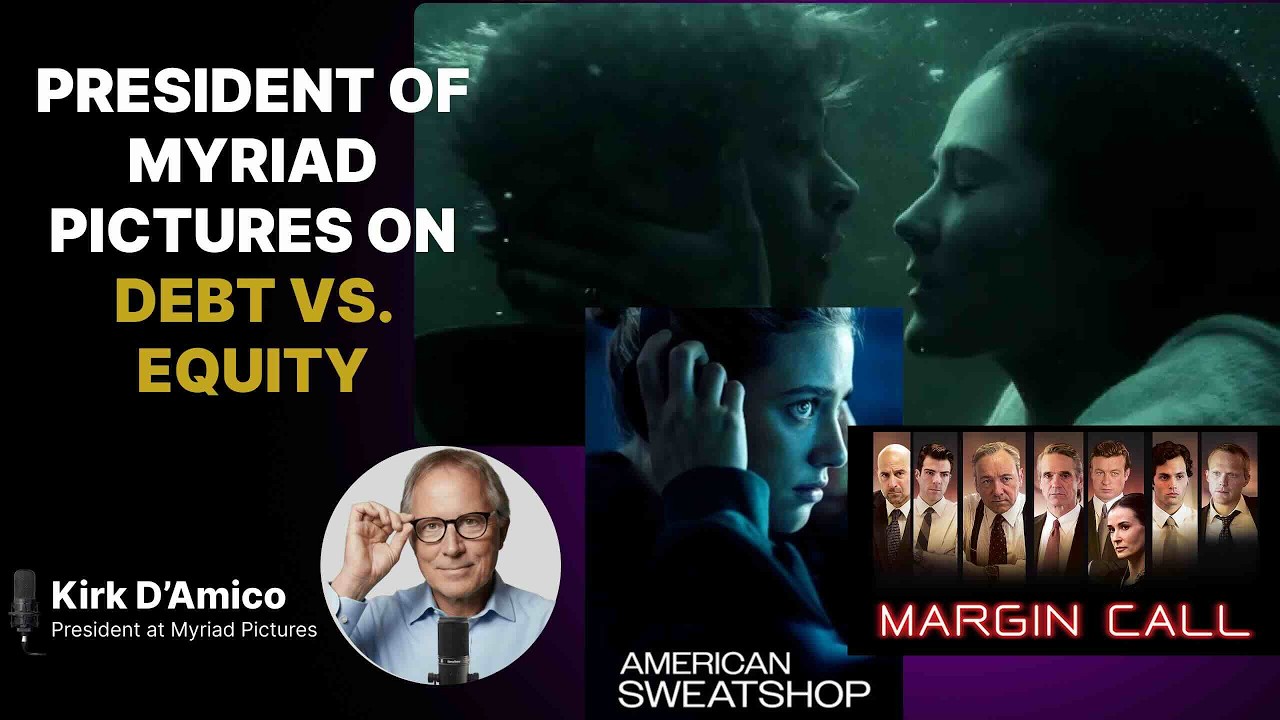
Andrea Scarso (Managing Partner, IPR VC) discusses how fund managers and equity investors structure legal protections into film investment deals — from reporting standards to deal documentation that satisfies institutional capital requirements:
6. Loan Agreement & Security Agreement — How Debt Financing Is Documented
When a lender — a bank, a private credit fund like Peachtree, or a mezzanine gap lender — advances production capital, two core documents govern the relationship: the loan agreement and the security agreement. Together they define the terms of the debt and establish the lender’s legal claim over the collateral if those terms aren’t met.
The loan agreement specifies the principal amount, draw schedule (funds typically released in tranches against production milestones), interest rate, maturity date, repayment triggers, and covenant structure — the operational restrictions the borrower agrees to while the loan is outstanding. For film, these covenants typically include: no material change to the approved budget without lender consent, no key talent replacement without approval, maintenance of the completion bond, and regular production reporting.
The security agreement — often accompanied by UCC financing statement filings — creates the lender’s perfected security interest in the film’s IP, the production entity’s rights in the project, and all associated revenues. This is the document that converts an unsecured promise to repay into a legally enforceable lien on the film itself. If the production defaults, the lender’s security interest allows them to foreclose on the IP and sell or distribute the film to recover their capital.
For gap loans specifically — debt secured against unsold territorial rights rather than executed presale contracts — the security agreement is more complex, because the collateral (future territory revenues) doesn’t yet exist in contractual form. This is precisely the structure Peachtree Media Partners specializes in: advancing against the projected value of unsold territories before distribution agreements are executed, using the security agreement to lock the lender’s position against future revenues as they materialize. The inter-party agreement framework governs how this security position interacts with other financing parties.
7. Presale Distribution Agreement & Notice of Assignment — Converting Rights Into Cash
A presale distribution agreement is a license contract in which a territorial distributor commits to pay a Minimum Guarantee (MG) for the right to distribute your completed film in their territory — typically structured as 10% on signature and 90% on delivery. But the presale contract alone doesn’t put production capital in your account. The mechanism that converts a presale contract into bank-ready collateral is the Notice of Assignment (NOA).
The NOA is a formal notification — signed by the distributor, acknowledged by the bank — that the MG payment obligation has been assigned to the lender. It’s a legally binding commitment from the distributor to pay the MG directly to the lender (not to the producer) when the film is delivered. This assignment is what makes the presale bankable. The bank then lends 70–90% of the face value of the assigned MG, depending on the distributor’s creditworthiness — A-list buyers like major theatrical distributors or established streamers command 85–90 cent advances; smaller or less established buyers get discounted more heavily.
Joshua Harris at Peachtree is explicit about the mechanical importance of the NOA: every distribution agreement his firm lends against carries a notice of assignment with a ticking clock — a defined deadline by which the distributor must pay once the film is delivered. That contractual certainty is what converts a future revenue promise into present-day collateral. According to Deadline, the discipline of having fully executed NOAs in place before drawing production loans is increasingly non-negotiable for entertainment lenders navigating today’s tighter independent film market.
8. Inter-Party Agreement — The Master Document That Holds the Stack Together
When a film is financed through multiple parties — a production bank, a gap lender, a completion bond company, a sales agent, and equity investors — each party has their own legal relationship with the production. But they also have legal relationships with each other. What happens if the bond company needs to step in? Who controls decisions about distribution if the production goes over budget? What rights does the bank have over the sales agent’s revenues? The Inter-Party Agreement (IPA) is the document that answers all of these questions and governs the relationships among every financing party in the capital stack simultaneously.
The IPA typically covers: the priority of claims on production revenues (who gets paid first if the film underperforms); the step-in rights of each party (under what conditions can the lender or bond company take over); the consent requirements for material decisions (which decisions require unanimous consent, which require majority approval, which the producer can make unilaterally); and the default and remedies structure (what triggers default, what notice periods apply, what remedies are available to each party).
Without an IPA, you have a collection of bilateral contracts that may conflict with each other in ways that only become apparent when something goes wrong — which is exactly when conflict resolution is most critical and most expensive. The IPA is the document that sophisticated lenders and institutional investors require before a multi-party financing can close. It’s also, frankly, the most complex document in the stack — this is where you want an entertainment attorney with direct deal experience, not a generalist who’ll learn on the job with your budget.
Need Direct Introductions to Financiers Who Understand Deal Documentation?
Vitrina Concierge is your Virtual Agent. We don’t hand you a list — we make warm introductions directly to equity investors, lenders, and co-production partners who know how to close structured film investment deals.
- LA producer → Netflix UK, Fifth Season, Fox Entertainment (48 hours)
- Korean animation studio → Netflix Adult Animation (week one)
- Middle Eastern producer → Legendary Pictures (direct access)
9. Collection Account Management Agreement — The Revenue Traffic Controller
Once your film is in distribution, revenue starts flowing from multiple sources simultaneously — theatrical receipts, SVOD licensing fees, territorial MG payments, home entertainment royalties, airline and ancillary fees. Without a formal mechanism governing how that money flows, the waterfall exists on paper but not in practice. The Collection Account Management Agreement (CAMA) solves this by appointing a neutral third-party administrator — typically a specialist firm like Fintage House, Freeway Entertainment, or a designated entertainment banking division — to collect all revenues from all distribution agreements into a single account and disburse them according to the recoupment waterfall in the correct priority order.
Why does this matter so much? Because without a CAMA, the producer controls the revenue account — and sophisticated investors know that “net profits” controlled by a producer have a way of disappearing into production company overhead, deferred fee recoupment, and creative accounting structures before equity investors see a return. The CAMA removes the producer from the collection and disbursement chain entirely. Revenue hits the collection account, the administrator applies the waterfall precisely as defined in the CAMA, and each party receives their allocation automatically.
For institutional equity investors — the family offices and PE funds that Andrea Scarso at IPR VC describes as requiring the same reporting standards and transparency from film investments as they’d expect from any other asset class — the CAMA is the mechanism that gives them confidence their capital is protected by process, not just by trust. IPR VC co-invests alongside studios including A24, managing capital for institutional investors and insurance companies who have zero tolerance for opaque revenue reporting. The CAMA is what makes film investment look like a professionally managed asset class rather than a handshake arrangement. For more on how this fits into the revenue flow from delivery to recoupment, our recoupment waterfall guide covers the full sequence.
As Variety has noted, the growing participation of institutional investors in independent film financing is directly correlated with the professionalization of deal documentation — particularly the adoption of CAMA structures and standardized waterfall definitions that give capital allocators the visibility they require.
The Document Stack Is Your Deal — Don’t Treat It as an Afterthought
Here’s the insider reality: experienced film investors — whether they’re institutional equity funds like IPR VC, debt lenders like Peachtree Media Partners, or sophisticated family offices allocating to entertainment as an alternative asset — don’t evaluate your project in isolation from your documentation. They evaluate both simultaneously. A compelling creative package with sloppy chain of title or an operating agreement drafted by a non-entertainment generalist signals the same thing: a producer who doesn’t understand the financial architecture of their own deal. That’s not a reason to pass on a great project. But it is a reason to impose worse terms, require more controls, and reduce the advance rate.
The nine documents above aren’t bureaucratic hurdles — they’re structural instruments. Each one performs a specific function in converting creative IP into investable, bankable, insurable capital. Together, they’re what separates a financeable film from an unfunded screenplay. Get them right before you start your investor outreach, not after your first term sheet arrives and you’re scrambling to answer due diligence questions with incomplete documentation.
Key Takeaways:
- Chain of title is the foundation: Every other legal document depends on provable, clean IP ownership. Clear it before you raise a dollar, not after you wrap production.
- The PPM is your securities shield: Any equity raise without a properly structured Private Placement Memorandum creates rescission risk and personal liability for the producer. This is non-negotiable in the US.
- Completion bonds unlock debt financing: No bond, no gap loan, no presale-backed bank advance. Budget 3–6% of production costs for the guarantee and factor it in from day one.
- The Notice of Assignment converts rights into cash: A presale agreement without an executed NOA isn’t bankable collateral — it’s a promise. The NOA is the instrument that makes lenders advance against territorial MGs.
- The Inter-Party Agreement is the most underestimated document in the stack: It governs the relationships among all your financing parties simultaneously. Without it, bilateral contracts can conflict at the worst possible time.
- The CAMA protects investor returns from “Hollywood accounting”: A collection account with a neutral administrator is the mechanism that makes institutional investors trust the waterfall on paper will actually function in practice.
Frequently Asked Questions: Legal Documents for Film Investment
What legal documents do you need for a film investment deal?
The nine essential legal documents for film investment deals are: chain of title documents, an operating agreement (LLC agreement), a Private Placement Memorandum (PPM), subscription agreements, a completion bond, loan and security agreements, presale distribution agreements with notices of assignment, an inter-party agreement, and a collection account management agreement (CAMA). The specific combination depends on whether you’re raising equity, debt, or a hybrid — but chain of title and the operating agreement are required in every structure.
What is chain of title in film finance?
Chain of title is the unbroken documentary record proving your production company owns or has the legal right to produce the underlying intellectual property. It includes option agreements or purchase agreements for source material, all assignment agreements transferring rights to the production entity, work-for-hire agreements for writers, and copyright registrations. Without clean chain of title, completion bonds won’t issue, E&O insurance can’t be obtained, and distribution agreements are legally challengeable.
Do I need a Private Placement Memorandum (PPM) to raise equity for a film?
Yes, in virtually all cases in the United States. Offering equity in a film production to investors constitutes a securities offering under federal law. A PPM is the disclosure document that satisfies your legal obligation to inform investors of material risks before they commit capital. Raising equity without a properly structured PPM creates rescission rights for investors and personal liability for the producer. Most US film equity raises are structured under Regulation D Rule 506(b) or 506(c), which exempts the offering from SEC registration but requires compliance with specific investor qualification rules.
What is a Notice of Assignment (NOA) in film financing?
A Notice of Assignment is a formal document — signed by a distributor, acknowledged by a lender — that assigns a distributor’s Minimum Guarantee payment obligation directly to the lender rather than the producer. This is the mechanism that converts a presale contract into bankable collateral. Without an executed NOA, a presale agreement is a promise to pay, not a legally assignable obligation the bank can lend against. The NOA also typically contains a ticking clock: a defined deadline by which the distributor must pay upon the film’s delivery.
What does a completion bond cover in a film investment?
A completion bond is an insurance contract guaranteeing that a film will be completed on budget and delivered to specifications on time. If production goes over budget, the bond company funds the overrun. If the production can’t be salvaged, the bond company repays the lender’s loan in full. It costs 3–6% of the production budget and is required by virtually all production lenders and gap financiers as a condition of advancing funds. Bond companies also have the right to step in and take over production if it’s going materially off-schedule or over-budget.
What is an Inter-Party Agreement in film finance?
An Inter-Party Agreement (IPA) is the master document that governs the relationships among all financing parties in a multi-party film capital stack simultaneously — the production bank, gap lender, completion bond company, sales agent, and equity investors. It defines priority of claims on revenues, step-in rights for each party, consent requirements for material decisions, and the default and remedies structure. Without an IPA, bilateral contracts among financing parties may conflict in ways that only become apparent — and expensive — when something goes wrong.
What is a Collection Account Management Agreement (CAMA) and why do investors require it?
A CAMA appoints a neutral third-party administrator — typically a specialist firm like Fintage House or Freeway Entertainment — to collect all distribution revenues from all sources into a single account and disburse them according to the recoupment waterfall in the correct priority order. It removes the producer from the revenue collection and disbursement chain entirely. Institutional investors require a CAMA because it ensures the waterfall that exists on paper actually functions in practice, protecting equity investors from “Hollywood accounting” structures that can reduce net profits to zero even on commercially successful films.
What recoupment position do equity investors typically hold in a film investment?
Equity investors sit at the bottom of the recoupment waterfall — they are paid after distribution fees (20–35%), P&A recoupment, senior debt (bank loans plus interest), gap financing plus interest, and tax credit or soft money recoupment. This is the highest-risk position in the capital stack. To compensate, equity investors typically negotiate a liquidation preference of 120–125% of invested capital, meaning they must recoup their principal plus a 20–25% premium before any remaining profits are shared further. Full equity recoupment typically takes 18 months to 5 years from the film’s completion, depending on distribution performance.
Find the Investors, Lenders, and Partners to Close Your Film Deal
Trusted by Netflix, Warner Bros, Paramount, and Google TV. Track 400,000+ projects. Access 3 million verified executives. Search active investment activity across 100 markets.
✓ 200 free credits | ✓ No credit card required | ✓ Cancel anytime
Or let Vitrina Concierge make warm introductions directly to financiers and legal partners who specialize in structured film investment deals. Explore Concierge Service →
Find Film+TV Projects, Partners, and Deals – Fast.
VIQI matches you with the right financiers, producers, streamers, and buyers – globally.
Producers Seeking Financing, Co-Pros, or Pre-Buys?
Vitrina Concierge helps producers reach the right financiers, commissioners, distributors, and co-production partners — with precision outreach, not cold pitching.
Join Industry Briefings Trusted by Leaders

Format Adaptations: Global Trends
Where formats are traveling, which adaptations are breaking out, and how streamers are backing remakes in 2025–2026.

Books, Novels & Comics Adaptations: Global Trends
Books, webtoons, and manga driving the next global screen hits. Discover how in this webinar.

Micro-Dramas & Mobile-First Storytelling
Micro-dramas are building real audiences and revenue. Understand the platforms, buyers, and economics behind the growth.

Navigating Global Content Licensing Trends
How global content licensing is shifting beyond flat fees to flexible, deal-driven models.