Short Film Financing: 6 Proven Sources to Fund Your Next Project

Share
Share
Short film financing

Here’s the brutal truth about short film financing: the tools that close feature budgets—gap loans, pre-sales, completion bonds—don’t apply. Gap lenders set their floor at $2M+. Foreign distributors don’t pay MGs for shorts. And no bank is advancing funds against unsold territory rights on a 12-minute drama.

But that’s not the bad news. It’s the map. Short films operate on a completely different financing logic—one built around grants, brand partnerships, regional screen agencies, crowdfunding, and strategic use of tax incentives at budgets where they actually move the needle. The producers consistently getting their short films funded aren’t hunting for capital that doesn’t exist for this format. They’re working the right sources with the right approach.

This guide breaks down 6 real short film financing sources, how each one works mechanically, and—critically—what the smart strategic play is when you combine them. Whether you’re making a $15,000 proof-of-concept or a $250,000 festival contender, there’s a stack here that can close your budget.

Find Short Film Financiers, Grant Bodies & Co-Producers in One Search

Vitrina maps 140,000+ verified entertainment companies—including production funders, regional agencies, and brand partnership executives used by teams from Netflix, Warner Bros, and Paramount. 200 free credits. No credit card required.

Ask VIQI About Short Film Funding

The Financing Logic That’s Different for Short Films

Short film financing doesn’t compress the feature film model. It’s a different model entirely—and confusing the two is what keeps most short film projects stuck in development.

Feature financing is built on recoupment logic: investors and lenders expect distribution revenues to pay them back, ideally with a return. Gap lenders underwrite against unsold territories. Equity investors price their risk against comparable box office and streaming revenues. The entire stack assumes the film will generate commercial returns at scale.

Short films don’t generate returns at that scale—and the honest ones don’t pretend they will. A short film’s “ROI” is typically measured in festival laurels, industry relationships, creative career advancement, and—when the strategy is explicit—proof of concept value for a feature pitch. That changes everything about who funds them and why.

Kirsty Bell, founder and CEO of Goldfinch, has built one of the UK’s most respected independent financing operations on exactly this principle: bridging art and enterprise through diverse revenue streams, brand integration, and a clear-eyed view of what each project is actually worth commercially. Her framework applies directly to short films—not chasing capital that doesn’t fit the format, but weaponizing the sources that do.

The short film capital stack looks like this, in rough priority order:

  • Grants and soft money (no repayment, highest value)
  • Regional screen agency funding (often conditional on location)
  • Brand partnerships and product integration (non-dilutive cash)
  • Crowdfunding (community-validated, moderate scale)
  • Tax incentives (jurisdiction-dependent, meaningful at $50K+)
  • Personal investment / deferred compensation (foundation of most budgets)

But here’s the thing—none of these work in isolation. The producers closing short film budgets stack two or three sources, each unlocking credibility for the next. A confirmed grant often triggers a regional agency match. A named brand partner signals commercial credibility that opens crowdfunding audiences. Let’s break each one down.

Stop Guessing Who’s Financing. Get Targeted Outreach.

Stop searching and start getting funded. We identify the exact decision-makers currently backing projects like yours, turning raw data into risk-aligned capital partnerships.

Major Studios

Scouting early stage projects, IP, and Regional partners for global studio pipelines.

IP Owners & Leads

Connecting creative leads with qualified financiers and major streaming platforms.

Streamers

Securing high-value pre-buy content and discovering early-stage global IP for platforms.

Indie Producers

Bridging the gap for indie filmmakers to reach executive production partners and capital.

Global Financing Ecosystems

Mapping complex markets and pairing projects with disciplined, risk-aligned capital across global territories worldwide.

Source 1: Grants and Soft Money — The Closest Thing to Free Capital

Grants—what the industry calls “soft money”—are non-repayable funds from public bodies, cultural organizations, and film funds. They’re the most valuable capital in short film financing because you don’t give up equity, you don’t accrue interest, and there’s no waterfall to navigate. The tradeoff is competition and lead time.

The major short film grant bodies by territory include the BFI (British Film Institute) in the UK, which runs dedicated short film programs through NETWORK and its Short Film Fund. Screen Ireland offers direct short film production funding to Irish filmmakers. In France, the CNC (Centre National du Cinéma) is arguably the world’s most robust public film funding body—its short film grants have launched the careers of directors now working with Netflix and Canal+. Australia’s Screen Australia runs an Emerging Filmmakers Fund with specific short film provisions.

In MENA, the opportunity is real and underused by international filmmakers. The Doha Film Institute in Qatar funds documentary and narrative shorts with a specific emphasis on Arab and emerging voices. Saudi Arabia’s Cultural Development Fund has deployed $62.4M+ into film projects since 2021, with the Daw’ Programme offering direct financial assistance to local filmmakers developing original content—budgets starting at $50,000 minimum spend.

Grant applications take time. You’re typically looking at 3–6 months from submission to decision. And they’re competitive—BFI short film programs receive hundreds of applications for dozens of slots. But the producers who win them consistently do two things differently: they apply with a project that fits the fund’s mandate precisely (not adjacent to it), and they attach emerging talent who represent the kind of voice the fund was created to support.

The challenge isn’t deal flow—it’s the quality of investing and how you structure the investment.

— Andrea Scarso, Managing Partner, IPR VC

That logic translates directly to grants: don’t apply broadly and hope. Read every fund’s stated priorities, understand the mandate, and position your project as the specific answer to what they’re already trying to accomplish.

Track 400,000+ Active Projects. Discover the Right Funding Partners.

Vitrina maps 140,000+ verified companies—from regional grant bodies to brand partnership teams—filtered by territory, genre, and funding type. 200 free credits. No credit card required.

Get 200 Free Credits

Source 2: Regional Screen Agencies and Film Commissions

Regional screen agencies are the undersung workhorses of short film financing. Unlike national bodies (which are more competitive and bureaucratic), regional agencies operate at a scale where short films genuinely matter—and they’re motivated by one primary goal: economic activity in their jurisdiction.

In the UK, bodies like Screen Yorkshire, Film London, ScreenSkills Scotland, and Creative England all run short film programs with explicit minimum spend requirements in their region. The deal is simple: shoot locally, hire local crew, spend money in the regional economy, and they’ll co-fund your project. Grants of £5,000–£50,000 for shorts aren’t uncommon from well-resourced regional agencies.

Film commissions work similarly. A number of US film commissions—including Utah (which offers a 25% rebate), New Mexico, and Georgia—have short film provisions within their incentive frameworks. The minimum spend thresholds are often reachable for a well-budgeted short: Georgia’s program starts at qualifying spend of $500,000, but several states have lower bars for projects specifically developed through regional talent programs.

And increasingly, the Sovereign Hubs—the government-backed production ecosystems in Saudi Arabia and UAE—are developing short film pipelines as talent incubation mechanisms. Film AlUla’s facilities hosted 1,500+ production days since opening in 2023. Abu Dhabi’s rebate of up to 50% applies to qualifying projects with a minimum spend of $70,000. For the right short film with the right cultural alignment, these are genuinely accessible programs.

The key is to identify your location before you lock your script—not after. Once you know which regional agency you’re targeting, you can design your shoot to maximize their criteria: local cast, local crew, identifiable regional locations. That’s not selling out your creative vision; that’s de-risking your production financing before you’ve spent a dollar.

Concierge Outreach

Find the Financiers Backing Your Genre

Stop searching and start getting funded. We identify the exact decision-makers currently backing projects like yours, turning raw data into risk-aligned capital partnerships.

Identifying financiers backing your budget & genre
Mapping incentive-driven financing ecosystems
Pairing projects with risk-aligned capital
Helping producers reach verified decision-makers

Source 3: Brand Partnerships and Product Integration

Brand partnerships are the most underused short film financing tool available to producers right now—and the one with the fastest timeline to cash. Done correctly, a brand integration deal isn’t product placement in the tacky sense. It’s a content partnership where a brand co-finances production in exchange for meaningful creative presence.

The model has been normalized at scale. Red Bull Studios built an entire production arm funding documentary and action-sport short films. Brands like Google, Adobe, and Canon have all financed short films that served dual purposes: genuine creative content and demonstrable brand narrative. The brand gets a content asset that their marketing team couldn’t produce internally; the filmmaker gets non-dilutive production capital with no recoupment waterfall.

For short film budgets under $100,000, a single brand partner covering 30–50% of production costs meaningfully changes what’s possible. And brands are often more interested in projects with festival ambitions than producers assume—a short film selected at Tribeca or SXSW gives the brand a prestige association that a traditional advertising spend can’t buy.

But the pitch has to be right. You’re not selling a brand a commercial—you’re selling them a story in which their presence is organic. Start with brands whose values align with your subject matter. A sustainability-focused short makes sense for an outdoor equipment company. A music-driven short drama makes sense for a streaming platform or headphone brand. That alignment is what gets a creative director to say yes instead of forwarding your email to legal.

As an internal link, see our full guide on brand partnership financing for media executives for the mechanics of structuring these deals correctly.

Source 4: Crowdfunding — Community Capital With a Strategy

Crowdfunding for short films works—but only when it’s treated as a campaign, not a fundraiser. The distinction matters enormously. A fundraiser assumes that because your project exists, people should fund it. A campaign builds an audience, creates genuine demand, and converts that demand into capital.

Kickstarter and Indiegogo remain the primary platforms. The data from successful short film campaigns is consistent: projects that hit their goals almost always launch with 30–40% of the target already committed from their immediate network before the campaign goes public. That early momentum triggers algorithmic promotion and social validation—the two forces that drive wider backers to contribute.

What works in short film crowdfunding: a specific, emotionally compelling story behind the project; a clearly articulated reason why this film needs to exist now; a director with a visible creative voice; and realistic reward tiers that don’t depend on revenue the film won’t generate. A short film promising “profit sharing” in exchange for a $250 backing is going to create legal and expectation problems that cost more than the capital raised.

Average successful short film Kickstarter campaigns raise between $10,000 and $50,000. That’s meaningful for a micro-budget short but rarely enough to close a full production budget on its own. The smart play is positioning crowdfunding as the validation layer that unlocks institutional funding—grant bodies often view a successful crowdfunding campaign as proof of public interest, which strengthens a subsequent grant application.

Need Help Identifying Your Short Film’s Funding Mix?

Vitrina’s Concierge Service connects your project with verified producers, grant consultants, and brand partnership executives across our network of 140,000+ companies. Trusted by Netflix, Paramount, and independent filmmakers worldwide. No commitment required.

Connect With Film Finance Experts

Source 5: Tax Incentives at the Short Film Budget Level

Tax incentives for short films are a smaller version of the same logic that applies to features—except the qualifying thresholds matter more because your budget is tighter. The good news: more jurisdictions have lowered their minimum spend thresholds in recent years as competition for productions of all sizes intensifies.

The UK’s High-End TV Tax Relief has a high qualifying bar—but the UK’s BFI + DCMS short film provisions can interact with limited tax arrangements for qualifying short drama projects. More practically, Ireland’s Section 481 incentive applies to qualifying Irish spend with a minimum threshold of just €125,000—reachable for a well-budgeted short with an Irish co-producer or location. At 32%, that’s meaningful money on a $150,000 short.

Abu Dhabi’s rebate—up to 50% on qualifying production expenditure—has a minimum spend of $70,000 for features, but documentary and short format projects have been approved through the program with bespoke structures. If your project has any cultural or creative alignment with the UAE’s content priorities, it’s worth a conversation with the Abu Dhabi Film Commission before you write off the program.

And Saudi Arabia’s 40% cash rebate requires a minimum of $50,000 for documentaries and animation—one of the most accessible thresholds globally for a credentialed short film. With Saudi actively targeting 100 films produced by 2030 and a box office that hit $248.9M in 2024, the appetite for short-form content that builds the broader ecosystem is real.

One practical note: tax incentives are backend money—they’re paid after production and audit, not before. For shorts without gap financing options, you’ll need to cover the incentive period out of your other funding sources and treat the rebate as a genuine return after delivery. Plan your cash flow accordingly.

Source 6: The Proof-of-Concept Play — Finance the Short to Fund the Feature

This is the most strategically underused short film financing approach in the industry—and it completely reframes the capitalization logic. If your short film is explicitly a proof-of-concept for a feature, you’re not just financing a short. You’re financing the most cost-effective part of a feature development strategy.

The mechanism is well understood by financiers like Joshua Harris of Peachtree Media Partners, who looks for projects with strong packaging—”reputable sales agent, reputable bond company, reputable distribution agreements.” A proof-of-concept short doesn’t have those yet. But it’s the asset that generates them. A short film selected at Cannes Short Film Corner, Sundance Shorts, or TIFF Short Cuts gives a feature pitch a credibility foundation that a script and a lookbook can never match.

The funding calculus changes when the short has an explicit feature trajectory. Suddenly, equity investors who won’t touch a standalone short—because there’s no ROI path—might consider a modest investment in a proof-of-concept that protects their position in the feature that follows. Grant bodies that fund emerging talent see the feature pipeline as a stronger case for cultural impact. And regional screen agencies see a potential long-term relationship with a filmmaker whose career they can track.

The key to making this work: be explicit about the strategy from day one. Don’t pitch the short as standalone prestige and the feature as an afterthought. Both need to be present in your financing conversations—the short as the vehicle you’re funding now, the feature as the reason this matters beyond the festival circuit. That narrative transparency is what converts soft funders into long-term partners.

Frequently Asked Questions About Short Film Financing

What is short film financing?

Short film financing refers to the process of assembling production capital—typically from grants, regional screen agencies, brand partnerships, crowdfunding, and tax incentives—to fund films under 40 minutes. Unlike feature film financing, short films don’t rely on gap lending, pre-sales, or completion bonds, since their budgets ($5,000–$300,000) fall well below the thresholds required for those instruments.

How much does it cost to finance a short film?

Short film budgets vary widely: micro-budget shorts can be made for $5,000–$20,000 with deferred crew compensation and owned equipment. Mid-range festival-quality shorts typically run $50,000–$150,000. High-end short films with professional cast, crew, locations, and post-production can reach $250,000–$500,000. Budget level directly affects which funding sources are accessible—tax incentive programs generally require minimum spend of $50,000–$70,000 before they apply.

Can you get grants to fund a short film?

Yes—grants are the primary financing source for most short films. Key grant bodies include the BFI (UK), Screen Ireland, Australia’s Screen Australia Emerging Filmmakers Fund, France’s CNC, and the Doha Film Institute in Qatar. Regional screen agencies in the UK, Europe, and Australia also offer direct short film development and production funding. Successful grant applicants match their project precisely to the fund’s stated mandate rather than applying broadly.

Do tax incentives apply to short films?

Yes, in several jurisdictions. Ireland’s Section 481 applies to qualifying Irish spend above €125,000. Saudi Arabia’s 40% cash rebate requires a minimum of $50,000 for documentary and animation shorts. Abu Dhabi’s rebate program (up to 50%) has been accessed by short format projects with bespoke structuring. Tax incentives are backend payments—paid after production and audit—so you need other capital sources to cover production before the rebate arrives.

How does crowdfunding work for short film financing?

Successful short film crowdfunding campaigns on Kickstarter or Indiegogo typically raise $10,000–$50,000. The key mechanic: campaigns that succeed almost always launch with 30–40% of their target already committed from the director’s immediate network, generating early momentum that attracts wider backers. Crowdfunding alone rarely closes a full short film budget but works well as a validation layer alongside grant applications and brand partnerships.

Can brand partnerships fund a short film?

Yes—brand integration deals are one of the fastest-path short film funding sources. Brands fund short films to gain content assets and cultural associations they can’t produce internally. A single brand partner can cover 30–50% of production costs on budgets under $100,000. The pitch must frame the project as a genuine content partnership (not a commercial), with natural brand alignment to the film’s subject matter and audience.

What is a proof-of-concept short film?

A proof-of-concept short is a short film produced explicitly to demonstrate the visual style, tone, and commercial viability of a feature film in development. It’s a strategic production—not a standalone creative project—designed to generate the festival credentials, industry relationships, and investor confidence needed to greenlight the feature. When explicitly positioned this way, proof-of-concept shorts can attract modest equity investment from parties interested in the feature’s upside.

How can Vitrina help with short film financing?

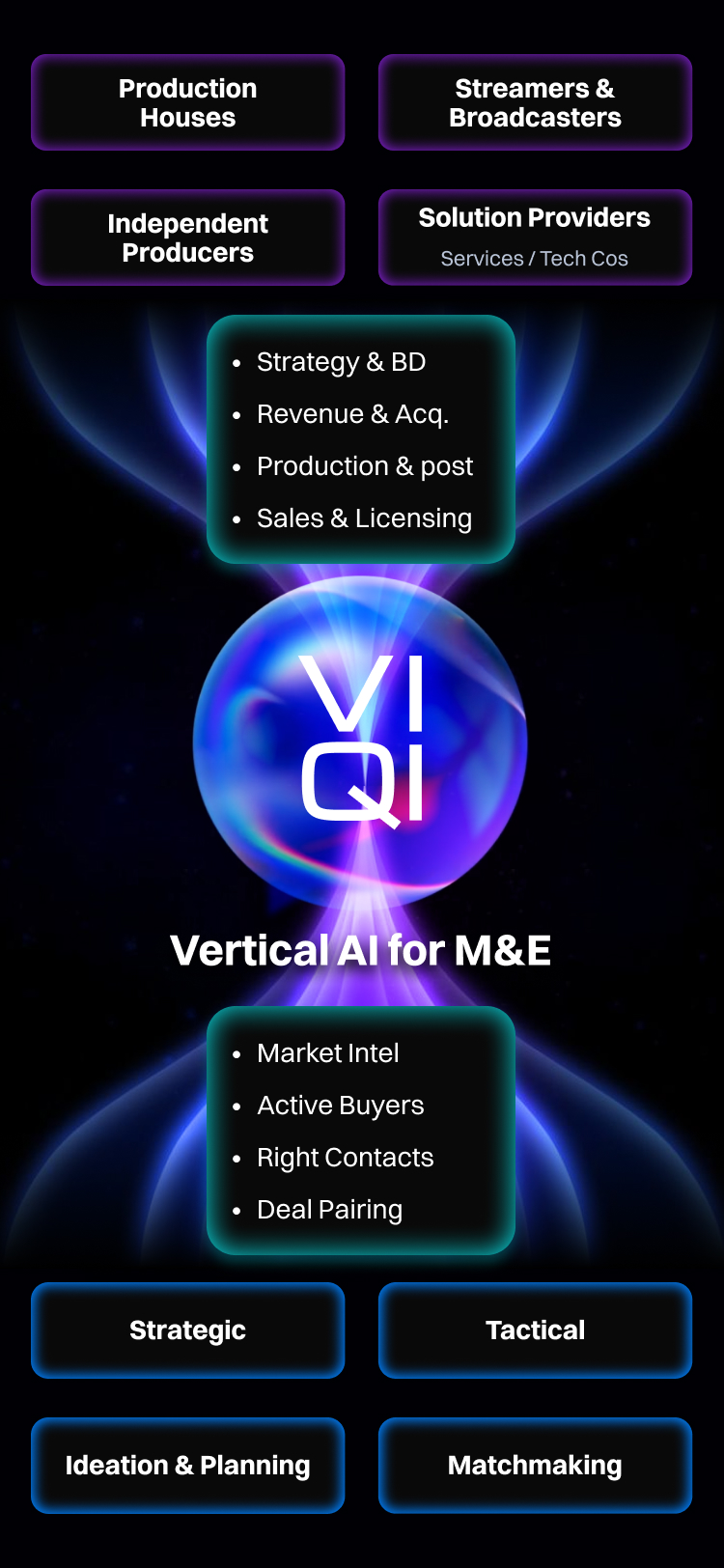
Vitrina maps 140,000+ verified entertainment companies—including production funders, regional agency contacts, brand partnership executives, and co-production partners—across 400,000+ active projects. You can search by funding type, territory, and project history. VIQI, Vitrina’s AI assistant, lets you query the database conversationally: ask which grant bodies are active in your territory, which brands have funded short films in your genre, or which co-producers specialize in your budget range. The platform starts with 200 free credits, no credit card required.

Conclusion: Stack the Right Sources, Not All the Sources

Short film financing rewards precision over volume. You don’t need to pursue all six sources—you need to identify the two or three that fit your project’s profile, budget level, and strategic intent, then build a stack where each source creates credibility for the next.

A grant win triggers a regional agency match. A regional agency contribution unlocks a brand partnership conversation. A brand partner’s involvement validates a crowdfunding campaign. And a completed, festival-selected short—with a clear feature trajectory—is the asset that opens every room the feature budget needs you in.

That’s the Fragmentation Paradox applied to short films: the information about which funders are active, which regional programs are open, which brands have funded similar projects—that information exists. The question is whether you have access to it fast enough to matter.

Key Takeaways

  • Different logic entirely: Short films don’t compress feature film financing—they use a different stack built around grants, agencies, brands, and crowdfunding.
  • Grants first: Soft money from the BFI, Screen Ireland, CNC, Screen Australia, and Doha Film Institute is the highest-value capital in the short film stack—no repayment, no equity dilution.
  • Location unlocks agency funding: Regional screen agencies fund short films conditional on local spend—design your shoot location to match the agency, not the other way around.
  • Tax incentives are accessible: Ireland (€125K minimum), Saudi Arabia ($50K for docs/animation), and Abu Dhabi (up to 50% rebate) all have thresholds reachable for well-budgeted shorts.
  • The proof-of-concept play changes everything: Positioning your short as part of a feature development strategy unlocks investor interest and institutional credibility that standalone shorts can’t access.

Start Finding Your Short Film’s Funding Partners Today

Vitrina connects you with 140,000+ verified entertainment companies—grant bodies, regional agencies, brand partnership teams, and co-producers—filtered by territory, genre, and budget.

200 free credits. No credit card required.


Find Film+TV Projects, Partners, and Deals – Fast.

VIQI matches you with the right financiers, producers, streamers, and buyers – globally.

Producers Seeking Financing & Partnerships?

Book Your Free Concierge Outreach Consultation

(To know more about Vitrina Concierge Outreach Solutions click here)

Producers Seeking Financing, Co-Pros, or Pre-Buys?

Vitrina Concierge helps producers reach the right financiers, commissioners, distributors, and co-production partners — with precision outreach, not cold pitching.

Real-Time Intelligence for the Global Film & TV Ecosystem

Vitrina helps studios, streamers, vendors, and financiers track projects, deals, people, and partners—worldwide.

  • Spot in-development and in-production projects early
  • Assess companies with verified profiles and past work

  • Track trends in content, co-pros, and licensing
  • Find key execs, dealmakers, and decision-makers

Who’s Using Vitrina — and How

From studios and streamers to distributors and vendors, see how the industry’s smartest teams use Vitrina to stay ahead.

Find Projects. Secure Partners. Pitch Smart.

  • Track early-stage film & TV projects globally
  • Identify co-producers, financiers, and distributors
  • Use People Intel to outreach decision-makers

Target the Right Projects—Before the Market Does!

  • Spot pre- and post-stage productions across 100+ countries
  • Filter by genre and territory to find relevant leads
  • Outreach to producers, post heads, and studio teams

Uncover Earliest Slate Intel for Competition.

  • Monitor competitor slates, deals, and alliances in real time
  • Track who’s developing what, where, and with whom
  • Receive monthly briefings on trends and strategic shifts