IHUB
IHUB
 Private Briefings (Webinars)


 LeaderSpeak Podcast
  Global Entertainment Digest (Newsletter)
  About Vitrina
 About VIQI
 Our Story
 Our Solutions 🔥
 Film+TV Projects Tracker 🚀
 Case Studies
 Our Profile
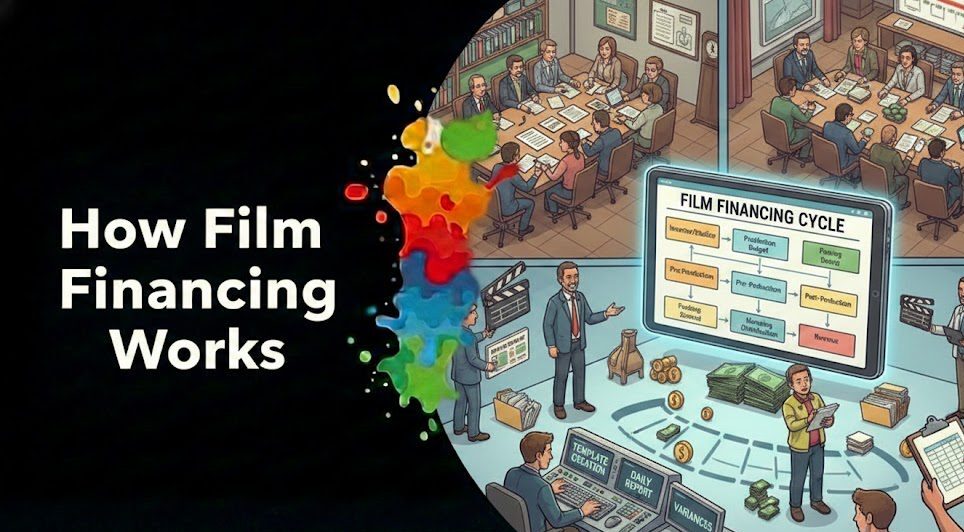
Raising money for a film is one of the most challenging—and misunderstood—aspects of production. Whether you’re a first-time producer with a compelling script or a seasoned filmmaker expanding your slate, understanding film financing isn’t optional anymore. It’s the foundation that determines whether your project gets made at all.
Here’s the thing: film financing isn’t a single transaction. It’s a complex assembly of funding sources, each with different risk profiles, return expectations, and structural requirements. According to a 2024 PGA survey, 78% of independent films use at least three distinct financing sources, and projects under $10M average five separate funding components. That’s not a financing plan—that’s a financing architecture.
This guide breaks down exactly how film financing works in today’s market. You’ll learn the core financing models, how to structure deals that attract investors, what financiers actually evaluate when reviewing your package, and the practical steps to close your funding gap. We’ve drawn insights from Vitrina’s extensive library of conversations with industry financiers, production executives, and producers who’ve successfully navigated these waters. No theoretical frameworks here—just the real mechanics of getting films financed.
In This Article
- 1
→
What is Film Financing? The Fundamentals Explained - 2
→
Understanding Film Financing Models: Equity, Debt, and Hybrid Structures - 3
→
Independent Film Financing: Strategies for Projects Under $10M - 4
→
Studio Financing vs. Independent Financing: Key Differences - 5
→
Building a Financing Package That Attracts Investors - 6
→
The Role of Sales Agents and Distributors in Film Financing - 7
→
Gap Financing and Completion Bonds: Closing Your Funding - 8
→
Tax Incentives and Soft Money: Maximizing Non-Traditional Funding - 9
→
Common Film Financing Mistakes and How to Avoid Them
What is Film Financing? The Fundamentals Explained
Film financing is the process of securing capital to cover a project’s production budget, delivery costs, and often marketing expenses through a combination of debt, equity, pre-sales, tax incentives, and other funding mechanisms. Unlike traditional business financing, film financing operates in a unique risk environment where the underlying asset—the completed film—has highly uncertain market value until it’s actually sold to distributors and audiences.
The core challenge is this: investors need to commit capital before the product exists, based on predictive models of future performance that are notoriously unreliable. A 2023 analysis by FilmLA found that only 17% of independent films recoup their production budgets through theatrical release alone, which is why sophisticated financing structures spread risk across multiple revenue windows and territories.
Most film financing operates on a recoupment waterfall structure. Money comes in from various sources, each with different priority positions for getting paid back. Senior debt—typically bank loans or gap financing—sits at the top of the waterfall and gets repaid first. Equity investors come next, often with different classes of equity having different recoupment multiples. Only after these positions are satisfied do producers see back-end participation.
Understanding this waterfall is essential because it determines how you structure your financing package. If you’re offering a sales agent 15% of gross receipts off the top, giving senior debt holders first recoupment position, and promising equity investors a 120% recoupment multiple before sharing profits, you need to model whether there’s actually money left for you at the end. Too many first-time producers build financing structures where the math simply doesn’t work for anyone once you map out realistic revenue projections.
The timing element matters just as much as the structure. Film financing typically happens in stages: development financing for script and packaging, production financing for principal photography, and gap financing to close the final funding shortfall. Each stage requires different documentation, different investor expectations, and different risk profiles. Understanding the complete film finance lifecycle helps you anticipate what’s needed at each stage.
And here’s what surprises newer producers—financing continues after the shoot wraps. You’ll need completion funding to finish post-production, delivery funding to create all required distribution materials, and sometimes marketing funding to support your release. A film isn’t truly financed until it’s delivered to distributors and generating revenue. Explore how VIQI can help you model complete financing structures that account for every stage of production.
Understanding Film Financing Models: Equity, Debt, and Hybrid Structures
There are three fundamental film financing models, each with distinct characteristics that determine who bears risk and how returns are distributed.
Equity Financing
Equity financing means investors provide capital in exchange for ownership stakes in the project. They participate in the film’s profits (if any) but also absorb losses if the film underperforms. Equity investors typically don’t receive guaranteed returns—their upside depends entirely on the film’s commercial success.
The advantage of equity is that it doesn’t create debt service obligations during production. You’re not making monthly payments or worrying about default triggers. But equity is expensive capital because investors expect substantial returns to justify the risk. Most equity structures offer investors a recoupment multiple—commonly 110% to 125%—before moving to profit sharing, where investors might receive 50% of net profits until they’ve achieved their target internal rate of return.
Equity investors evaluate projects based on comparable performance data, talent attachments, and market positioning. They want to see how similar films performed financially and why your project has advantages that justify investment. This is where having strategies for independent film funding becomes critical—you need to demonstrate you understand your market.
Debt Financing
Debt financing provides loans that must be repaid with interest, regardless of the film’s performance. Banks, specialty lenders, and film finance companies offer various debt products, each secured against different assets or revenue sources.
Senior debt is typically secured against pre-sales—distribution contracts signed before production begins. A bank might lend 70-80% of the value of verified pre-sale agreements from creditworthy distributors. The loan is repaid directly from distribution receipts when the film is delivered. Interest rates vary but generally range from prime plus 2-5% depending on the strength of the underlying contracts.
The benefit of debt is that it doesn’t dilute ownership—you’re borrowing against future revenue, not selling pieces of your film. But debt creates mandatory repayment obligations that can be problematic if distribution doesn’t materialize as planned or if delivery is delayed. Miss your delivery dates and you’ll face penalty interest rates or default provisions that can be devastating.
Kirsty Bell, Goldfinch — Understanding how financiers evaluate revenue streams across multiple distribution windows
Kirsty Bell’s framework for assessing revenue potential is particularly valuable here. She emphasizes that debt financiers want to see multiple revenue streams—not just theatrical but also premium VOD, SVOD licensing, international sales, and ancillary rights. The more diversified your projected revenue, the more comfortable lenders become advancing against it.
Hybrid Structures
Most professional film financing uses hybrid structures that combine equity, debt, pre-sales, tax incentives, and other funding sources. A typical $5M independent film might structure financing as:
30% from equity investors
25% from pre-sale advances
20% from senior debt against pre-sales
15% from production tax credits
10% from gap financing
Each component has different documentation requirements, different recoupment positions, and different risk-reward profiles. The producer’s job is assembling these pieces into a coherent whole where the timing works, the collateral doesn’t conflict, and the economics make sense for all parties.
The challenge with hybrid structures is complexity management. You’re juggling multiple agreements, each with specific delivery requirements, audit rights, and approval mechanisms. One delayed element can cascade through the entire structure—if your tax credit certification is delayed, your senior lender might refuse to fund, which means you can’t start production, which triggers penalties in your talent agreements. See how successful producers structure complex financing arrangements by exploring real deal case studies.
Independent Film Financing: Strategies for Projects Under $10M
Independent film financing operates differently than studio financing because you’re working without a corporate balance sheet backing your production. You need to assemble financing from multiple sources, often simultaneously, while managing conflicting priorities and timelines.
For projects under $10M, the financing strategy typically centers on four pillars: pre-sales, equity, tax incentives, and gap financing. But the sequencing matters enormously. You can’t get gap financing until you have equity committed. You can’t get equity committed until you have strong packaging. You can’t get meaningful pre-sales without cast attachments. It’s a coordination problem as much as a capital problem.
The Pre-Sales Foundation
Pre-sales remain the bedrock of independent film financing. When a foreign distributor commits to licensing your film for their territory—before you’ve shot a frame—that contract becomes bankable collateral. Sales agents broker these deals, taking your project to major film markets like Cannes, AFM, or Berlinale with marketing materials designed to generate buyer interest.
Strong pre-sales come from strong packaging. Distributors are buying perceived market value, which means recognizable cast, proven genre positioning, and professional execution guarantees. A thriller with a B-list domestic name and two international cast members might generate $2-3M in pre-sales across major territories if the script is strong and the production team is credible.
But pre-sales have gotten harder. Streaming’s disruption of traditional distribution windows has made buyers more cautious. Minimum guarantees have compressed, and territories that once routinely pre-bought genre films now wait for festival screenings or completed content. According to Screen International’s 2024 analysis, pre-sale volumes for sub-$10M independent films declined 23% between 2019 and 2023.
Phil Hunt, Head Gear Films — Gap financing mechanics and risk mitigation strategies for independent producers
Phil Hunt’s explanation of gap financing provides crucial context here. Gap financing fills the space between your secured funding—equity, pre-sales, tax credits—and your total budget. If you’ve raised $4M toward a $5M budget, a gap financier might provide the remaining $1M based on projected sales to unsold territories.
Equity Investor Targeting
Finding equity investors for independent film requires understanding investor motivations. Some invest for financial returns, analyzing your project like any other investment opportunity. Others invest for strategic reasons—access to the industry, passion for the material, or portfolio diversification. And some invest primarily for tax benefits, where the investment’s structure creates advantageous tax treatment.
Financial investors want to see robust comparable analysis. What did similar films cost? How did they perform across different distribution channels? What’s the realistic downside scenario, and what’s the upside if things go well? They’ll model various performance scenarios and evaluate whether the risk-reward ratio justifies capital allocation.
Strategic investors often care more about the team and the material than pure financial modeling. They want to be involved with quality filmmakers on projects they believe in. These investors might accept lower return thresholds but often want meaningful involvement—producer credits, set visits, input on creative decisions. Managing these relationships requires different skills than managing purely financial investors.
The timing challenge with equity is that most investors won’t commit until you’ve demonstrated momentum—cast attachments, director commitment, maybe some pre-sales. But you can’t secure those elements without funding for development and packaging. This chicken-and-egg problem is why many producers use development financing from specialized funds or high-net-worth individuals who understand the early-stage risk. Explore diverse financing approaches that address this coordination challenge.
Tax Incentive Maximization
Production tax incentives have become essential components of independent film financing. Most U.S. states and many countries offer refundable tax credits or rebates for qualified production spending, effectively reducing your net budget by 20-40%.
But accessing these incentives requires careful planning. Each program has different qualification criteria, different eligible expense definitions, and different claiming procedures. Georgia’s incentive is transferable, meaning you can sell the credit to a third party for immediate cash. Louisiana’s program requires more state spending but offers higher percentages. The UK’s program covers post-production, while many U.S. programs don’t.
Smart producers model multiple incentive scenarios during development. Where should you shoot to maximize incentives while maintaining creative integrity? Can you structure production to qualify for multiple programs—principal photography in one jurisdiction, post-production in another? How do you handle the timing gap between spending money and receiving credit payments?
The financing implication is that tax credits often can’t be monetized until after spending occurs, creating a cash flow challenge. Some specialty lenders will advance against tax credits, effectively giving you the money upfront in exchange for the credit plus fees. These facilities charge 3-8% depending on the jurisdiction and the lender’s confidence in the program’s reliability. Explore how Vitrina can connect you with incentive optimization specialists who understand the nuances of different programs.
Studio Financing vs. Independent Financing: Key Differences
The mechanics of studio financing differ fundamentally from independent approaches, even when the final budget numbers are similar.
Studios finance films from their corporate balance sheets. When Universal greenlights a $50M film, they’re allocating corporate capital with the expectation that the film will generate returns that justify that allocation within their broader portfolio strategy. The film doesn’t need to succeed individually—it needs to contribute to the studio’s overall slate performance and strategic positioning.
This creates completely different risk dynamics. Studios can absorb failures that would bankrupt an independent producer. They can overspend on development because they’re developing dozens of projects simultaneously and only expect a fraction to reach production. They can pay above-market rates for talent because they’re buying not just this film but ongoing relationships that benefit future projects.
Independent producers don’t have these luxuries. Every dollar spent is a dollar that must be justified to specific investors who care about this specific project’s performance. You can’t cross-collateralize losses against other projects in your slate. You don’t have a corporate treasury department managing cash flow. This fundamentally changes how you approach financing.
Studio projects also benefit from pre-existing distribution. When Warner Bros. finances a film, they’re simultaneously securing domestic theatrical distribution through their own distribution arm. This eliminates a major uncertainty that plagues independent producers—will anyone actually distribute this film, and on what terms?
But here’s the trade-off: studios control the creative process in ways independent producers don’t. Studio financing comes with development executives, notes processes, test screenings, and final cut rights that can fundamentally alter the filmmaker’s vision. Independent financing preserves creative control but requires producers to solve every problem themselves.
The financial structures also differ. Studios rarely use recoupment waterfalls because they’re not assembling financing from multiple external parties. They’re tracking costs against revenue for internal accounting, but there’s no external equity investor waiting for their 120% recoupment multiple. This simplifies the production process but also means filmmakers rarely participate meaningfully in backend profits unless they’ve negotiated substantial points as part of their upfront deal.
Building a Financing Package That Attracts Investors
Creating an investable film financing package requires more than a great script. Investors need to understand the complete picture: who’s making this film, why audiences will care, how you’ll reach them, and what returns they can realistically expect.
The essential components of a professional financing package include a detailed budget with contingency planning, a comprehensive production schedule, cast and key crew attachments, comparable film performance analysis, distribution strategy documentation, and clear financing terms with waterfall illustrations. Each element serves a specific purpose in de-risking the investment for potential financiers.
The Comparable Analysis Challenge
Nothing matters more to film investors than comparable performance data. They want to see how similar films performed financially across different markets and revenue windows. But creating meaningful comps is harder than it looks because true financial performance data for independent films remains closely guarded.
You need to identify films that share key attributes with your project: similar budget range, comparable cast profile, same genre positioning, and analogous distribution strategy. Then you need to gather actual performance data—not just box office but also home entertainment, streaming licensing, international sales, and ancillary revenue.
This is where most producers struggle because comprehensive financial data simply isn’t publicly available for most independent films. Box office numbers are easy to find, but they represent only one revenue stream. The real money often comes from other windows that don’t publish their numbers.
Vitrina’s comparable analysis tools address this gap by aggregating performance data across multiple sources and providing context around how films with specific attributes tend to perform. Rather than relying on incomplete box office data, producers can model realistic revenue scenarios based on comprehensive historical patterns.
Risk Mitigation Documentation
Sophisticated investors want to understand not just your upside potential but your downside protection. How are you minimizing risk at every level of production and distribution?
This means documenting your completion bond arrangement, explaining your insurance coverage, detailing your contingency planning for key crew or cast replacement, outlining your weather and location backup strategies, and clarifying your delivery guarantees to distributors. Every element that could derail production or distribution needs to have a documented mitigation strategy.
Production insurance and completion bonds aren’t optional for any project seeking professional financing. A completion bond guarantees that if you go over budget or over schedule, the bonding company will step in with additional funds to complete the film according to the approved script and budget. This costs roughly 3-6% of the budget but is essential for attracting debt financing.
The Distribution Strategy
Investors need to understand exactly how your film will reach audiences and generate revenue. Saying “we’ll get into Sundance and get a big distribution deal” isn’t a strategy—it’s wishful thinking that immediately identifies you as naive.
A credible distribution strategy addresses multiple scenarios. What’s your plan if you get into a top-tier festival? What if you don’t? How will you approach theatrical versus streaming versus hybrid distribution? What international markets are you targeting, and why? Who are the specific distributors and sales agents you’re pursuing, and what’s your timeline for engaging them?
The strongest packages include letters of intent from sales agents or distributors who’ve reviewed the project and expressed genuine interest. These don’t guarantee deals, but they demonstrate that professional buyers see commercial potential. If you can attach a reputable sales agent during the financing phase, you’ve significantly increased your project’s credibility.
The Role of Sales Agents and Distributors in Film Financing
Sales agents serve as the critical intermediary between producers and international distributors, and their involvement often determines whether a film can attract financing at all.
A sales agent represents your film to distributors around the world, typically taking the project to major film markets and festivals to generate buyer interest. They create marketing materials—posters, trailers, sales decks—designed to position your film in the international marketplace. When they secure distribution deals, they handle contract negotiation, delivery coordination, and revenue collection.
For their services, sales agents typically receive 15-25% of gross sales plus expense reimbursement for marketing and market attendance costs. This comes off the top of the revenue waterfall before any other recoupment positions are satisfied, which is why sales agent fees significantly impact your project’s economics.
“The sales agent relationship is the most important business relationship most independent producers will have. Choose poorly and you’ll struggle to finance anything. Choose well and you’ll build a multi-film relationship that serves your career for years.”
— INDUSTRY VETERAN PRODUCER
The challenge is that reputable sales agents are selective about the projects they represent. They have relationships with distributors that they’ve cultivated over years, and they won’t risk those relationships on films they don’t believe can perform. This means you need strong packaging before approaching sales agents, but you often need a sales agent attached to secure that packaging. It’s another coordination problem requiring strategic sequencing.
When to Approach Sales Agents
The optimal time to approach sales agents is when you have a completed script, a committed director with relevant credits, and at least one meaningful cast attachment. If you have financing commitments or pre-sales already secured, even better—these demonstrate that others see commercial value in your project.
Sales agents evaluate projects based on genre viability, cast recognition, director track record, budget appropriateness, and production quality indicators. They’re asking whether they can realistically sell your film for enough money to justify their time and expense investment. A $2M thriller with a recognizable lead might generate strong interest. A $8M character drama with no names probably won’t unless you have major festival credentials.
Research which sales agents handle films similar to yours. Look at the credits on comparable films to see which sales companies represented them. Attend film markets if possible, or schedule meetings during festivals where sales agents are actively looking for new projects. Come prepared with professional materials—lookbook, script, budget, team bios—that demonstrate you’re a serious producer worth their time.
Distribution vs. Sales Agent Roles
It’s important to understand that sales agents and distributors serve different functions. A sales agent represents your film to multiple distributors across different territories. A distributor actually releases your film in their specific territory—they handle marketing, theatrical bookings, streaming platform negotiations, and home entertainment releases.
You might have one sales agent representing your film globally while having different distributors in the U.S., UK, France, Germany, Japan, and other territories. Each distributor pays a minimum guarantee and/or revenue share to license distribution rights for their territory. The sales agent collects these payments, deducts their fees and expenses, and distributes the remaining revenue according to your film’s financing waterfall.
Some companies serve both functions—they have sales operations that represent films internationally while also distributing films in specific territories. Understanding the distribution landscape helps you identify which companies might be appropriate partners for your specific project.
Gap Financing and Completion Bonds: Closing Your Funding
Gap financing addresses one of the most common challenges in independent film financing—you’ve assembled most of your budget but need additional capital to reach your total. This funding gap typically represents unsold territories in your international sales projections.
Here’s how it works: your sales agent provides estimates for what your film should sell for in territories where you haven’t secured pre-sales. If you have $3M in confirmed pre-sales but your sales agent’s total estimate is $5M, there’s a $2M gap between confirmed sales and projected sales. A gap financier might lend you 60-70% of that gap—in this case, $1.2-1.4M—based on their confidence in the sales estimates.
Gap financing is expensive capital because it’s inherently riskier than senior debt secured against actual contracts. Gap lenders charge higher interest rates—typically 8-15%—and often require equity participation or producer fee sharing as additional compensation. But for many independent films, gap financing makes the difference between production happening or not.
The key to securing gap financing is having a credible sales agent with strong buyer relationships and conservative estimates. Gap financiers want to see that the projected sales are realistic based on market conditions, comparable performance, and your specific packaging. They’ll discount heavily if they think the sales agent is being optimistic or if market conditions have shifted since the estimates were prepared.
Completion Bonds as Lender Protection
A completion bond guarantees that your film will be delivered on time and on budget according to the approved script and production plan. If you run into problems—cast injury, weather delays, budget overruns—the bonding company steps in with additional funds to complete the film or, in extreme cases, takes over production entirely.
Completion bonds aren’t insurance policies that producers buy voluntarily—they’re requirements imposed by lenders and investors who want protection against production failure. No reputable bank or gap financier will advance against your film without a completion bond in place. The bond protects their collateral by ensuring the film they’ve lent against actually gets completed and delivered.
Getting bonded requires rigorous due diligence. The bonding company reviews your script, budget, schedule, insurance coverage, key personnel, and shooting locations. They’re looking for red flags that might indicate production risk—first-time director handling complex action sequences, inadequate contingency, shooting in politically unstable locations, inadequate prep time. If they identify issues, they’ll either decline to bond the project or require changes to mitigate the risk.
Bonding costs typically run 3-6% of the budget depending on the project’s risk profile. A straightforward contemporary drama might bond at the low end. A period action film with extensive stunts and VFX might hit the high end. These costs need to be factored into your budget from the beginning—discovering at the last minute that bonding will cost more than expected can blow up your entire financing structure.
Tax Incentives and Soft Money: Maximizing Non-Traditional Funding
Tax incentives and soft money represent non-dilutive capital that can significantly reduce your net production cost. Understanding and maximizing these funding sources has become essential for competitive independent film financing.
Production tax incentives come in two primary forms: refundable tax credits and cash rebates. Refundable tax credits reduce your tax liability and, if the credit exceeds your tax owed, result in a cash refund. Cash rebates directly reimburse a percentage of qualified production spending. While the mechanics differ, both effectively lower your net budget by returning capital after you’ve spent it.
The most generous programs offer 30-40% returns on qualified spending. Georgia’s program provides up to 30% transferable tax credits. Louisiana offers 40% for projects spending over a certain threshold in-state. The UK’s Audio-Visual Expenditure Credit provides 25.5% cash rebates on qualifying UK expenditure. Canada’s various federal and provincial programs can combine for total incentives approaching 40%.
Qualifying for Tax Incentives
Each incentive program has specific qualification requirements. Most require minimum spending thresholds in the jurisdiction, specific percentages of local crew hiring, detailed documentation of all expenditures, and certification that the project meets cultural or content criteria. Some programs exclude certain expense categories—above-the-line talent, financing costs, or non-local vendor spending might not qualify for credit calculations.
Smart producers engage tax incentive specialists during development to optimize their production structure. Where should principal photography occur to maximize incentives? Can post-production be structured to capture additional credits in a different jurisdiction? How should vendor contracts be structured to maximize qualifying expenditure? These decisions significantly impact your effective cost of production.
The timing challenge is that most programs reimburse after spending is verified and audited, creating a cash flow gap. You spend $5M, but you won’t receive your $1.5M credit for 6-18 months depending on the program’s processing time. This is where tax credit monetization comes in—specialty lenders advance capital against expected credits, giving you the money upfront in exchange for the credit assignment plus a discount.
Soft Money Sources
Soft money refers to non-traditional funding sources that don’t require traditional financial returns—government grants, cultural funding, regional development funds, and co-production treaty benefits. These sources can contribute 10-30% of your budget while requiring no recoupment or only deferred participation.
Many countries and regions offer production grants to support local film industries. These grants might require hiring local crew, shooting in specific locations, or incorporating cultural themes into your story. The amounts vary widely—some programs offer $50K-100K grants for modest projects, while others provide millions for large productions that meet specific criteria.
Co-production treaties between countries create opportunities to access multiple incentive programs simultaneously. A Canada-UK co-production might qualify for Canadian federal and provincial incentives plus UK credits, potentially covering 40-50% of the total budget through various soft money sources. But navigating treaty requirements—spending thresholds, cultural content rules, creative control provisions—requires specialized expertise.
Understanding the global incentive landscape helps you structure production to maximize these non-dilutive funding sources while maintaining creative flexibility.
Common Film Financing Mistakes and How to Avoid Them
Even experienced producers make financing mistakes that jeopardize their projects. Understanding these common pitfalls helps you structure more resilient financing plans.
Overpromising Returns
The biggest mistake new producers make is offering unrealistic return scenarios to attract investors. Promising that investors will triple their money based on optimistic box office projections and minimal comparable analysis destroys credibility with sophisticated financiers and creates legal liability when those returns don’t materialize.
Professional financiers want conservative projections based on historical performance data. They’ll discount any numbers that seem aspirational. Better to model realistic scenarios—base case, upside case, downside case—that demonstrate you understand the market and the risks. Sophisticated investors respect honest assessment more than optimistic promises.
Insufficient Contingency
Running out of money during production is catastrophic. Yet many producers budget with minimal contingency—5% or less—because they’re trying to minimize the capital raise. This is backwards thinking. A 10% contingency is standard for most productions, with higher percentages for complex shoots or first-time teams.
Undercapitalization forces horrible decisions during production—cutting scenes, eliminating shooting days, reducing post-production quality. These compromises often damage the film’s commercial potential far more than the additional cost of proper contingency would have. Budget realistically from the beginning.
Weak Legal Documentation
Film financing involves complex contracts with multiple parties whose interests often conflict. Producers who try to save money with template agreements or inadequate legal review create problems that can torpedo their projects.
Every financing component needs proper documentation: equity investment agreements with clear recoupment terms, loan agreements with specific delivery requirements, sales agent contracts with defined territories and fee structures, talent agreements with appropriate contingent compensation. These documents need to work together without conflicts or gaps. Invest in experienced entertainment attorneys who understand film financing structures.
Ignoring Distribution Reality
Many producers focus exclusively on production financing without addressing distribution early enough. By the time they’re looking for distribution, they’ve made creative and business decisions that limit their options.
Think about distribution from the beginning. What’s the realistic distribution path for this specific film? What cast and genre positioning will maximize distribution value? Should you be pursuing festival strategy or direct-to-distributor approach? These questions should inform your packaging and financing structure, not be afterthoughts once the film is complete.
How Vitrina Simplifies Film Financing
Vitrina provides producers with the tools, data, and network to structure financing packages that attract serious investment. Our platform offers comprehensive comparable analysis, financial modeling tools, and direct connections to financiers actively funding independent film.
Comparable Performance Database: Access financial data on thousands of films to build credible revenue projections
Financing Structure Modeling: Build detailed waterfalls showing exactly how different funding sources interact
Financier Network: Connect with equity investors, gap financiers, and sales agents looking for projects
Expert Interviews: Learn from industry leaders who share real-world financing insights
Vitrina Membership
Every Conversation, Fully Unlocked
Vitrina members get the full LeaderSpeak archive, plus live webinars, the Global Digest, and VIQI — the AI that answers your specific market questions.