About Innovation Hub
 Global Content Pulse (Webinars)


 Global Production Financing
(Webinars)
Global Production Financing
(Webinars)  LeaderSpeak Podcast
  Global Entertainment Digest (Newsletter)
  About Vitrina
 About VIQI
 Our Story
 Our Solutions 🔥
 Film+TV Projects Tracker 🚀
 Case Studies
 Our Profile

Procedural tools for production scaling are automated software systems and AI-driven methodologies that allow filmmakers to handle increased project complexity without a proportional increase in manual labor or costs.
This involves using algorithmic scheduling, automated asset management, and cloud-native workflows to streamline the entertainment supply chain.
According to industry reports, productions leveraging procedural automation can reduce administrative overhead by up to 40% while maintaining high creative standards.
In this guide, you will learn how to implement these tools effectively, from automated scheduling to AI-enhanced post-production scaling.
While traditional filmmaking relies on manual coordination and fragmented data, the modern production mandate requires a move toward industrialized, data-powered frameworks. This guide solves the current information gap by providing specific methodologies for scaling that were previously only available to major studios.
We will explore practical applications, including real-world case studies of filmmakers who successfully transitioned from “snowflake” pipelines to scalable, automated systems.
Table of Contents
- 01
What are Procedural Tools for Production Scaling? - 02
How Do Procedural Tools Work in Practice? - 03
Why Should Independent Filmmakers Use Automated Scheduling? - 04
Scaling Visual Workflows: From Post to Localization - 05
Real Success Stories: Scaling Production with Data Intelligence - 06
Key Takeaways - 07
FAQ - 08
Moving Forward
Key Takeaways for Producers
-
Procedural Efficiency Wins: Implementing AI-driven procedural tools can reduce manual administrative tasks by 40%, allowing teams to focus on creative scaling.
-
Automation Smashes Bottlenecks: Automated scheduling and asset management tools solve technical gaps in production workflows, enabling rapid scaling across global markets.
-
Data-Driven Partner Discovery: Scaling requires more than just internal tools; it requires supply chain intelligence to find global vendors and co-production partners.
What are Procedural Tools for Production Scaling?
Procedural tools are defined by their ability to generate complex outputs from sets of predefined rules and data, rather than through manual individual crafting. In production, this refers to software that automates the “business logic” of a film shoot—everything from scheduling conflicts to resource allocation and asset tracking.
For independent filmmakers, these tools solve the “fragmentation paradox.” While global production is more connected than ever, operational data is often siloed in spreadsheets. Procedural tools bridge this gap by creating a unified data taxonomy that scales as the production grows.
Find automated production service vendors for your next project:
How Do Procedural Tools Work in Practice?
Implementation starts with centralizing project data into a cloud-native platform. Once the data—scripts, talent availability, locations—is structured, procedural algorithms can run thousands of simulations to find the most cost-effective production path.
Scaling requires transitioning from a manual, high-risk art form into a data-driven science. By utilizing vertical AI, producers can track over 1.6 million titles and 140,000 companies to identify how similar projects were scaled, ensuring they aren’t reinventing the wheel with every new production.
Industry Expert Perspective: Prime Focus Technologies’ AI-Enhanced Supply Chain
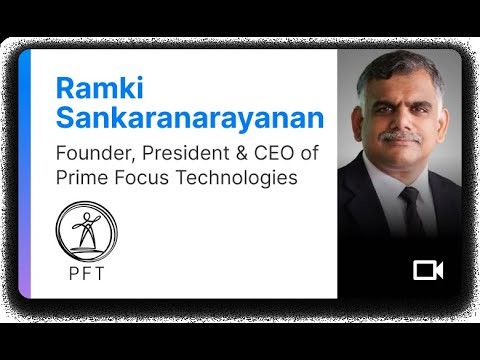
Ramki Sankaranarayanan, CEO of Prime Focus Technologies, explains how AI and automation are transforming the entertainment supply chain from end-to-end, solving critical scaling challenges for modern content creators.
Key Insights
Discover how Ramki and his team are revolutionizing the entertainment supply chain with cutting-edge AI and automation. From end-to-end solutions to the transformative power of the Clear platform, dive deep into the future of AI in entertainment with us!
Why Should Independent Filmmakers Use Automated Scheduling?
Automated scheduling is the bedrock of production scaling. Traditional scheduling takes weeks and falls apart the moment a lead actor gets sick or a location becomes unavailable. Procedural scheduling tools can re-calculate entire production calendars in seconds.
For independent projects, this means better cash flow management. When you can precisely predict shoot days, you can optimize talent contracts and equipment rentals. This financial discipline is what allows companies like Goldfinch to bridge art and enterprise, leveraging creative financing models to sustain independent growth.
Analyze recent production financing trends to optimize your budget:
Scaling Visual Workflows: From Post to Localization
Once a project moves into post-production, procedural tools enable “weaponized distribution.” This involves using AI-powered localization to dub or subtitle content at scale, allowing a regional film to find audiences globally in just weeks.
Companies like Dubformer and Deepdub are already using emotional AI voice stacks to automate this process. This significantly reduces the cost barrier for independent creators looking to enter the “Authorized Data” market, where premium content is licensed to rivals or AI training models to maximize ROI.
Real Success Stories: Scaling Production with Data Intelligence
Consider the case of a Middle Eastern studio with a high-concept superhero IP. Traditionally, finding global co-production partners would take months of travel and trade shows. Using Vitrina’s pairing engine and project tracking intelligence, they secured development conversations with Legendary Pictures within days.
Another success story involves a Korean animation studio. By leveraging vertical AI to identify specific acquisition departments at Netflix, they globalized their IP in their first week of outreach. This is the power of procedural scaling: removing the “data trust deficit” and replacing it with verifiable, structured intelligence.
“The industry is transitioning from an opaque, relationship-driven ecosystem to a centralized, data-powered framework. Those who adopt procedural tools now will have the ‘insider advantage’ of a Hollywood agent, scaled globally.”
Moving Forward
The shift toward procedural tools represents a fundamental structural metamorphosis in the M&E industry. By addressing the data deficit, filmmakers can transition from manual, high-risk processes to scalable, data-driven systems that ensure long-term sustainability.
Whether you are an independent producer looking to scale your next series, or a VFX studio trying to target active productions during peak bidding windows, supply chain intelligence is the key to unlocking the next phase of global content growth.
Outlook: Over the next 12-18 months, we expect the rise of “Authorized Data” markets to further accelerate, making procedural asset management and rights tracking indispensable for any filmmaker aiming for global scale.
Frequently Asked Questions
Quick answers to the most common queries about procedural tools and production scaling.
What are the best procedural tools for independent filmmakers?
How does AI help in scaling film production?
Can procedural tools reduce the cost of film production?
About the Author
Written by the Vitrina Strategic Insights team, specialized in mapping the global entertainment supply chain through data and vertical AI. Connect on Vitrina.
Find Film+TV Projects, Partners, and Deals – Fast.
VIQI matches you with the right financiers, producers, streamers, and buyers – globally.
Producers Seeking Financing, Co-Pros, or Pre-Buys?
Vitrina Concierge helps producers reach the right financiers, commissioners, distributors, and co-production partners — with precision outreach, not cold pitching.
Join Industry Briefings Trusted by Leaders

Format Adaptations: Global Trends
Where formats are traveling, which adaptations are breaking out, and how streamers are backing remakes in 2025–2026.

Books, Novels & Comics Adaptations: Global Trends
Books, webtoons, and manga driving the next global screen hits. Discover how in this webinar.

Micro-Dramas & Mobile-First Storytelling
Micro-dramas are building real audiences and revenue. Understand the platforms, buyers, and economics behind the growth.

Navigating Global Content Licensing Trends
How global content licensing is shifting beyond flat fees to flexible, deal-driven models.