About Innovation Hub
 Global Content Pulse (Webinars)


 Global Production Financing
(Webinars)
Global Production Financing
(Webinars)  LeaderSpeak Podcast
  Global Entertainment Digest (Newsletter)
  About Vitrina
 About VIQI
 Our Story
 Our Solutions 🔥
 Film+TV Projects Tracker 🚀
 Case Studies
 Our Profile
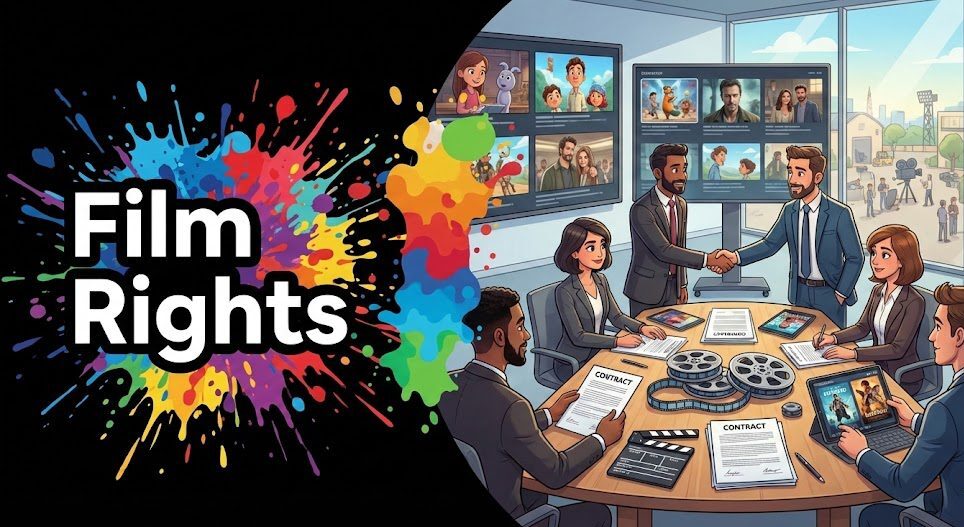
Negotiating film acquisition rights for a small theater is the strategic process of securing legal permission to exhibit cinematic content while balancing financial splits with distributors.
This involves understanding theatrical windows, negotiating minimum guarantees, and leveraging audience demographics to secure favorable terms.
According to Variety Intelligence Platform, localized independent theaters have seen a 15% rise in niche programming demand as audiences shift away from generic multiplex offerings.
In this guide, you’ll learn actionable negotiation tactics, how to leverage community engagement as a bargaining chip, and how data intelligence simplifies the sourcing of independent distributors.
While traditional resources focus on large-scale studio deals, they often fail to address the high-friction, low-leverage reality faced by independent theater operators. This gap leaves small businesses struggling with rigid contract terms and limited visibility into which distributors are actually friendly to smaller venues.
This comprehensive guide addresses these specific gaps by providing a roadmap for negotiation—from identifying the right partners to finalizing the terms that protect your bottom line.
Table of Contents
Key Takeaways for Small Theater Owners
-
Community is Leverage: Use your local engagement metrics to negotiate lower minimum guarantees by proving your ability to drive niche audience traffic.
-
Data-Driven Sourcing: Small theaters identify distribution partners 5x faster by tracking unreleased project pipelines rather than relying on standard trade listings.
-
Flexible Windows: Negotiate for non-exclusive rights or shorter theatrical windows to allow for local event-based screenings that multiplexes often ignore.
What is Film Rights Negotiation for Small Theaters?
For small theater owners, film rights negotiation is the bridge between creative curation and financial viability. Unlike major chains that have pre-existing volume deals with studios, independent exhibitors must negotiate on a title-by-title basis. This process determines the percentage of ticket sales (rental fee) that stays with the theater versus going to the distributor.
Commonly, these negotiations revolve around the “Minimum Guarantee” (MG)—a flat fee paid upfront—or a “Sliding Scale” where the percentage changes over the length of the run. For smaller venues, the goal is often to minimize the MG and secure a “per capita” deal that aligns with actual attendance.
Find active independent distributors for your region:
Industry Expert Perspective: Strategy for Financial Sustainability in Independent Filmmaking
Understanding the financial models of independent distributors is key to negotiating better rights. In this perspective, industry leaders discuss how creative financing and disciplined business models are transforming independent content sustainability.

Key Insights
Kirsty Bell, founder and CEO of Goldfinch, discusses her journey from the financial world to transforming the independent film industry through disciplined business models and creative financing. She explores how the company bridges art and enterprise by leveraging diverse revenue streams.
How to Leverage Local Community in Negotiations
The greatest leverage a small theater owner has is their “Hyper-Local Audience Intelligence.” Distributors want guaranteed eyeballs. If you can prove that your specific community has a high density of interest in a particular niche—be it environmental documentaries or regional foreign cinema—you can negotiate from a position of power.
- 1. Demographic Proof Points: Share newsletter open rates and social media engagement for specific genres to justify lower upfront fees.
- 2. Event-Based Programming: Offer to package the film with a Q&A or a local sponsor event, which increases the film’s perceived value and ticket price.
Identify niche distributors acquiring your target genre:
How to Find Distributors for Small Theater Releases
Traditional databases often focus on the “Big Five” studios, leaving independent theater owners in the dark about the 140,000+ other companies operating in the supply chain. Finding “small-theater-friendly” distributors requires looking at track records—specifically, who has recently licensed content to non-chain venues.
Vitrina AI’s supply chain intelligence allows theater owners to map these relationships. By tracking over 1.6 million titles and their associated deals, you can identify which sales agents and distributors are actively seeking theatrical exposure for independent projects, often at much more flexible terms than major studios.
The 3 Biggest Barriers to Fair Licensing Deals (And How to Overcome Them)
Small theater owners often enter negotiations with a “data deficit.” Without knowing what other theaters are paying or which distributors are desperate for screens, you’re at a disadvantage.
- 1. The High Minimum Guarantee Trap: Many distributors ask for an MG that exceeds your theater’s capacity. The Fix: Offer a “floor” (minimum per screening) rather than a total MG.
- 2. Rigid Theatrical Windows: Studios may demand a 4-week exclusive run. The Fix: Negotiate for “weekend-only” rights or “split-screens” to keep your programming fresh.
- 3. Hidden Marketing Costs: Don’t get stuck with Co-Op advertising fees that weren’t in the budget. The Fix: Explicitly state that the theater provides social/organic reach while the distributor provides all digital assets.
Moving Forward
Negotiating film rights for small theaters has evolved from a game of chance to a game of intelligence. By leveraging your community’s unique demographics and using supply-chain data to find the right partners, you can secure content that drives revenue without sacrificing your independence.
Whether you are a new theater owner looking for beginner-friendly licensing models, or a veteran exhibitor trying to bypass traditional studio hurdles, data-driven negotiation is the path forward.
Outlook: Over the next 12-18 months, the rise of “Weaponized Distribution” will see premium content moving across platforms and windows more rapidly, creating unprecedented opportunities for small theaters to capture high-value titles earlier in their lifecycle.
Frequently Asked Questions
How much does it cost to license a movie for a small theater?
Can I negotiate the “Theatrical Window”?
About the Author
With over 15 years in independent film exhibition and distribution strategy, our team specializes in bridging the gap between small theater operations and global supply chain intelligence. Connect on Vitrina.