About Innovation Hub
 Global Content Pulse (Webinars)


 Global Production Financing
(Webinars)
Global Production Financing
(Webinars)  LeaderSpeak Podcast
  About Vitrina
 Our Story
 Our Solutions 🔥
 Film+TV Projects Tracker 🚀
 Case Studies
 Our Profile
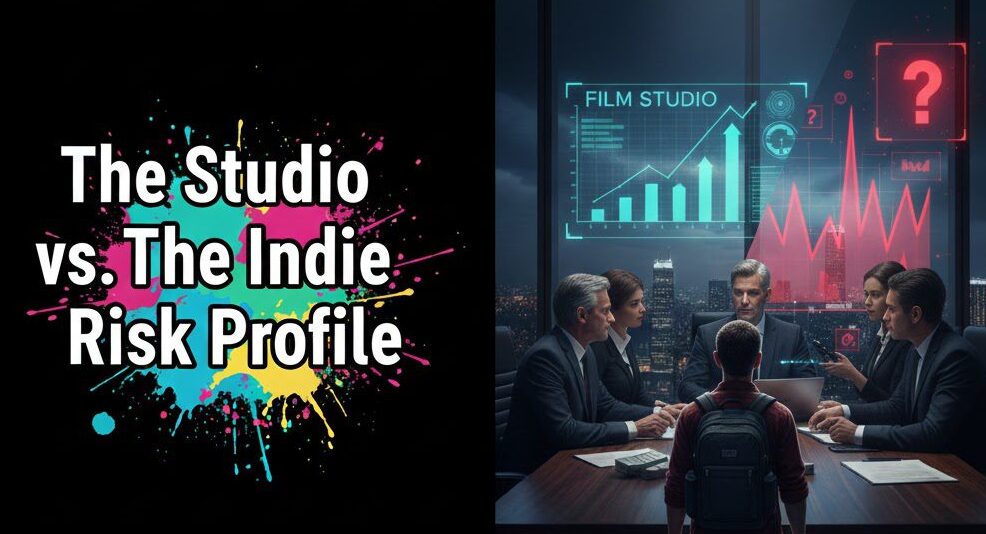
Equity models in film finance are bifurcating between the “Walled Garden” stability of major studios and the high-yield, decentralized risk profiles of independent slates.
While studio equity leverages integrated distribution and massive balance sheets, indie models rely on a complex web of co-productions, tax incentives, and regional capital pools.
According to Vitrina AI, 85% of capital discovery in the independent sector is currently hindered by fragmented data across 600,000+ companies.
This guide provides a comparative framework for strategy leads to evaluate counterparty risk using real-time supply chain intelligence.
Strategic Roadmap

Your AI Assistant, Agent, and Analyst for the Business of Entertainment
VIQI AI helps you plan content acquisitions, raise production financing, and find and connect with the right partners worldwide.
- Find active co-producers and financiers for scripted projects
- Find equity and gap financing companies in North America
- Find top film financiers in Europe
- Find production houses that can co-produce or finance unscripted series
- I am looking for production partners for a YA drama set in Brazil
- I am looking for producers with proven track record in mid-budget features
- I am looking for Turkish distributors with successful international sales
- I am looking for OTT platforms actively acquiring finished series for the LATAM region
- I am seeking localization companies offer subtitling services in multiple Asian languages
- I am seeking partners in animation production for children's content
- I am seeking USA based post-production companies with sound facilities
- I am seeking VFX partners to composite background images and AI generated content
- Show me recent drama projects available for pre-buy
- Show me Japanese Anime Distributors
- Show me true-crime buyers from Asia
- Show me documentary pre-buyers
- List the top commissioners at the BBC
- List the post-production and VFX decision-makers at Netflix
- List the development leaders at Sony Pictures
- List the scripted programming heads at HBO
- Who is backing animation projects in Europe right now
- Who is Netflix’s top production partners for Sports Docs
- Who is Commissioning factual content in the NORDICS
- Who is acquiring unscripted formats for the North American market
Executive Insights
-
Centralized vs. Decentralized: Studio equity offers lower returns but guaranteed distribution, while indie models provide higher upside but face high “Data Deficit” risks.
-
Supply Chain Vetting: Real-time tracking of 140,000+ companies is now mandatory to qualify the “Risk-Mitigated Slate” of indie partners.
-
Authorized Intelligence: Use vertical AI to identify regional hubs where indie equity is outperforming traditional studio pre-sales.
Structural Arbitrage: Studio vs. Indie Equity
The studio equity model is characterized by vertical integration. When a streamer like Netflix or a studio like Warner Bros. Discovery funds a project, they effectively internalize the equity risk within a “Walled Garden.” The financial lead’s priority is maximizing Average Revenue Per User (ARPU) across a global platform. In this model, equity is a tool for total IP control, often sacrificing the individual project’s back-end potential for the benefit of the ecosystem.
In contrast, the independent equity model is a exercise in supply chain orchestration. Independent financiers must assemble “decentralized equity” from various sources—private equity, state grants, and regional co-production treaties. This creates a higher risk profile due to the interdependence of multiple stakeholders, but it offers a significantly higher ceiling for revenue participation in non-traditional markets.
Compare recent indie and studio equity deal structures:
The Risk-Reward Paradox in Non-Traditional Markets
Strategy leads are increasingly looking at non-traditional markets like Brazil and MENA, where the “Risk-Reward Paradox” is most evident. In these regions, studio models often struggle with local content quotas and fragmented distribution. However, independent equity thrives by partnering with regional “Supply Chain Champions” who understand localized consumption habits.
The “Big Crunch” of film finance, as noted by industry veterans, means that pre-sales are harder to secure. This has forced indie financiers to rely on data-driven “Weaponized Distribution” strategies. By using Vitrina AI’s rolling three-year views of production volumes, leads can identify regional hubs that are “under-equity” and ripe for strategic entry.
Map the risk-reward ratio in MENA and Brazil:
Expert Perspective: The Big Crunch in Film Finance
Phil Hunt, CEO of Bankside Films and Head Gear Films, explains why the current financing climate is more challenging than ever and how indies must adapt to survive.

Strategic Takeaway
Hunt highlights that “the money is disappearing” from traditional sources, necessitating a more rigorous approach to selecting partners. This aligns with the need for verified reputation scores and deal history mapping to avoid “predatory equity” in independent slates.
Quantifying Counterparty Risk with Supply Chain Data
The greatest gap in modern film finance is the “Data Deficit.” Strategic leads often evaluate indie partners based on a single “hit” project rather than a verifiable supply chain history. Vitrina AI bridges this by mapping 30 million relationships across 3 million professionals, allowing financiers to qualify partners based on specialization, deal velocity, and historical reliability.
By treating content as an “Authorized Data” asset, leads can move from subjective vetting to data-powered science. This is particularly critical when comparing the risk profiles of cross-border equity deals where legal and operational standards vary widely. Institutional-grade intelligence turns “High-Risk Indie” into “Precision-Orchestrated Slate.”
“The industry is transitioning from an opaque, relationship-driven ecosystem to a centralized, data-powered framework. Sourcing equity is no longer about who you know, but about what the supply chain data verifies.”
Strategic Outlook
The comparison between studio and indie equity models reveals a permanent shift toward data-driven risk management. As studios focus on efficiency, the independent sector offers a strategic opening for leads who can master decentralized equity models.
Whether managing a $100M M&A transition or a regional production slate, actionable intelligence is the only “Digital Lighthouse” in a borderless market. The future of film finance belongs to those who bridge the data deficit.
Frequently Asked Questions
What is the primary risk difference between studio and indie equity?
How do strategy leads qualify indie financiers?
What is “Weaponized Distribution” in equity models?
Why is the data deficit dangerous in indie finance?
How does Vitrina map relationship risk?
What is a “Supply Chain Champion”?
How has Netflix’s M&A activity changed equity risk?
What role does AI play in comparing these models?
About the Vitrina Strategic Insights Team
Our analysts leverage the industry’s largest global supply chain dataset—mapping 30 million relationships across 600,000 companies—to provide actionable intelligence for the world’s leading media financiers and strategy leads. Connect on Vitrina AI.
Find Film+TV Projects, Partners, and Deals – Fast.
VIQI matches you with the right financiers, producers, streamers, and buyers – globally.
Producers Seeking Financing, Co-Pros, or Pre-Buys?
Vitrina Concierge helps producers reach the right financiers, commissioners, distributors, and co-production partners — with precision outreach, not cold pitching.
Join Industry Briefings Trusted by Leaders

Format Adaptations: Global Trends
Where formats are traveling, which adaptations are breaking out, and how streamers are backing remakes in 2025–2026.

Books, Novels & Comics Adaptations: Global Trends
Books, webtoons, and manga driving the next global screen hits. Discover how in this webinar.

Micro-Dramas & Mobile-First Storytelling
Micro-dramas are building real audiences and revenue. Understand the platforms, buyers, and economics behind the growth.

Navigating Global Content Licensing Trends
How global content licensing is shifting beyond flat fees to flexible, deal-driven models.