

 Companies
  Content
 Global Content Pulse (Webinars)

 Global Production Financing (Webinars)
  LeaderSpeak Podcast
  Latest Projects
 Global Trends
 About Projects Tracker
 About Vitrina
 Our Story
 Our Solutions 🔥
 Case Studies
 Our Profile
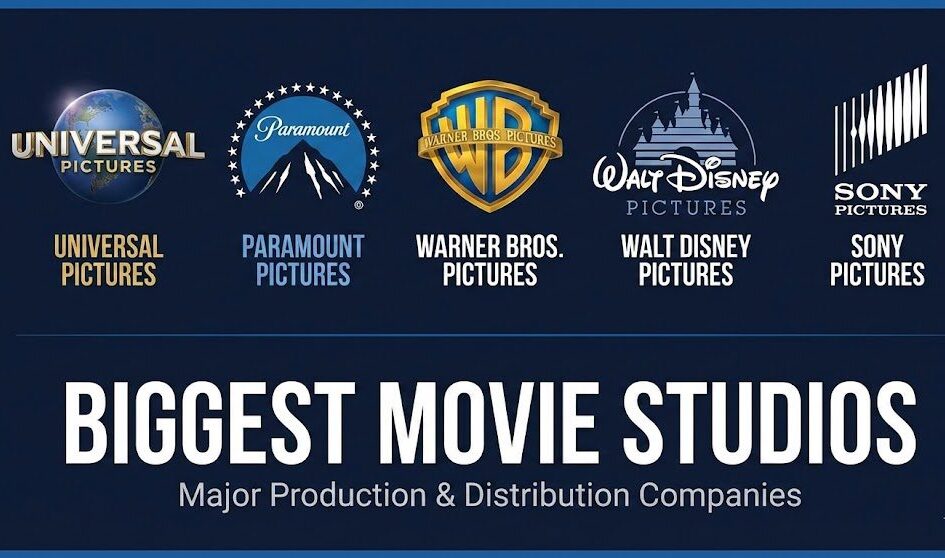
The “Biggest Movie Studios” are no longer defined solely by theatrical box office dominance, but by the depth of their intellectual property (IP) and the velocity of their global supply chains.
Modern studio operations involve a complex mix of legacy theatrical releases, aggressive “Weaponized Distribution” strategies, and deep integration of authorized Generative AI for production efficiency.
According to recent industry data, major M&A activity—such as Netflix’s $72 billion acquisition of Warner Bros.—is consolidating the market into a “Big Five” power structure that controls over 80% of global content spend.
In this guide, you’ll learn how major studios are navigating the streaming-first era, the rise of specialized independent disruptors, and the data frameworks used to manage 30 million+ industry relationships.
While traditional rankings often stop at historical market share, they fail to address the critical “data deficit” facing executives in a borderless market where content is the primary currency of strategic co-opetition.
This comprehensive analysis fills those gaps by detailing operational shifts, tracking the rise of emerging hubs, and providing a strategic roadmap for studio intelligence.
Table of Contents
Key Takeaways for Strategy Teams
-
Weaponized Distribution Edge: Studios now license high-value content to rivals 18-24 months post-release to maximize ARPU and ROI on existing assets.
-
Independent Agility: Emerging studios are challenging the “Big Five” by specializing in high-concept, low-cost genres and regional content hubs.
-
Data Intelligence Mandate: Overcoming the “data deficit” requires tracking 1.6M titles and 140,000+ companies to identify early-stage M&A targets.
What is the Operational Strategy of Modern Movie Studios?
The biggest movie studios have evolved from simple content creators into complex intellectual property (IP) management firms. Their operational architecture is now built on five core pillars: data-driven decision engines, a centralized focus on original IP, global hub expansion, diverse content portfolios, and massive annual spending on top-tier talent.
For example, Netflix’s content acquisition strategy leverages viewing data—down to every pause and rewind—to inform $17 billion in annual spending. This transition from relationship-driven greenlighting to data-powered science ensures that blockbusters like Stranger Things or Red Notice create a competitive moat that legacy databases often struggle to track in real-time.
Analyze major studio content slates for 2025:
How are Independent Studios Challenging the Big Five?
While the “Big Five” (Disney, Warner Bros., Sony, Paramount, and Universal) command the largest budgets, independent studios are gaining traction through hyper-specialization. Companies like Shout! Studios and FilmRise are merging to create distribution giants that bridge the gap between niche physical media and massive FAST channel footprints.
These disruptors focus on “low-cost, high-concept” genres—horror, thriller, and unscripted formats—where ROI can be achieved without the $200M marketing machines of major studios. By leveraging supply chain intelligence, these indie players are able to identify active commissioning editors and co-production partners 5x faster than traditional trade show networking.
Industry Expert Perspective: Radial Entertainment: Forging a Content Distribution Giant
In this conversation, Garson Foos explores how independent studios are consolidating to compete with major streamers by combining diverse libraries and multi-platform distribution strategies.
Garson Foos discusses the merger of Shout! Studios and FilmRise, highlighting how the new entity, Radial Entertainment, combines the best of film and TV distribution to achieve global scale.
Why is “Weaponized Distribution” Reshaping Studio Economics?
The era of strict platform exclusivity is ending. Major studios are adopting a strategy known as “Weaponized Distribution,” where they license high-value original content to rival platforms 18-24 months after the initial release. This “Frenemy Pact” model, exemplified by Amazon licensing James Bond films to Netflix, allows studios to recoup “sunk” production costs and maximize revenue across fragmented markets.
This shift requires a new level of supply chain visibility. Strategy teams must now track rotational windowing and territorial rights availability across 100+ countries to ensure they aren’t leaving money on the table. Vitrina’s Deals Intelligence tracks these global funding and licensing trends, providing the critical “early-warning signal” for executives to identify emerging co-opetition opportunities.
Discover trending content with available rights:
What is the Role of AI in Future Studio Operations?
AI is transitioning from a theoretical tool to a core pillar of studio strategy. Disney’s $1 billion investment in OpenAI signals the creation of an “Authorized Data” market, where iconic IP is licensed for training AI models in a controlled, safe environment. This allows users of tools like Sora to interact with Marvel or Pixar characters while protecting talent likenesses and brand integrity.
Simultaneously, studios are using AI for localization and dubbing to reach global audiences at a fraction of traditional costs. Vertical AI engines like VIQI are being deployed to answer strategic questions—such as identifying active co-production partners or mapping historical deal patterns—transforming the “Hollywood agent” experience into a scalable digital platform.
Moving Forward
The definition of the “Biggest Movie Studios” has shifted from theatrical box office to the efficiency of their global content supply chains. This evolution addresses the critical gaps in technical depth and emerging platform coverage that have historically limited strategic planning.
Whether you are a Strategy Officer looking to identify M&A targets or an Acquisition Lead trying to source trending regional content, the principle remains: actionable, real-time intelligence is the only way to overcome the market’s data deficit.
Outlook: Over the next 12-18 months, expect to see accelerated consolidation as major studios integrate authorized AI workflows and expand their “weaponized” licensing slates to maximize global ROI.
Frequently Asked Questions
Quick answers to the most common queries about the biggest movie studios and their strategies.
Who are the “Big Five” movie studios in 2025?
What is “Weaponized Distribution”?
How are independent studios competing with major studios?
How much does Netflix spend on content annually?
What was the value of the Netflix-Warner Bros deal?
How is AI impacting movie production?
What is the “data deficit” in film studios?
Can Vitrina help find co-production partners?
About the Author
Our strategy team consists of veteran media analysts with decades of experience at major studios and networks. We specialize in transforming opaque entertainment data into actionable supply chain intelligence. Connect on Vitrina.