About Innovation Hub
 Global Content Pulse (Webinars)


 Global Production Financing
(Webinars)
Global Production Financing
(Webinars)  LeaderSpeak Podcast
  About Vitrina
 Our Story
 Our Solutions 🔥
 Film+TV Projects Tracker 🚀
 Case Studies
 Our Profile
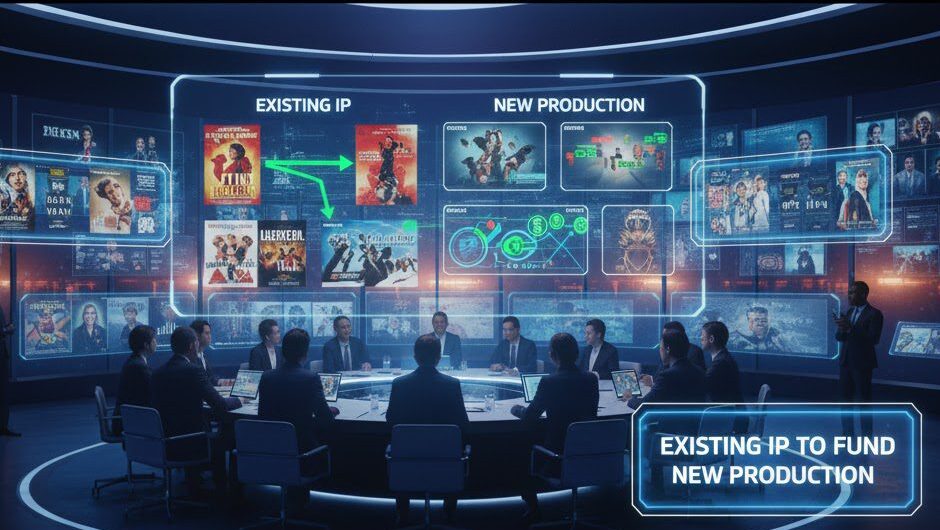
A library deal is a strategic licensing agreement where a producer or studio monetizes their back catalog of existing IP to generate immediate cash flow for new production cycles.
This involves identifying “sunk” assets—content that has completed its primary release windows—and re-licensing them to FAST channels, regional streamers, or rival platforms under a “Weaponized Distribution” model.
According to industry intelligence, major players like Warner Bros. Discovery are now recouping massive production costs by licensing premium legacy titles to rivals like Netflix, signaling a market-wide shift toward ROI-driven library management.
In this guide, you’ll learn how to audit your IP for hidden value, discover active library buyers using supply chain intelligence, and implement rotational window strategies to maximize your catalog’s earnings.
While many producers view their finished projects as static assets, the modern supply chain treats existing IP as a liquid currency. However, the lack of structured intelligence on emerging FAST channels and regional acquisition preferences creates a “data trust deficit” that leaves millions in potential revenue on the table.
This analysis fills that gap by providing a data-driven framework for library monetization—transforming your historical credits into an active financing engine for your 2025 slate.

Your AI Assistant, Agent, and Analyst for the Business of Entertainment
VIQI AI helps you plan content acquisitions, raise production financing, and find and connect with the right partners worldwide.
- Find active co-producers and financiers for scripted projects
- Find equity and gap financing companies in North America
- Find top film financiers in Europe
- Find production houses that can co-produce or finance unscripted series
- I am looking for production partners for a YA drama set in Brazil
- I am looking for producers with proven track record in mid-budget features
- I am looking for Turkish distributors with successful international sales
- I am looking for OTT platforms actively acquiring finished series for the LATAM region
- I am seeking localization companies offer subtitling services in multiple Asian languages
- I am seeking partners in animation production for children's content
- I am seeking USA based post-production companies with sound facilities
- I am seeking VFX partners to composite background images and AI generated content
- Show me recent drama projects available for pre-buy
- Show me Japanese Anime Distributors
- Show me true-crime buyers from Asia
- Show me documentary pre-buyers
- List the top commissioners at the BBC
- List the post-production and VFX decision-makers at Netflix
- List the development leaders at Sony Pictures
- List the scripted programming heads at HBO
- Who is backing animation projects in Europe right now
- Who is Netflix’s top production partners for Sports Docs
- Who is Commissioning factual content in the NORDICS
- Who is acquiring unscripted formats for the North American market
Table of Contents
Key Takeaways for Library Owners
-
Sunk Asset Monetization: Library deals allow producers to generate fresh capital from “sunk” assets—content that has already completed its primary theatrical or SVOD run.
-
Weaponized Distribution Edge: Strategic licensing to rival platforms 18-24 months post-release is now a standard practice to maximize Average Revenue Per User (ARPU).
-
FAST Channel Appetite: Emerging FAST (Free Ad-supported Streaming TV) channels are high-volume buyers for library content across niche genres and regional hits.
-
Data-Driven Sourcing: Using supply chain intelligence to track buyer preferences helps producers identify hidden licensing opportunities 5x faster than manual outreach.
What is a Library Deal in 2025?
A library deal is the process of packaging multiple existing titles—films, series, or formats—and licensing them to a third-party platform for a fixed term or revenue-share agreement. In the legacy era, these were often referred to as “catalog sales” and seen as secondary revenue. However, in 2025, these deals have become a primary pillar of project financing for independent studios.
The true power of a library deal lies in its ability to unlock capital without the long lead times of new production development. By identifying platforms that have a specific “data deficit” in your genre, producers can negotiate premium licensing fees that serve as non-dilutive capital for their next green-lighted project.
Discover platforms seeking library content in your genre:
The Rise of Weaponized Distribution and Library ROI
We have entered the era of “Weaponized Distribution,” a term describing the end of strict platform exclusivity. Major studios are now licensing high-value content to rivals after a 12-24 month window. This strategy prioritizes ROI over rigid “walled garden” models, and it creates a massive opening for independent producers to do the same with their catalogs.
Industry Expert Perspective: Radial Entertainment: Forging a Content Distribution Giant
Garson Foos, CEO of Radial Entertainment, discusses the merger of Shout! Studios and FilmRise, creating a distribution powerhouse that leverages vast and diverse content libraries to drive growth in a changing market.
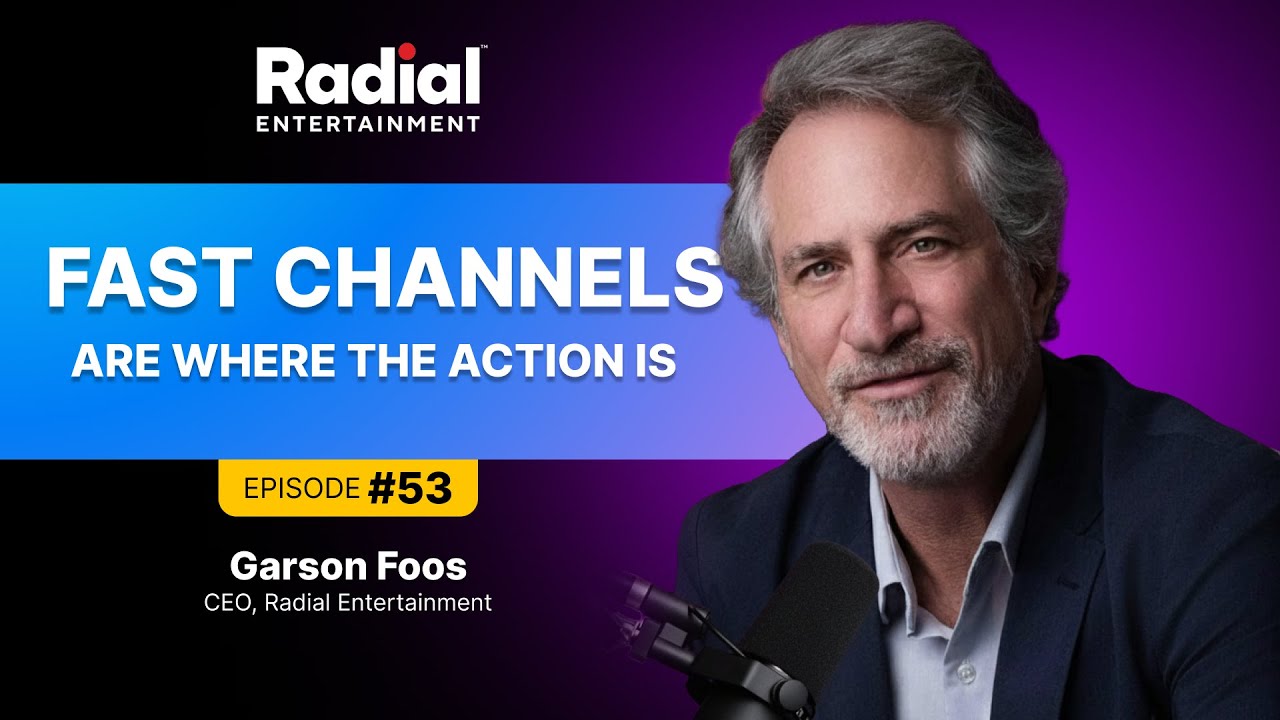
The combination of diverse libraries allows distribution entities to maximize Average Revenue Per User (ARPU) across physical, digital, and streaming platforms. For producers, this proves that library depth is a critical asset for building long-term value in the content supply chain.
How Do Producers Value Their Existing IP for Licensing?
Valuing a library isn’t just about counting titles; it’s about “Metadata Enrichment” and “Supply Chain Intelligence.” To command premium fees, producers must prove that their content aligns with current platform needs—whether that’s a deficit in high-concept thrillers or a demand for regional family animation.
1. Perform a Territorial Rights Audit
The Challenge: Many producers lose track of territorial rights that have reverted to them after 5-7 year licensing cycles. Without a centralized tracking system, these “unlocked” rights represent millions in dormant revenue.
The Approach: Use supply chain intelligence to monitor contract expirations and regional license renewals. By proactively identifying reverted rights in high-growth markets like Brazil or the Middle East, producers can package titles for fresh licensing rounds immediately.
2. Track “Weaponized” Deal Patterns
Monitor M&A and licensing trends (like the Netflix-WBD deal) to understand current territory-specific valuations for library content. When a major player starts licensing to rivals, it sets a price benchmark that independent producers can leverage in their own negotiations.
Using Supply Chain Intelligence to Discover Library Buyers
Vitrina AI has emerged as the industry’s first global supply chain platform to replace anecdotal networking with structured intelligence. For library owners, this means using the Global Film+TV Projects Tracker to identify which platforms are actively renewing library deals and which are facing a content deficit in specific genres.
By tracking 1.6M titles and 140,000+ companies, Vitrina provides the “early-warning signal” for library monetization opportunities. Whether you’re an indie studio with a 20-title catalog or a showrunner with format rights, Vitrina industrializes your partner discovery, turning the opaque library market into a data-driven financing science.
“In an era where premium content is licensed to rivals to maximize ROI, your library is no longer a graveyard of finished projects—it is a liquid financing engine for your next creative vision.”
Moving Forward
The independent content landscape has shifted from relationship-dependent catalog sales to data-driven library monetization. This transformation addresses the critical gap this guide explored: the need for producers to treat their existing IP as active production capital rather than static history.
Whether you are an independent producer looking to fund a 2025 slate, or a sales agent trying to optimize a studio catalog for FAST and SVOD, the Vitrina platform provides the steady signal needed to navigate this complex landscape.
Outlook: Over the next 12-18 months, platform fragmentation will accelerate the demand for regional library content, making verified supply chain intelligence your most valuable negotiation asset.
Frequently Asked Questions
Quick answers to the most common queries about library deals.
What is a library deal in film distribution?
How can I use my existing IP to fund new production?
What is weaponized distribution?
Why are FAST channels good for library monetization?
About the Author
Content Strategist specializing in entertainment supply chain intelligence and IP valuation with 10+ years in territorial distribution. Connect on Vitrina.