About Innovation Hub
 Global Content Pulse (Webinars)


 Global Production Financing
(Webinars)
Global Production Financing
(Webinars)  LeaderSpeak Podcast
  About Vitrina
 Our Story
 Our Solutions 🔥
 Film+TV Projects Tracker 🚀
 Case Studies
 Our Profile
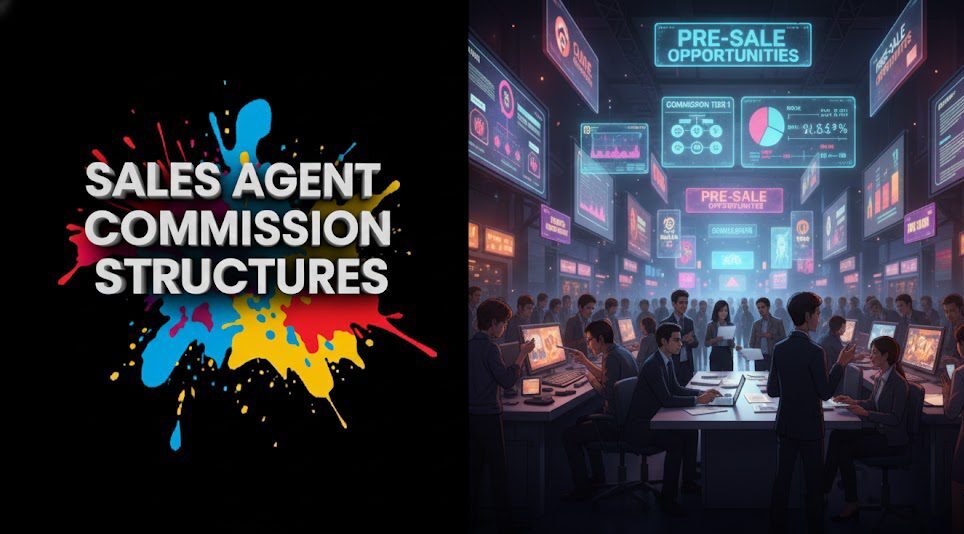
Sales agent commission structures are the percentage-based fees (typically 10% to 25%) that international sales agents retain from a film’s gross receipts in exchange for representation and distribution services.
This process involves negotiating the specific “split” between the producer and agent, often incorporating tiered rates that decrease as revenue benchmarks are met and strict caps on deductible marketing expenses.
According to industry data from Vitrina AI’s network of 140,000+ companies, producers using supply chain intelligence to benchmark agents achieve 15% better net revenue retention by identifying partners with specific genre-territory expertise.
In this guide, you’ll learn proven strategies for structuring tiered commissions, auditing marketing expenses, and leveraging data to secure equitable deals.
While traditional negotiation relies on legacy relationships and “standard” contract templates, these often favor the agent, leaving producers with significant “expense leakage.” Most beginner resources fail to explain how to properly audit these structures or benchmark them against real market performance.
This comprehensive guide addresses these gaps by providing actionable negotiation frameworks—from “corridor” structures to marketing caps—ensuring you retain the maximum value of your IP.

Your AI Assistant, Agent, and Analyst for the Business of Entertainment
VIQI AI helps you plan content acquisitions, raise production financing, and find and connect with the right partners worldwide.
- Find active co-producers and financiers for scripted projects
- Find equity and gap financing companies in North America
- Find top film financiers in Europe
- Find production houses that can co-produce or finance unscripted series
- I am looking for production partners for a YA drama set in Brazil
- I am looking for producers with proven track record in mid-budget features
- I am looking for Turkish distributors with successful international sales
- I am looking for OTT platforms actively acquiring finished series for the LATAM region
- I am seeking localization companies offer subtitling services in multiple Asian languages
- I am seeking partners in animation production for children's content
- I am seeking USA based post-production companies with sound facilities
- I am seeking VFX partners to composite background images and AI generated content
- Show me recent drama projects available for pre-buy
- Show me Japanese Anime Distributors
- Show me true-crime buyers from Asia
- Show me documentary pre-buyers
- List the top commissioners at the BBC
- List the post-production and VFX decision-makers at Netflix
- List the development leaders at Sony Pictures
- List the scripted programming heads at HBO
- Who is backing animation projects in Europe right now
- Who is Netflix’s top production partners for Sports Docs
- Who is Commissioning factual content in the NORDICS
- Who is acquiring unscripted formats for the North American market
Table of Contents
Key Takeaways for Independent Producers
-
Negotiate Tiered Rates: Producers using tiered splits (e.g., 20% reduced to 12.5% after recoupment) retain 15-20% more net revenue on high-performing titles.
-
Audit Marketing Caps: Strict expense caps (e.g., $50,000 for digital marketing) prevent “hidden” fees from eroding the producer’s share during international markets.
-
Leverage Intelligence: Using Vitrina’s verified track records allows you to negotiate from a position of authority by citing an agent’s historical genre performance.
What are Standard Sales Agent Commission Structures?
In the entertainment supply chain, a sales agent acts as the primary intermediary between a production and global buyers. Their commission is typically calculated as a percentage of the gross receipts—the total money paid by distributors to acquire the film. While 20% was the legacy “standard,” the rise of digital platforms and direct-to-streamer buyouts has forced these rates into a more competitive range, often between 10% and 15% for high-value projects.
However, the percentage itself is only half the story. The structure of how that commission is deducted—and what expenses are removed before the producer sees a dollar—is the most critical point of negotiation. Sales agents typically deduct their commission off the top of gross receipts, followed by recoupment of their pre-approved marketing and festival expenses.
Benchmark sales agent rates for your specific genre:
How to Negotiate Tiered Commission Splits
Sophisticated producers prioritize tiered commission splits. This structure aligns the agent’s incentives with the film’s financial success. For example, a contract might stipulate a 20% commission on the first $250,000 of sales, dropping to 15% on the next $500,000, and finally settling at 10% for all revenue beyond that threshold.
Another variation is the “Corridor” model, where the producer is guaranteed a small percentage of every dollar from the very first sale, even before the sales agent has recouped their marketing expenses. This ensures some cash flow to the production company during the lengthy distribution window. Negotiating these tiers effectively requires knowing the agent’s typical “deal velocity”—data that can be extracted from historical project tracking.
Industry Expert Perspective: Inside FilmSharks International: World Sales Mastery
Guido Rud, founder of FilmSharks International, provides an inside look at how global sales agents structure their business models. Understanding the agent’s perspective on remake distribution and world sales is critical for producers looking to negotiate fair commission tiers.
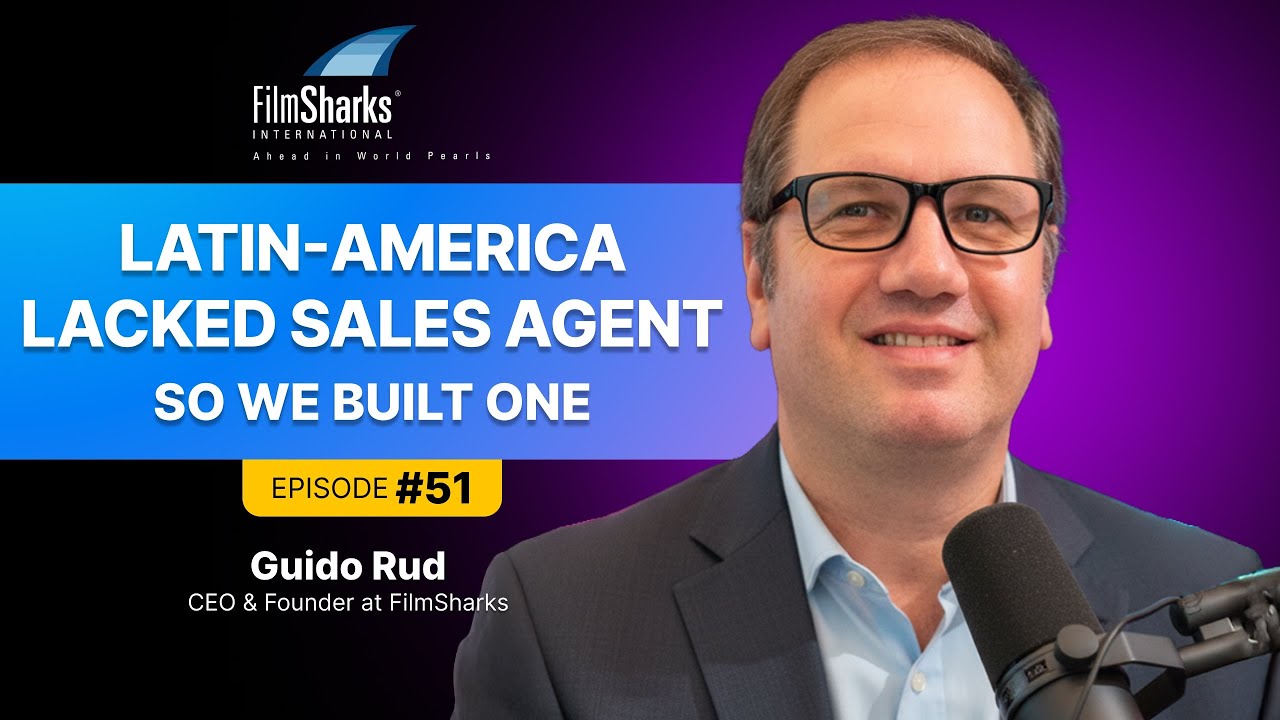
Guido Rud explains the inception of FilmSharks and the company’s focus on world sales and remake distribution. This highlights how modern agents diversify their revenue, which can be a leverage point for producers—if an agent is profiting from remakes, they may be more flexible on the initial sales commission.
Capping Marketing Expenses: Protecting Your Revenue
A common pitfall for independent producers is failing to set a hard cap on marketing and festival expenses. Sales agents deduct these costs from the gross receipts before the producer’s share is calculated. Without a cap, an agent might spend $100,000 on market screenings and office overhead at Cannes, essentially wiping out the producer’s profit from the first few territorial deals.
A fair negotiation involves setting an “overall cap” (e.g., $30,000 to $50,000) and specifying exactly which categories are recoupable. Producers should exclude “office overhead” or generic “promotion” fees and instead insist on direct, third-party invoices for localized trailers, posters, and market-specific advertising. This transparency prevents the agent from “double dipping” on the commission.
Identify agents with low overhead and high deal velocity:
Using Supply Chain Intelligence for Agent Benchmarking
The most powerful lever in negotiation is asymmetric information. Most agents assume producers lack data on their historical commission rates or recent deal closures. By leveraging the Vitrina Global Projects Tracker, producers can audit an agent’s performance across 1.6 million titles and 30 million industry relationships.
If data shows an agent consistently secures high-value SVOD buyouts for similar genre titles in under 90 days, you can push for a lower commission percentage on digital rights. Conversely, if an agent has a massive overhead but slow deal velocity, it’s a signal to negotiate a tighter “cap” on recoupable expenses. Supply chain intelligence transforms “trust-based” negotiation into “data-based” strategy.
Moving Forward
Negotiating a fair sales agent commission structure is no longer about accepting a “standard” 20% split. It’s about leveraging the industry’s shift toward data-driven science to audit every line item in your distribution contract. By focusing on tiered rates and strict expense caps, you ensure your project remains financially sustainable.
Whether you are an independent producer looking to protect your gross receipts, or a sales agent trying to prove your value through transparency, the path forward is built on verified supply chain intelligence.
Outlook: Over the next 18 months, we expect to see “smart contracts” in distribution that automatically adjust commission rates based on real-time platform performance, further reducing the manual friction of auditing sales agent reports.
Frequently Asked Questions
Quick answers to the most common queries about sales agent structures.
What is the typical sales agent commission for indie films?
Should I pay for festival expenses out of my own pocket?
What are “recoupable expenses”?
How can Vitrina help with negotiation?
Is a “net profit” split better than a “gross receipt” split?
About the Author
Vitrina Editorial Team specializing in entertainment supply chain intelligence. With data on 5 million professionals and 30 million relationships, we provide the definitive roadmap for modern content monetization. Connect on Vitrina.
Find Film+TV Projects, Partners, and Deals – Fast.
VIQI matches you with the right financiers, producers, streamers, and buyers – globally.
Producers Seeking Financing, Co-Pros, or Pre-Buys?
Vitrina Concierge helps producers reach the right financiers, commissioners, distributors, and co-production partners — with precision outreach, not cold pitching.
Join Industry Briefings Trusted by Leaders

Format Adaptations: Global Trends
Where formats are traveling, which adaptations are breaking out, and how streamers are backing remakes in 2025–2026.

Books, Novels & Comics Adaptations: Global Trends
Books, webtoons, and manga driving the next global screen hits. Discover how in this webinar.

Micro-Dramas & Mobile-First Storytelling
Micro-dramas are building real audiences and revenue. Understand the platforms, buyers, and economics behind the growth.

Navigating Global Content Licensing Trends
How global content licensing is shifting beyond flat fees to flexible, deal-driven models.