

 Companies
  Content
 Global Content Pulse (Webinars)

 Global Production Financing (Webinars)
  LeaderSpeak Podcast
  Latest Projects
 Global Trends
 About Projects Tracker
 About Vitrina
 Our Story
 Our Solutions 🔥
 Case Studies
 Our Profile
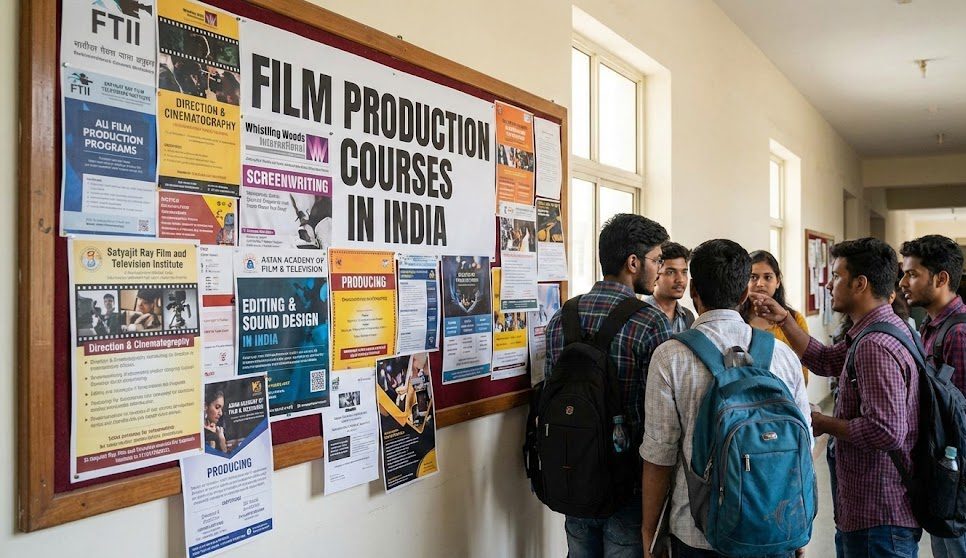
Film production courses in India are professional certifications provided by premier institutes like FTII, SRFTI, and Whistling Woods International that are validated by their alumni’s integration into the mainstream entertainment supply chain.
Recognition in the Indian film industry is less about the piece of paper and more about the network, technical rigor, and hands-on exposure to high-end production pipelines.
According to industry reports, nearly 65% of technical leads in major Bollywood and regional productions are graduates of accredited national film institutes.
In this guide, you’ll learn how to identify recognized certifications, evaluate alumni success stories, and leverage supply chain intelligence to find the right career trajectory.
While most online resources provide shallow lists of colleges, they often fail to address how these courses adapt to the rising demands of OTT platforms and the globalized supply chain.
This comprehensive guide bridges the gap between academic theory and industry reality, providing actionable strategies for selecting certifications that offer genuine market value.
Table of Contents
- 01What Defines a Recognized Film Certification?
- 02Alumni Success: The Real Metric of Recognition
- 03How to Choose the Right Course for Your Career Goals
- 04Digital Transformation: Courses Adapting to OTT Trends
- 05Networking Opportunities Within Professional Programs
- 06The Global Supply Chain Advantage in Education
- 07Overcoming Challenges in Film Education Selection
- 08Real-World Application: From Classroom to Set
- 09Key Takeaways
- 10FAQ
- 11Moving Forward
Key Takeaways for Aspiring Producers
-
Network Over Paper: Industry recognition stems from the institution’s alumni network and direct connections to active production houses rather than the certification alone.
-
Alumni Proof-Points: Evaluate courses by tracking their graduates on platforms like Vitrina to verify their participation in major domestic and global projects.
-
OTT Readiness: Modern recognized programs now include specialized training for digital content creation and global co-production standards, meeting the current market demand.
-
Data-Driven Sourcing: Using supply chain intelligence allows you to qualify which institutes are currently feeding talent into trending regional markets like South India.
What Defines a Recognized Film Certification?
In the Indian context, “recognition” is a multifaceted term that extends beyond government accreditation. While the Film and Television Institute of India (FTII) and Satyajit Ray Film and Television Institute (SRFTI) carry the weight of being national bodies, private entities like Whistling Woods International earn recognition through high industry placement rates. Recognition is essentially a signal of a candidate’s readiness to operate within a professional, high-stakes production environment.
A recognized certification ensures that the student has been trained on industry-standard equipment, such as Arri Alexa cameras or Avid Media Composer suites, and understands the complex “language of the set.” This technical grounding is critical in an industry where downtime costs lakhs per hour. Employers look for these credentials to mitigate the risk of hiring unproven talent.
Discover which companies hire from premier film institutes:
Alumni Success: The Real Metric of Recognition
The true value of any film production course is visible in its alumni directory. Graduates from recognized institutes consistently populate the credits of National Award-winning films and global streaming hits. For instance, the cinematography and editing departments of nearly every major Indian project feature names from the “Old Guard” institutes, creating a self-sustaining cycle of mentorship and recruitment.
When analyzing alumni success, look for “Supply Chain Depth.” Do graduates end up in leadership roles (HODs), or are they concentrated in entry-level positions? Institutions like LV Prasad Film & TV Academy have a proven track record of producing directors and cinematographers who dominate the South Indian regional markets, proving that regional recognition is just as powerful as Bollywood acclaim.
Industry Expert Perspective: Beyond Bollywood: Unpacking India’s Regional Film Markets
Understanding the dynamics of regional cinema is crucial for any student choosing a course, as these markets often offer faster career acceleration and higher demand for skilled professionals.
Naveen Chandra, CEO of 91 Film Studios, discusses the immense potential of India’s regional cinema market, highlighting how organized capital and professional pipelines are transforming these once-fragmented sectors into powerhouse creative economies.
How to Choose the Right Course for Your Career Goals
Choosing a certification is not a one-size-fits-all process. You must align the institute’s strengths with your desired role. For technical mastery in cinematography or sound, government institutes like FTII are unparalleled due to their rigorous three-year curriculum. However, if your goal is rapid entry into the commercial production ecosystem or creative producing, private institutes in Mumbai offer closer proximity to active sets and networking mixers.
Evaluating the faculty is equally important. Courses taught by “Active Practitioners”—those currently working on major series or films—provide a level of real-world insight that tenure-track academics cannot match. They can explain the nuances of working with OTT delivery specs for Netflix or Amazon Prime, which are now mandatory requirements for modern production staff.
Find production houses active in OTT content:
Digital Transformation: Courses Adapting to OTT Trends
The explosion of Over-The-Top (OTT) platforms has fundamentally changed what an “industry-recognized” course looks like. Traditional film schools are now integrating modules on episodic storytelling, “showrunning,” and digital asset management. This shift is a response to the massive volume of content being commissioned by global streamers, which requires a workforce comfortable with rapid turnaround times and international quality standards.
Courses that partner directly with tech-forward studios or provide exposure to “Virtual Production” (as seen in Hollywood blockbusters) are gaining significant traction. As India becomes a global hub for VFX and post-production, certifications that focus on the intersection of technology and creativity are often more valuable than those focused solely on classical film theory.
Networking Opportunities Within Professional Programs
In the entertainment industry, your network is your net worth. Recognized film production courses act as gatekeepers to exclusive professional circles. During these programs, students often work on short films that are mentored by visiting HODs or participate in masterclasses held at major studios like Yash Raj Films or Film City.
The “Cohort Effect” is also a powerful driver of success. When you graduate from a recognized institute, your classmates become your future collaborators. A cinematographer from a 2020 batch is likely to hire an editor or sound designer from the same cohort for their first independent project. This lateral networking is often more effective for securing long-term work than cold applications to production houses.
Moving Forward
Navigating the Indian film education landscape requires a shift from passive list-reading to active supply chain analysis. By focusing on institutes that offer verified alumni success, OTT-ready curricula, and deep regional connections, you position yourself at the forefront of the industry’s digital transformation.
Whether you are a first-time filmmaker looking to build a technical foundation or an independent producer trying to vet potential collaborators, the principle remains the same: professional recognition is earned through the network and the rigor of the training pipeline.
Outlook: Over the next 12-18 months, expect to see a surge in “Hybrid Certifications”—short-form, high-intensity professional programs backed by major studios and OTT platforms, designed to fast-track talent into the booming regional content markets.
Frequently Asked Questions
Quick answers to the most common queries about Indian film production certifications.
Which film institutes in India are considered the most prestigious?
Does a certification guarantee a job in the Indian film industry?
How important is the location of the film school?
Are online film production certifications recognized?
What is the role of the alumni network in film education?
Do OTT platforms prefer candidates from specific film schools?
How can I verify the credibility of a private film institute?
Is it better to specialize or take a general filmmaking course?
About the Author
Our Content Architect team specializes in the global entertainment supply chain, bringing over 15 years of experience in market analysis and production strategy. We leverage proprietary data from Vitrina AI to help professionals navigate the complexities of content discovery and partnership due diligence. Connect on Vitrina.