About Innovation Hub
 Global Content Pulse (Webinars)


 Global Production Financing
(Webinars)
Global Production Financing
(Webinars)  LeaderSpeak Podcast
  About Vitrina
 Our Story
 Our Solutions 🔥
 Film+TV Projects Tracker 🚀
 Case Studies
 Our Profile
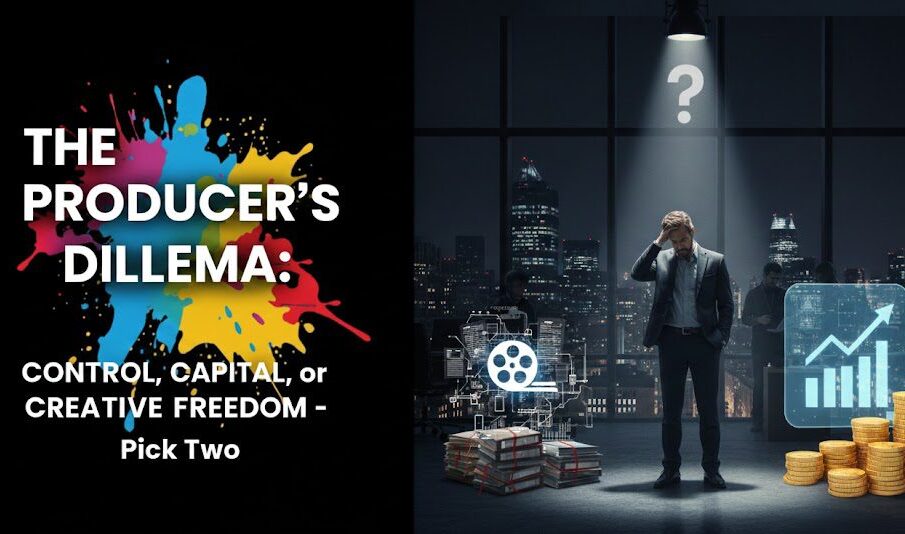
The “Producer’s Dilemma” is a strategic framework stating that in any media project, you can only maximize two out of three pillars: Control, Capital, or Creative Freedom.
Securing massive capital often requires yielding creative freedom to a studio, while retaining absolute control usually means operating with limited capital.
In the current “Weaponized Distribution” era, data from Vitrina AI reveals that producers are increasingly using supply chain intelligence to identify niche financiers who offer a “third way”—capital that respects creative equity.
This article breaks down the mechanics of these trade-offs and provides a data-driven roadmap for producers to bridge the “data deficit” and secure better deal terms.
Table of Contents
Strategic Insights
-
The “Pick Two” Rule: Accept that every financing deal involves a structural sacrifice. Data helps you decide which sacrifice is most sustainable.
-
Supply Chain Leverage: Using Vitrina’s 30 million relationships allows producers to skip generic “Walled Garden” buyers and find specific partners with better alignment.
-
Control via IP: Retaining IP ownership (Control) is the only way to capitalize on “Authorized Data” licensing for AI models in the coming years.
Defining the Triangle: Control vs. Capital vs. Freedom
In the entertainment supply chain, resources are never unlimited. Every producer faces a triangular trade-off:
- Capital: The budget required to execute a vision with high production value.
- Control: The legal ownership of IP, distribution windows, and sequels.
- Creative Freedom: The ability to make final cut, casting, and script decisions without interference.
Historically, “Independent” producers prioritized Freedom and Control but struggled with Capital. “Studio” producers secured Capital but surrendered both Control and Freedom. Today, however, the rise of specialized Vertical AI is allowing producers to map the market more precisely, finding boutique financiers who allow for hybrid configurations.
Find “Freedom-First” financiers for your next independent feature:
The High Cost of Capital: When Freedom is the Price
When a major streamer like Netflix or Disney+ provides 100% of the production capital, they aren’t just buying a license; they are buying the “Walled Garden” rights. This often results in a total loss of IP control and significant script mandates to satisfy global algorithm requirements.
According to Vitrina AI’s analysis of 600,000+ companies, the “Capital-Heavy” model is shifting. As streamers cut budgets (the “Streaming Recessions”), they are becoming more open to co-productions. This allows producers to bring in diverse capital sources—preserving some control—while the streamer takes a specific distribution window.
Analyze co-production trends in the MENA and Asian regions:
Finding “Hidden” Capital via Supply Chain Intelligence
The greatest gap for producers is the “data deficit.” Many producers keep going back to the same 10-15 buyers, even when those buyers demand the highest sacrifices in freedom. Supply chain intelligence provides visibility into the other 140,000+ companies globally.
Vitrina’s platform acts as a digital lighthouse, identifying “Hidden Capital”—non-traditional financiers, brand integration partners, and regional distributors who are desperate for premium content but lack the leverage to demand total control. By diversifying your capital, you reduce the power of any single “Master.”
Uncover non-traditional financing partners globally:
Retaining Control in the Era of Global Streamers
To retain Control (IP), producers are adopting “Weaponized Distribution.” Instead of selling all rights to one buyer, they use data to slice windows: TV rights here, Digital rights there, and Airline/Hotel rights elsewhere.
As Atul Phadnis, CEO of Vitrina AI, notes, the industry is transitioning to a centralized, data-powered framework. Producers who own their IP are sitting on “sunk production assets” that can generate revenue for decades. In the age of AI, this control becomes even more valuable, as “Authorized Data” for model training is quickly becoming a new revenue stream.
Expert Perspective: Financial Sustainability in Independent Film
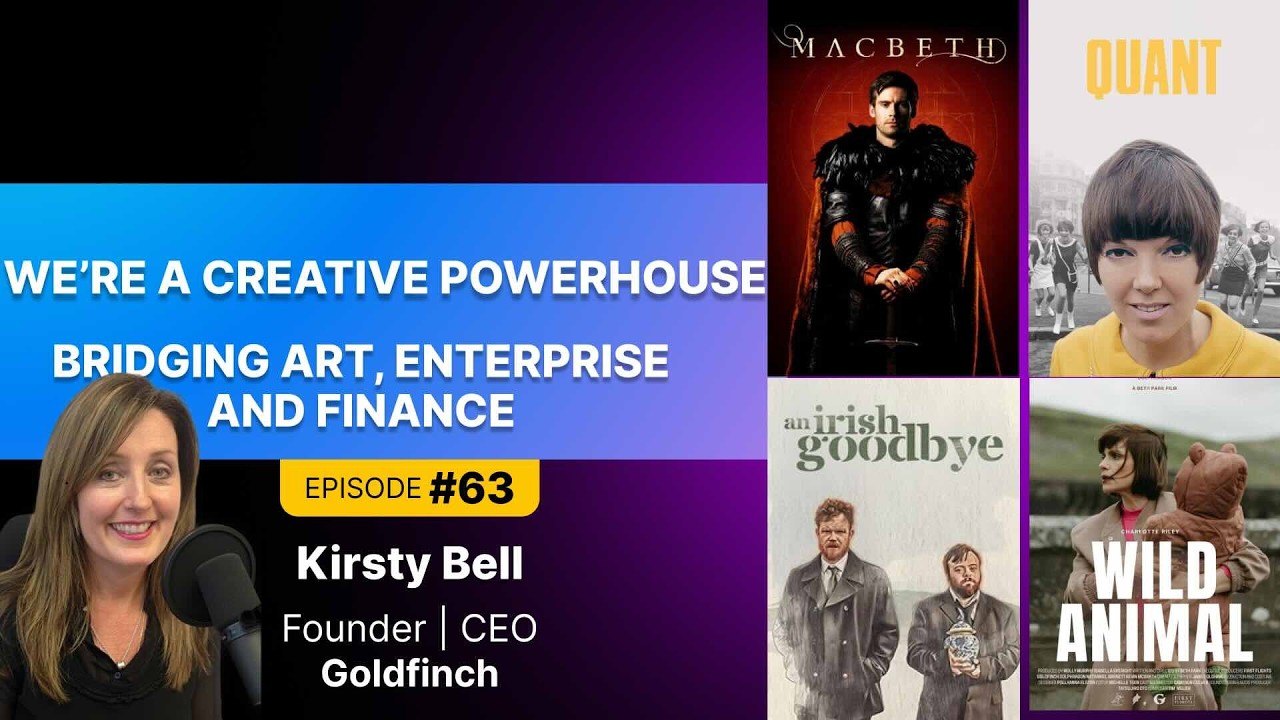
Kirsty Bell, founder of Goldfinch, explains how she bridges the art-enterprise gap by leveraging diverse revenue streams and disciplined business models.
Moving Forward
The Producer’s Dilemma is no longer a life sentence. With 1.6M+ tracked projects and 3M professionals available via Vitrina, the “Pick Two” rule is being challenged by “Precision Outreach.”
Future Outlook: Expect the next 24 months to favor producers who leverage Vertical AI to find co-production partners in emerging markets like Africa and the Middle East, where Capital is available with fewer “Walled Garden” strings attached.
Frequently Asked Questions
Can I have all three: Capital, Control, and Freedom?
Rarely. Even A-list directors usually trade some control for massive budgets. However, high-leverage data allows you to minimize the sacrifice.
How does Vitrina help solve the Producer’s Dilemma?
By mapping the entire global supply chain, Vitrina helps you find the “Hidden Capital” that doesn’t demand the same level of Control as major studios.
What is “Weaponized Distribution”?
It is a strategy where producers retain IP and license it in specific windows and territories to maximize ROI post-release.
Does creative freedom decrease as budget increases?
Statistically, yes. More capital means more stakeholders with “notes.” Using co-production models can mitigate this by spreading the “notes” across multiple smaller partners.
What is the “data deficit” in film production?
It is the lack of verified, real-time intelligence on which companies are currently buying, financing, or partnering, forcing producers to rely on outdated personal networks.
Why is IP ownership (Control) becoming more valuable?
Because of new monetization paths like “Authorized Data” licensing for AI and the ability to rotational license content across fragmented streaming platforms.
Is co-production a way to balance the dilemma?
Yes. Co-production allows you to pool capital while retaining control over your specific territory or equity share, though it adds administrative complexity.
Can VIQI AI help identify specific deal terms?
While it can’t show private contracts, it understands the industry context and maps relationship histories to help you qualify partners based on their previous deal structures.
“Producers are moving from an opaque, relationship-driven ecosystem to a centralized, data-powered framework where the ‘Dilemma’ is solved with precise mapping.”
About Vitrina Intelligence
Written by the editorial team at Vitrina AI, the global supply chain platform for M&E. Tracking 140k+ companies and 3M+ professionals to transform high-risk art into a data-driven science.