

 Companies
  Content
 Global Content Pulse (Webinars)

 Global Production Financing (Webinars)
  LeaderSpeak Podcast
  Latest Projects
 Global Trends
 About Projects Tracker
 About Vitrina
 Our Story
 Our Solutions 🔥
 Case Studies
 Our Profile
Negative pickup deals are contractual agreements where a film distributor commits to purchasing a completed film for a fixed sum, typically paid upon delivery.
This arrangement allows producers to use the contract as collateral to secure production loans from banks or private financiers, effectively bridging the gap between creative development and physical production.
According to industry data from the Vitrina Intelligence Platform, the use of structured distribution guarantees has increased by 40% as traditional pre-sales markets become more selective.
In this guide, you’ll learn the mechanics of these deals, their strategic benefits, and how to identify “pickup-ready” distributors in today’s evolving supply chain.
While most resources focus on the legal jargon of the Hollywood studio system, they often fail to address how independent creators can navigate these deals in a borderless, data-driven market.
This comprehensive guide addresses those gaps by providing actionable strategies—from vetting bankable partners to leveraging AI for market discovery.
Table of Contents
Key Takeaways for Producers
-
Collateralized Contracts: A negative pickup deal acts as a bankable guarantee that turns a future sale into immediate production capital.
-
Creative Autonomy: Unlike studio-funded models, pickups often grant producers greater control over the day-to-day creative execution during physical production.
-
Intel-Driven Discovery: Leveraging platforms like Vitrina allows producers to identify active distributors who are specifically seeking “pickup-ready” independent slates.
What is a Negative Pickup Deal?
In the context of the entertainment supply chain, a negative pickup is a financing structure where a distributor (the “buyer”) agrees to “pick up” the completed negative—or master file—of a film for a set price. Unlike a licensing deal that might happen at a festival after the film is finished, this agreement is signed before production begins. It serves as a purchase order that the producer can take to a lender.
This deal is called “negative pickup” because, historically, the distributor would pay once they received the physical film negative. In the digital age, this has evolved to include delivery of 4K masters, metadata, and marketing assets. For the independent producer, the contract is essentially “bankable paper” that transforms a theoretical profit into tangible production funds.
Find active distributors offering pickup deals:
Industry Expert Perspective: The Big Crunch: Why Film Finance is Harder Than Ever
In this deep dive, Phil Hunt of Head Gear Films explains why traditional pre-sales have collapsed and why structured agreements like negative pickups are becoming the survival mechanism for modern independent producers.
Hunt provides an overview of the challenging independent film landscape, highlighting the industry’s shift away from pre-sales and the current market’s demand for low-cost, high-concept projects that can be “banked” against solid distribution commitments.
“In a market defined by rapid M&A and the sunset of easy streamer capital, the negative pickup isn’t just a deal—it’s a survival strategy. Producers who leverage supply chain data to secure these guarantees are effectively building a competitive moat around their projects before the first day of photography.”
How the Negative Pickup Mechanism Works
The execution of a negative pickup deal follows a specific “supply chain” logic. First, the producer creates a package—script, talent, and budget. They present this to a distributor who specializes in the film’s genre. If the distributor sees commercial potential, they issue a Binding Distribution Agreement. This document specifies the “pickup price” and the technical delivery requirements.
Armed with this agreement, the producer approaches a commercial bank or a boutique film financier. The lender reviews the “bankability” of the distributor. If the distributor is a reputable entity (like A24, Searchlight, or a major regional player), the bank treats the contract as a guaranteed future receivable. They lend the production budget (minus interest and fees), allowing cameras to roll.
Using Supply Chain Intel to Find Partners
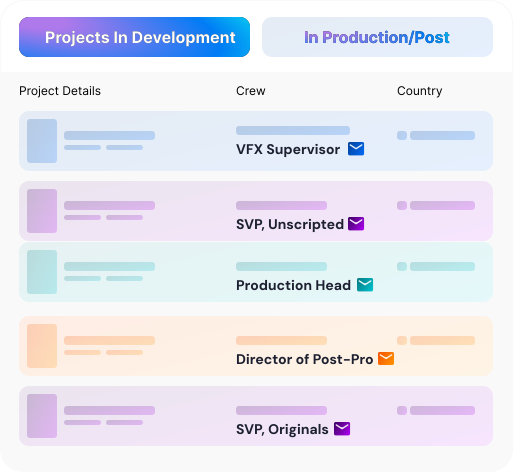
The biggest hurdle for producers isn’t understanding the deal—it’s finding the partner. Traditional methods rely on expensive travel to trade shows like Cannes or AFM. However, as noted in the Vitrina Brief, the industry is transitioning to a data-powered framework. Producers now use Vitrina’s 1.6 million title tracker to identify which distributors are actively acquiring independent content in their specific budget range.
By vetting a distributor’s “Reputation Score” and transaction history on Vitrina, a producer ensures they are signing with a partner that a bank will actually trust. This data-driven approach compresses months of networking into days of strategic outreach, allowing producers to qualify partners based on verifiable track records rather than anecdotal trade buzz.
Moving Forward
The shift from relationship-dependent networking to data-driven discovery has transformed the negative pickup deal from a Hollywood rarity into a global strategic tool. By understanding the mechanics of these “bankable” contracts, independent producers can bypass traditional funding bottlenecks.
Whether you are a first-time filmmaker looking to secure your first production loan, or an established studio executive trying to diversify your financing slate, the principle remains: actionable intelligence drives deal velocity.
Outlook: Over the next 12-18 months, as interest rates and platform strategies stabilize, we expect negative pickup structures to become the primary vehicle for high-concept, genre-driven independent content.
Frequently Asked Questions
How is a negative pickup different from a pre-sale?
A pre-sale usually involves selling rights territory-by-territory (e.g., France, UK, Germany). A negative pickup is typically a worldwide or major-territory agreement with a single distributor for a fixed fee upon delivery.
Can I use a negative pickup for a TV series?
Yes. While more common in film, streamers and networks often use similar “license-on-delivery” models that producers can bank against for episodic production.
About the Author
Written by the Vitrina Editorial Team, specializing in supply chain intelligence and market transformation for global entertainment professionals. Connect on Vitrina.