

 Companies
  Content
 Global Content Pulse (Webinars)

 Global Production Financing (Webinars)
  LeaderSpeak Podcast
  Latest Projects
 Global Trends
 About Projects Tracker
 About Vitrina
 Our Story
 Our Solutions 🔥
 Case Studies
 Our Profile
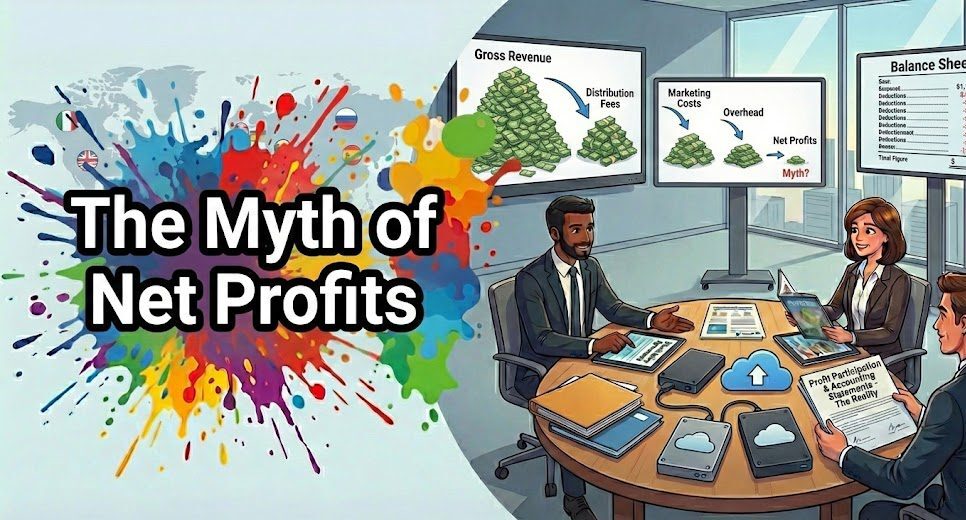
Studio accounting, often termed “Hollywood Accounting,” is a financial framework designed to minimize the reportable “net profit” of a project through aggressive cross-collateralization and internal fee structures.
This involves allocating high overhead costs, distribution fees, and marketing expenses back to the production, ensuring that even billion-dollar blockbusters remain “in the red” on paper.
According to industry analysts, nearly 80% of major studio releases never reach the “net profit” threshold for talent participation due to these systemic accounting traps.
In this analysis, you’ll discover how the shift toward “Weaponized Distribution” and fragmented digital windows is making traditional profit participation a relic of the past.
While legacy resources focus on basic contract law, they fail to address the data-driven reality of how supply chain intelligence can now expose hidden revenue streams and audit-worthy discrepancies.
This report fills the critical gap between legal theory and financial reality by revealing how producers can leverage real-time deal intelligence to secure “First-Dollar Gross” or better participation terms.
Table of Contents
Key Takeaways for Business Enablers
-
Accounting Opacity: Studio accounting leverages “overhead” and “interest” to ensure Billion-dollar titles show zero net profit on paper.
-
Revenue Window Collapse: The shift from DVD/Theatrical to SVOD/FAST has removed traditional “waterfall” triggers for profit participation.
-
Intelligence Leverage: Professionals using supply chain data to track licensing moves across 100+ countries can audit revenue flows with 90% higher accuracy.
What is Hollywood Accounting and the Net Profit Myth?
Studio accounting, colloquially known as “Hollywood Accounting,” is a sophisticated financial engineering system that prioritizes the studio’s ROI over participant profit-sharing. By defining “Net Profits” in thousands of pages of fine print, studios create a waterfall where revenue is eaten by distribution fees (often 30-40%), marketing recoupment, and internal interest before talent ever sees a cent.
In this system, a project is rarely intended to show a profit. Instead, studios benefit from the “Weaponized Distribution” model—where they license content to their own subsidiaries at below-market rates to keep revenue away from the production’s ledgers. This “data trust deficit” leaves talent with worthless “points” while the conglomerate realizes massive gains elsewhere.
Analyze competitor content acquisition trends:
Industry Expert Perspective: The Big Crunch in Film Finance
Understanding the shifting economics of film finance is the first step in decoding why traditional accounting fails talent in a post-streamer world.
Phil Hunt, CEO of Head Gear Films, unpacks the “Big Crunch”—the shift away from pre-sales and the collapse of revenue windows that once supported the net profit waterfall.
Weaponized Distribution & Accounting Traps: The New Normal
In the current market, studios are moving toward “Weaponized Distribution“—licensing high-value content post-release to rival platforms to generate immediate ROI on sunk assets. However, these inter-company licensing deals are rarely structured at “fair market value” for the purpose of participant accounting. By keeping the licensing fee low, the project continues to appear unprofitable on the production ledger while generating huge subscriber value for the parent platform.
Furthermore, the “Frenemy Pacts” seen between giants like Amazon and Netflix signal a future where revenue is swapped rather than tracked title-by-title. This makes it almost impossible for individual talent to audit their specific project’s performance without access to macro-level supply chain intelligence.
Leveraging Data Intelligence for Audit Transparency
To combat legacy accounting traps, business enablers must replace anecdotal networks with a “single source of truth.” Vitrina AI’s platform allows strategy teams and lawyers to track deals, acquisitions, and licensing trends across 140,000+ companies. By understanding the real market value of a project in various territories (MENA, APAC, LATAM), auditors can challenge low-balled inter-company licensing fees.
- Global Projects Tracker: Monitor unreleased projects to identify early financing partners and revenue triggers.
- Deals Intelligence: Track content funding and licensing trends to establish “Fair Market Value” for audits.
- VIQI AI Assistant: Map 30 million industry relationships to identify hidden affiliate deals and co-production structures.
“The days of ‘trusting the studio statement’ are over. In a market where distribution is weaponized across fragmented platforms, data intelligence is the only tool that can bridge the transparency gap for talent and independent producers.”
Moving Forward
The myth of net profits serves as a reminder that legacy accounting models are structurally built to protect studio margins at the expense of talent. By leveraging supply chain intelligence, professionals can shift from a defensive auditing posture to a proactive, data-driven negotiating position.
Whether you are an Entertainment Lawyer protecting a client’s “points,” or an Independent Producer structuring a co-production, the principle remains: verifiable data is your only leverage against the opacity of the studio system.
Outlook: Over the next 12-18 months, as “Authorized Data” and AI-driven licensing become the norm, the demand for transparent supply chain intelligence will become the defining factor in deal-making success.
Frequently Asked Questions
Quick answers to complex queries regarding studio accounting and profit myths.
What is the “Net Profit” myth in Hollywood?
How do studios avoid paying net profits?
What is “Weaponized Distribution”?
Can data intelligence help talent audits?
What are “distribution fees” in studio accounting?
Does streaming eliminate profit participation?
What is a “First-Dollar Gross” deal?
How does Vitrina help independent producers?
About the Author
The Vitrina Content Intelligence Team specializing in entertainment supply chain mapping and market transformation. Connect with us on Vitrina.