

 Companies
  Content
 Global Production Financing Webinar

 Media Titans Webinar
  LeaderSpeak Podcast
  Latest Projects
 Global Trends
 About Projects Tracker
 About Vitrina
 Our Story
 Our Solutions 🔥
 Case Studies
 Our Profile
Minimum Guarantees vs. Advances: Understanding Cash Flow vs. Risk

Author: rutuja kokate
Published: December 1, 2025
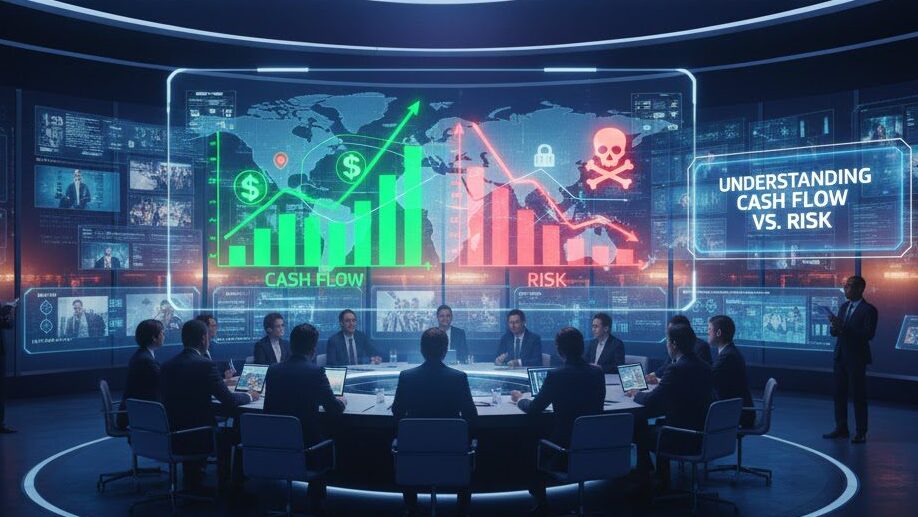
About This Guide: Minimum guarantees and advances represent different approaches to upfront financing in entertainment distribution, each with distinct cash flow patterns, risk allocations, and revenue implications. This comprehensive analysis examines the mechanics, benefits, and risks of each structure, drawing insights from Vitrina’s database of distribution deals, financing structures, and performance outcomes across global markets.
Understanding Minimum Guarantees vs. Advances
At their core, minimum guarantees and advances serve the same fundamental purpose: providing upfront financing to rights holders based on projected future revenues. However, their structural differences create vastly different risk profiles and cash flow implications.
A minimum guarantee represents a distributor’s commitment to pay a specified amount regardless of actual performance, essentially transferring market risk from the rights holder to the distributor. Advances represent prepayments against future earnings that may be fully or partially recoupable depending on deal terms.
Structural Differences & Mechanics
Minimum Guarantee Payment Structure:
Minimum guarantees follow milestone-based payments that align distributor risk with project stages:
• Signature Payment: 20-30% upon contract execution
• Delivery Payment: 30-40% upon completion of materials
• Release Payment: 30-50% upon theatrical launch
• Performance Milestones: Additional payments at box office thresholds
Advance Payment Components:
Advances prioritize immediate cash flow, often providing 80-100% within 10-30 days:
• Recoupable Advance: 70-100% deducted from revenue share
• Non-Recoupable Advance: 0-30% paid regardless of performance
• Cross-Collateralization: May recoup across multiple titles
• Interest Charges: Some accrue 2-8% annually during recoupment
Risk Allocation: MGs place 100% performance risk on distributors up to guarantee amount, while advances shift varying risk back to rights holders. Hybrid structures balance approaches with 50-70% distributor risk.
Recoupment Mechanics: Calculations vary between gross receipts (100% basis) and net receipts (after 15-35% distribution fees). Cross-title recoupment reduces individual risk by 20-30% but may delay overages.
Cash Flow Analysis & Timing Implications
Payment Timing Impact:
The timing differential significantly impacts production financing. MGs provide 20-30% upfront while advances deliver 80-100% within 10-30 days, creating 2-6 month acceleration in cash access.
• Bridge Financing Reduction: Earlier payments reduce needs by 15-25%
• Interest Cost Savings: Earlier receipt saves 2-5% annually
• Development Acceleration: Enables 15-25% faster project cycles
• Pipeline Expansion: Supports 20-40% increase in development capacity
Net Present Value Analysis:
Using 8-12% discount rates, non-recoupable advances show 5-15% NPV advantages over equivalent MGs. However, MGs often offer higher total returns through backend participation.
Working Capital Optimization:
Companies with growth opportunities benefit from advance structures providing immediate reinvestment capital. Established companies may prefer MGs maximizing long-term returns.
Multi-Currency Considerations: Currency hedging costs 1-3% annually, while volatility affects values by 5-15%. Advances provide better risk management through accelerated conversion.
Use Vitrina’s financial modeling tools to optimize cash flow management and payment structures.
Risk Assessment & Allocation
Distributor Credit Risk:
Credit assessment metrics for both structures:
• Financial Ratios: Debt-to-equity below 3:1, current ratio above 1.5x
• Payment History: 95%+ on-time payments over 3 years
• Parent Support: Guarantees reduce risk by 60-80%
• Market Position: 5%+ market share shows 40% lower default rates
Market Performance Risk:
MGs transfer performance risk to distributors, while advances leave rights holders exposed above recoupment thresholds:
• Revenue Volatility: 25-40% variance for independent films
• Genre Multipliers: Horror 0.8x, drama 1.2x, action 0.9x risk factors
• Star Impact: A-list talent reduces risk 30-50%
• Seasonal Effects: Q4 releases show 15% higher performance, 25% volatility
Recoupment Risk:
• MG Recoupment: 65-75% fully recoup within 36 months
• Advance Overages: 45-60% generate post-recoupment payments
• Breakeven Threshold: Requires 150-200% of MG in gross receipts
• Audit Disputes: 15-25% of deals experience reporting issues
Mitigation Strategies: Portfolio diversification across 8-12 distributors reduces risk by 40%. Letters of credit reduce payment risk by 85-95%. Insurance coverage reduces overall risk by 20-30%.
Connect with Vitrina’s network of risk management specialists for comprehensive strategies.
Strategic Considerations & Deal Selection
Business Strategy Alignment:
Early-stage companies prefer advances (70-80%) for cash flow, while mature companies favor MGs for higher returns. Optimal portfolio mix: 60% MGs, 40% advances.
Market Timing:
• Bull Markets: Favor MG structures for upside potential
• Bear Markets: Favor advances for guaranteed value
• Competition: High competition increases advance premiums 15-25%
• Seasonal Timing: Q1-Q2 negotiations yield 10-15% better terms
Distributor Selection:
Key criteria include financial strength (minimum 7/10 score), top quartile genre performance, P&A spending of 40-60% of MG, and relationships with 3+ major platforms.
Deal Optimization:
• Payment Enhancement: Negotiate 40-50% signature payments
• Revenue Splits: Target 65-75% after recoupment
• Recoupment Corridors: Negotiate 110-125% for faster breakeven
• Performance Bonuses: Structure at 2x, 3x, 5x MG levels
Access Vitrina’s market intelligence for optimal distribution strategy development.
Market Variations & Industry Trends
Regional Preferences:
• North America: 60% MG preference, $2-8M average for mid-budget
• Europe: 70% advance preference, $500K-3M per territory
• Asia: 55% MG preference, conservative payment schedules
• Streaming Platforms: 90% advance preference, 12-18 month schedules
Technology Impact:
Digital revenues now represent 60-70% of distribution income. Day-and-date releases reduce MG values by 20-30%. AI analytics increase MG confidence by 15-20%. Direct-to-consumer models bypass traditional distribution.
Economic Effects:
Higher interest rates increase advance preference by 10-15%. Currency volatility boosts international advance preference by 25%. Tight credit markets favor advance structures over extended MG payment schedules.
Stay current with evolving trends through Vitrina’s market intelligence platform.
Optimization Strategies & Best Practices
Deal Structure Enhancement:
Hybrid structures combine MG bases with advance components for optimal risk-return balance. Performance escalators add MG payments at revenue milestones. Recoupment modifications include corridors and cross-collateralization limits.
Financial Optimization:
• Currency Hedging: Lock favorable exchange rates for international deals
• Tax Efficiency: Structure across jurisdictions for optimal treatment
• Cash Flow Coordination: Time multiple deal payments for working capital
• Interest Management: Close deals during favorable rate environments
Risk Management:
Implement comprehensive distributor due diligence including financial and operational review. Include robust default remedies and security provisions. Balance deal types, territories, and relationships across portfolio.
Technology Integration:
Use performance data analytics for future deal optimization. Implement automated reporting for real-time revenue tracking. Leverage AI and machine learning for revenue forecasting and risk assessment.
Long-Term Relationship Building:
Develop multi-picture strategies with proven distributors. Exchange market intelligence and performance insights. Collaborate on promotional strategies and campaigns. Align distribution with long-term business objectives.
Professional Advisory:
Engage experienced entertainment lawyers and financial advisors. Conduct thorough market analysis before negotiations. Monitor competitor structures and positioning. Stay current with industry trends and regulatory changes.
Conclusion
The choice between minimum guarantees and advances represents one of the most critical decisions in entertainment distribution, with profound implications for cash flow, risk exposure, and long-term revenue potential. While advances provide faster access to capital and reduced performance risk, minimum guarantees offer higher upside potential and better alignment with distributor interests.
Success requires understanding that no single structure is universally superior – the optimal choice depends on company stage, risk tolerance, cash flow needs, and market conditions. Early-stage companies often benefit from advance structures that provide immediate capital for growth, while established companies may prefer minimum guarantees that maximize long-term returns.
The key lies in sophisticated analysis of each deal’s specific circumstances, including distributor creditworthiness, market conditions, content characteristics, and strategic objectives. Companies that master this analysis and develop flexible approaches to deal structuring will consistently achieve better outcomes.
As the industry continues evolving with streaming platforms, shortened windows, and changing consumer behavior, deal structures will become increasingly sophisticated. The winners will be those who understand these nuances, leverage data and analytics for decision-making, and build strong relationships with reliable distribution partners.
Frequently Asked Questions
Advances are preferable when immediate cash flow is critical, distributor credit risk is high, or market performance is uncertain. Early-stage companies, first-time producers, or projects in volatile genres often benefit more from advance structures that provide guaranteed value regardless of performance.
Recoupment terms significantly impact long-term value – deals with 110-125% recoupment corridors provide faster breakeven, while cross-collateralization can delay or prevent overage payments. Rights holders should model various performance scenarios to understand true expected returns.
Key protections include letters of credit, parent company guarantees, escrow accounts, and comprehensive insurance coverage. Letters of credit provide the strongest protection, reducing payment risk by 85-95%, while parent guarantees offer substantial protection for subsidiaries.
Streaming platforms typically prefer advance structures with 12-18 month payment schedules, representing 90% of platform deals. The shift toward streaming has generally reduced MG values by 20-30% while increasing preference for advance structures due to more predictable revenue patterns.