

 Companies
  Content
 Global Content Pulse (Webinars)

 Global Production Financing (Webinars)
  LeaderSpeak Podcast
  Latest Projects
 Global Trends
 About Projects Tracker
 About Vitrina
 Our Story
 Our Solutions 🔥
 Case Studies
 Our Profile
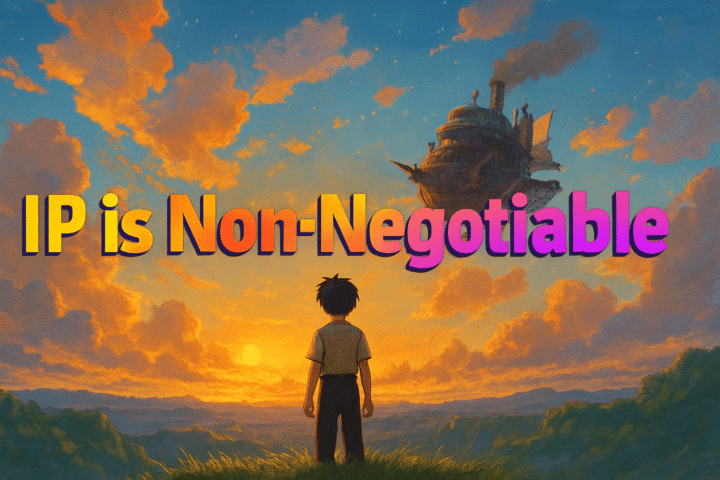
A lien on Intellectual Property (IP) is a legal claim that grants an investor a security interest in the film’s copyright and all associated revenue streams.
In the high-risk world of independent production, this “Security-First” approach ensures that if a production defaults or mismanages funds, the investor has the legal right to seize the asset—the IP—to recoup their capital.
According to Vitrina AI’s latest market intelligence, as the industry moves toward a data-powered supply chain, the ability to verify and perfect these security interests is becoming the primary differentiator between professional financing and speculative gambling.
In this analysis, we explore the technical mechanics of UCC-1 filings, the catastrophic risks of “lien-less” investing, and how supply chain intelligence protects your position in the waterfall.
While many investors focus on talent attachments or box office projections, seasoned financiers know that the only real protection is a perfected security interest.
This guide provides the technical roadmap for ensuring your capital is guarded by the industry’s most robust legal shields.
Table of Contents
Key Takeaways for Investors
-
Asset Control: A lien converts your investment from a “promise to pay” into a secured claim on the underlying intellectual property.
-
Perfection Requirements: Security must be “perfected” through both a UCC-1 filing and a copyright mortgage recorded with the Library of Congress.
-
Seniority Priority: Investors should negotiate for first-priority status or clearly defined inter-creditor agreements to prevent dilution during recovery.
-
Supply Chain Verification: Vitrina’s 3-year rolling view of global production volumes allows investors to qualify the production company’s stability before filing.
The Legal Backbone: UCC-1 and Copyright Mortgages
Securing an investment requires two distinct legal filings. First, the UCC-1 (Uniform Commercial Code) filing acts as a public notice that the investor has a security interest in the business assets of the production entity. However, because film IP is a federal copyright, a second filing—a Copyright Mortgage—must be recorded with the U.S. Copyright Office. Without both, your security interest is “unperfected,” leaving you vulnerable to other creditors who might file later but record correctly.
Vet production companies by their deal history:
The Nightmare Scenario: Investing Without a Perfected Lien
Investing without a lien means you are an “unsecured creditor.” In the event of a production company’s bankruptcy or legal dispute, you sit at the very bottom of the priority list. Secured creditors—such as the senior bank lender or completion bonder—will seize the film’s assets, leaving you with nothing but a breach-of-contract lawsuit against a shell company with no remaining assets. The lien is your insurance policy against operational failure.
Analyze financial risks in the current supply chain:
Industry Expert Perspective: The Big Crunch in Film Finance
Phil Hunt, co-founder of Head Gear Films and Bankside Films, discusses why the current financial environment is “harder than ever.” He highlights the necessity of disciplined deal structures and the survival of producers who understand the interplay between creative vision and iron-clad financial security.
Phil Hunt provides a candid look at the “Big Crunch” currently squeezing the film industry. He emphasizes that in a market where traditional institutional lending is retreating, investors must be more rigorous than ever about the legal and financial integrity of their projects.
Chain of Title Due Diligence: Verifying the Asset
A lien is only as valuable as the underlying asset. Chain of Title is the documentation that tracks every transfer of ownership from the original script author to the current production entity. If there is a “break” in the chain—for example, an un-signed option agreement or an un-cleared music right—your lien on the “IP” may be legally worthless. Investors must demand a comprehensive Title Opinion from a media law firm before releasing funds.
“In a borderless content market, personal networks aren’t enough to verify security. You need structured, verifiable data to confirm that the asset you are liening actually exists and is owned by the party you are funding.”
How Supply Chain Data Secures the Financing Cycle
Vitrina AI acts as a Digital Lighthouse for investors by providing the verified profiles of over 140,000 companies. Before you file a lien, you can use Vitrina to qualify your partners based on their specialization, deal history, and reputation scores. By mapping 30 million relationships across the global entertainment supply chain, Vitrina ensures that you are lending to entities with the stability and track record required to deliver a return on your secured investment.
Conduct deep due diligence on potential project partners:
Frequently Asked Questions
Technical answers regarding security interests and IP collateral in film finance.
What happens if the production company already has a lien on its assets?
How long does a UCC-1 filing last?
What is the difference between a lien and a mortgage on IP?
Can I file a lien on a project that hasn’t started filming?
How do I verify the Chain of Title?
What is a Seniority Position?
Can I foreclose on a film IP?
How does Vitrina reduce the risk of lien disputes?
Moving Forward
In the “Big Crunch” of modern film finance, the distance between high returns and total loss is measured by the quality of your security interest. Demanding a lien on IP is not a sign of distrust; it is the hallmark of professional investment discipline. By combining iron-clad legal filings with the verified supply chain intelligence provided by Vitrina AI, you can move from speculative participating to strategic investing.
Your capital is the engine of creativity, but the IP lien is the steering wheel that ensures you stay in control of your financial destination.
Outlook: Expect future financing models to integrate blockchain-based IP tracking, making the verification of security interests instantaneous and globally accessible.
About the Author
Written by the Vitrina Strategic Content Team. We specialize in mapping the complexities of the global entertainment supply chain, providing investors and producers with the data-driven insights needed to thrive in a hyper-competitive market. Connect with our experts on Vitrina AI.