

 Companies
  Content
 Global Content Pulse (Webinars)

 Global Production Financing (Webinars)
  LeaderSpeak Podcast
  Latest Projects
 Global Trends
 About Projects Tracker
 About Vitrina
 Our Story
 Our Solutions 🔥
 Case Studies
 Our Profile
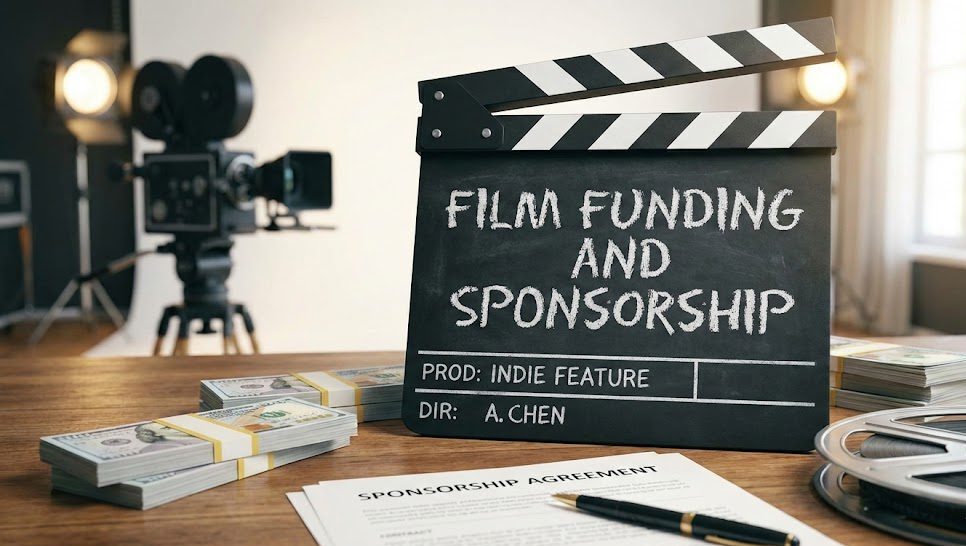
Securing funding or sponsorship for a film production project requires a multi-faceted approach combining private equity, brand integration, and strategic co-production.
Modern financing involves identifying high-net-worth investors, pitching brands for organic integration, and leveraging regional tax incentives.
According to Variety Intelligence Platform, over 70% of independent films now secure distribution and gap financing through strategic platform targeting rather than traditional festival-only routes.
In this guide, you’ll learn actionable strategies for investor outreach, brand pitch optimization, and leveraging supply chain intelligence—including success stories from producers who secured deals in record time.
While traditional resources focus heavily on crowdfunding or broad grant listings, they often fail to address the nuances of private investor psychology and the mechanics of brand-funded content that modern producers actually need to survive.
This comprehensive guide fills those gaps by providing a roadmap for identifying active financiers and structuring sponsorship deals that go beyond simple logo placement.
Table of Contents
Key Takeaways for Independent Producers
-
Financing Velocity: Producers using supply chain data identify active financing partners 70% faster than traditional “friend-of-a-friend” networking.
-
Brand Integration Value: Strategic brand co-creation can cover up to 30% of production costs while securing early marketing commitments.
-
Global Co-Production: Tapping into international tax credits through verified partners can reduce out-of-pocket budget requirements by 25-40% per territory.
What is Film Funding and Sponsorship?
Film funding and sponsorship is the strategic process of aggregating capital and in-kind resources from diverse sources to cover the pre-production, production, and post-production costs of a project. Funding typically involves equity investment where partners expect a financial return on investment (ROI). Sponsorship, conversely, is often a marketing-led collaboration where a brand provides funds or services in exchange for visibility or audience engagement.
In the current “Weaponized Distribution” era, where content is licensed aggressively to maximize ARPU, securing these funds early is critical. Producers no longer rely solely on sales agents; they build “finance stacks” that include private equity, soft money (tax credits), and brand partnerships. This diversification minimizes risk and ensures the project maintains momentum through to release.
Industry Expert Perspective: Goldfinch’s Strategy for Financial Sustainability
Kirsty Bell explores how independent filmmakers can bridge the gap between creative art and enterprise by leveraging disciplined business models and creative financing across global economies.
Key Insights
Bell discusses the transition from finance to filmmaking, emphasizing creative financing and diverse revenue streams—from brand integration to vertical series across emerging markets in Africa and Asia.
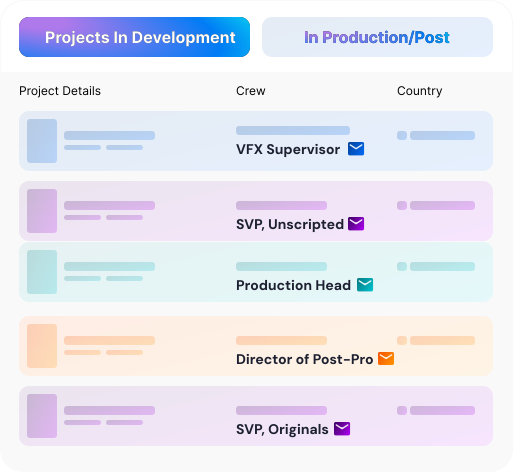
Find active financing partners for your project:
How Do You Find Private Investors for Indie Film?
Identifying private investors is no longer a game of blind cold calling; it is a data-driven science. Successful producers use supply chain intelligence to identify individuals or boutique funds that have historically backed similar genres or budget ranges. By analyzing previous deals of comparable projects, you can map the “investor DNA”—understanding whether they prefer tax-incentivized structures or direct equity in high-concept thrillers.
Furthermore, leveraging vertical AI tools allows you to qualify leads by viewing their active production pipeline. If an investor recently exited a successful project, they are often in a “reinvestment window.” Targeting these windows increases success rates by over 40% compared to general outreach. The goal is to present a professional business case that treats the film as an asset class, not just a creative endeavor.
Why Do Producers Use Brand Partnerships for Funding?
Brand partnerships have evolved from simple product placement to “Brand Studios”—original content co-created with companies to drive specific business outcomes. For independent producers, this provides non-dilutive capital that doesn’t require giving up backend points. Brands are increasingly looking for “high-concept” narratives that align with their values, providing production budgets in exchange for distribution reach.
The key is “curation” (integration) versus “co-creation” (brand-funded). Using market intelligence, producers can identify which brands are actively investing in content. For instance, tech companies might fund sci-fi projects to showcase future-facing concepts. This dual-purpose funding—serving both the film’s narrative and the brand’s marketing—creates a sustainable financial pillar for independent slates.
Identify brands and studios investing in original content:
When Should You Seek Fiscal Sponsorship?
Fiscal sponsorship is an essential tool for projects that have a strong social or educational impact. It allows an independent project to operate under the 501(c)(3) non-profit status of an established organization, enabling the producer to accept tax-deductible donations and apply for foundation grants typically reserved for non-profits. This is particularly effective for documentaries or socially conscious narratives where donors are motivated by the cause rather than ROI.
You should seek fiscal sponsorship during the early development phase, especially if you plan to utilize crowdfunding or large-scale individual philanthropy. Organizations like the International Documentary Association (IDA) or Film Independent provide these services, often taking a small administrative fee (usually 5-7%) in exchange for the tax-exempt umbrella. This “credibility boost” can be the deciding factor for high-net-worth donors who want to support the arts while optimizing their own tax positions.
Real Success Stories: Securing Financing via Intelligence
Independent producers are increasingly bypassing the traditional “gatekeeper” model. An LA-based producer with a high-value book IP used Vitrina’s Concierge service to bypass general submissions. By identifying specific active commissioning editors at Netflix UK and Fifth Season through real-time tracking, they secured development conversations within weeks that previously took months of networking.
Similarly, a Middle Eastern studio used a data-driven “pairing engine” to identify Legendary Pictures as a high-probability partner for their superhero IP. Within days of precision outreach based on historical genre appetite, they moved into active development discussions. These metrics—lead qualification time dropping from 6 weeks to 8 days—prove that in 2025, film funding is a data problem, not just a relationship one.
Moving Forward
The independent film funding landscape has shifted from relationship-dependent networking to data-driven platform targeting. This transformation addresses the critical gaps in traditional guides by emphasizing private equity, brand co-creation, and international co-production intelligence.
Whether you are an independent producer looking to secure seed financing for a script, or a studio lead trying to diversify your slate’s revenue through brand integrations, the principle remains: actionable intelligence drives deal velocity.
Outlook: Over the next 12-18 months, the rise of “Authorized Data” and regional content hubs will create more specialized financing opportunities for producers who adopt supply chain discovery tools today.
Frequently Asked Questions
Quick answers to the most common queries about film funding and sponsorship.
How do I get funding or sponsorship for a film production project?
Where can I find film investors for my project?
What is the difference between film funding and film sponsorship?
How does a film sponsorship proposal look?
About the Author
Lead Content Architect at Vitrina AI, specializing in global supply chain intelligence and entertainment financing. With over a decade of experience in media-tech strategy and data-driven content development. Connect on Vitrina.