

 Companies
  Content
 Global Content Pulse (Webinars)

 Global Production Financing (Webinars)
  LeaderSpeak Podcast
  Latest Projects
 Global Trends
 About Projects Tracker
 About Vitrina
 Our Story
 Our Solutions 🔥
 Case Studies
 Our Profile
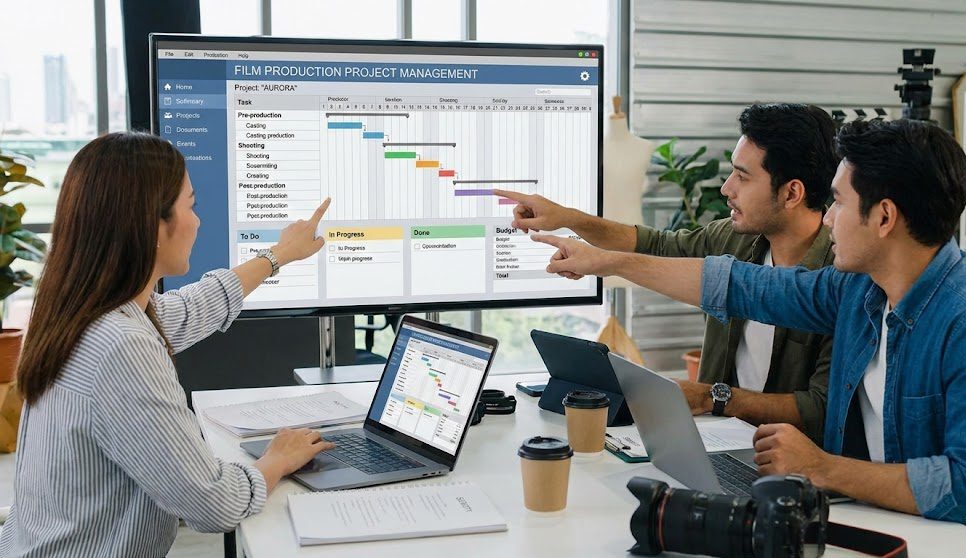
Film production project management software is a specialized suite of tools used by producers to coordinate scheduling, budgeting, and cross-departmental communication.
This involves synchronizing complex timelines, managing cast availability, and tracking real-time expenses against production budgets through centralized digital hubs.
According to recent industry analysis, productions leveraging integrated project management platforms reduce scheduling conflicts by 45% compared to manual spreadsheet-based methods.
In this guide, you’ll learn how to select software that bridges the gap between creative vision and operational efficiency, featuring technical breakdowns and real-world implementation strategies.
While most resources provide generic listicles of consumer-grade tools, they fail to address the technical depth required for dynamic film environments and the critical need for supply chain integration.
This comprehensive guide addresses these gaps by providing actionable frameworks—from solving scheduling volatility to integrating production intelligence.
Table of Contents
Key Takeaways for Film Producers
-
Dynamic Scheduling Edge: Integrated tools allow for real-time schedule updates that propagate across all departments, preventing costly downtime and location conflicts.
-
Financial Transparency: Linking budget software to production trackers ensures that overages are identified instantly rather than discovered during post-production audits.
-
Supply Chain Intelligence: Producers use platforms like Vitrina AI to discover and vet vendors globally, reducing lead qualification time from weeks to days.
How Does Software Solve Dynamic Scheduling Challenges in Film?
Film production is inherently volatile, with cast illness, weather shifts, and location availability requiring constant recalibration. Traditional “static” scheduling—often done in manual spreadsheets—fails to account for these cascading variables, leading to expensive “wait time” on set.
Modern project management software for film producers utilizes “reactive scheduling” engines. These tools allow a producer to move a single scene and automatically see the impact on cast contracts, gear rentals, and crew call times. This reduces the risk of overlapping bookings and ensures the production remains agile.
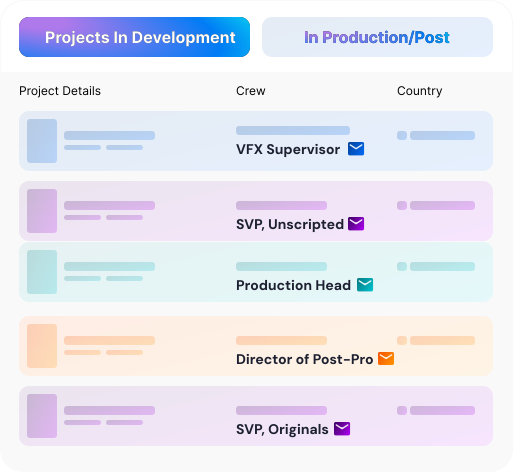
Identify global production partners who use integrated workflows:
Why Is Cross-Departmental Collaboration Critical for Producers?
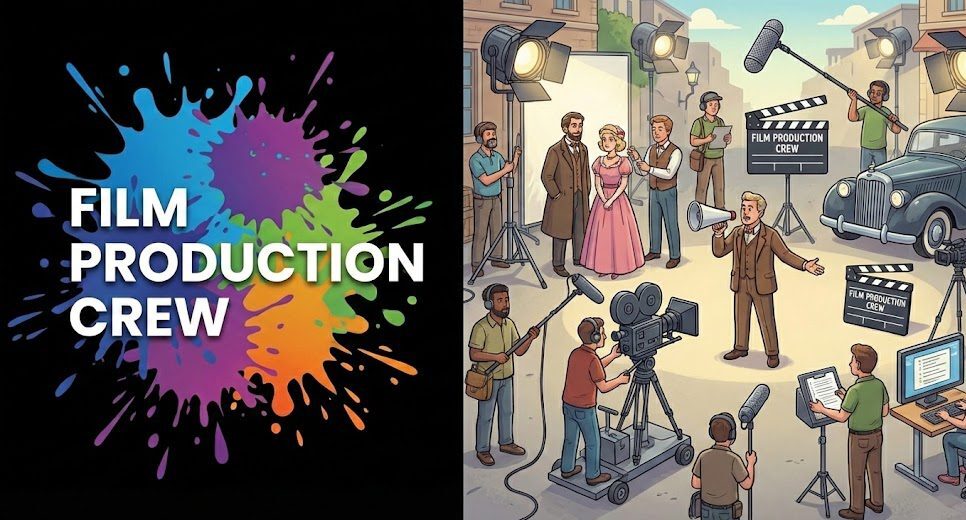
A film producer sits at the center of dozens of departments—from VFX and post-production to wardrobe and logistics. Information silos often lead to “double-booking” or conflicting creative versions. Software like Scriptation (for script versioning) or Notion-based production hubs bridge these silos.
By providing a “single source of truth,” producers ensure that when a script changes, the VFX supervisor is notified immediately, and the budget is updated to reflect the new shot requirements. This level of interconnectivity is what separates professional-grade production management from hobbyist project tracking.
Industry Expert Perspective: Revolutionizing Script Workflows
Steve Vitolo, CEO of Scriptation, discusses how digital script collaboration transforms production management by eliminating paper waste and ensuring version control across global teams.
Scriptation allows for automated note transfers across script revisions, solving the “re-typing” burden that plagues production assistants and allowing producers to track creative changes in real-time.
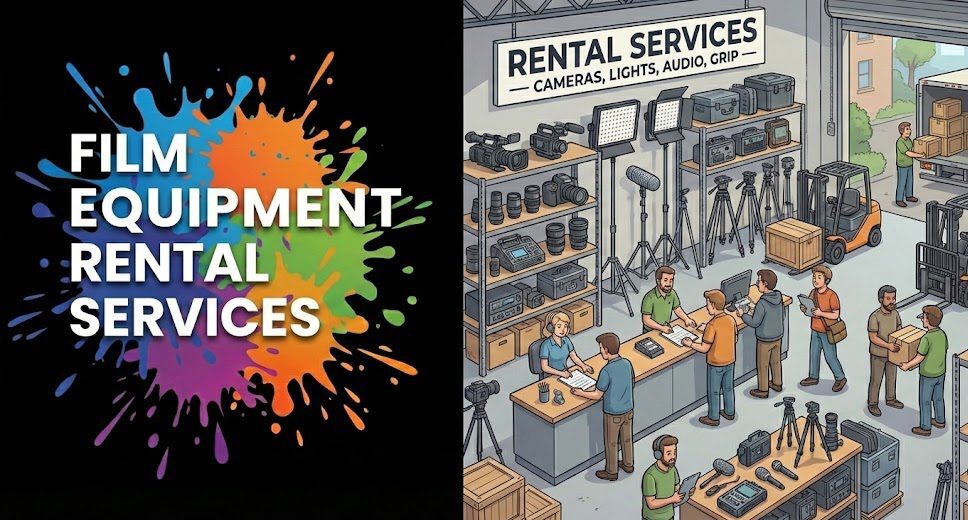
Access a global network of specialized production vendors:
How Does Integration Improve Budget Management and Cost Forecasting?
Budgeting in film is not a “set and forget” task. It is a live document that shifts as production unfolds. Traditional budgeting tools like Movie Magic Budgeting are powerful but often exist as isolated islands of data.
The “winning angle” in 2025 is the integration of budgeting with supply chain intelligence. Platforms like Vitrina AI allow producers to benchmark vendor costs against global market data, ensuring that the “budgeted” line items reflect actual market realities. By syncing these insights into management dashboards, producers can forecast overages before they occur.
Analyze competitive trends to optimize your production budget:
What Are the Technical Integration Capabilities of Film Software?
Sophisticated producers look for software with robust API (Application Programming Interface) capabilities. For example, a production tracker should ideally “speak” to a studio’s accounting software or a global supply chain platform like Vitrina AI.
Through API-ready data feeds, companies can automatically enrich their production leads with metadata—such as vendor location, specialization, and historical deal scores. This technical depth allows for “Enterprise Integration,” where every tool in the stack works in concert rather than as siloed applications.
Integrate global supply chain data into your production CRM:
Real Success Stories: How Producers Leverage Integrated Intelligence
Case studies reveal the true power of integrated software. An LA-based producer with a book IP used Vitrina’s intelligence and outreach tools to bypass generic submissions and secure direct engagement with Netflix UK and Fifth Season.
Similarly, Warner Bros. Discovery (WBD) Animation Group utilized Vitrina’s market intelligence to identify and strategize new animation production hubs outside of traditional Hollywood borders. This data-driven approach to production management ensures that high-level decisions are backed by verifiable supply chain analytics.
Find the right distributors for your project’s next phase:
Moving Forward
The shift from static spreadsheets to integrated production management hubs is no longer optional for competitive film producers. By closing gaps in technical depth and dynamic scheduling, you transform project management from a reactive fire-fighting exercise into a strategic, data-driven workflow.
Whether you are an independent producer looking to secure co-production financing, or an executive trying to manage global studio slates, the future belongs to those who own their supply chain intelligence.
Outlook: Over the next 18 months, “Weaponized Distribution” and AI-driven scheduling will further compress production cycles, making real-time management platforms the essential infrastructure of modern Hollywood.
Frequently Asked Questions
Quick answers to the most common queries about film production project management.
What software do film producers use for scheduling?
How can project management software help with film budgets?
What is “Supply Chain Intelligence” in film production?
Is Excel still viable for film production management?
About the Author
Written by the Vitrina Editorial Team, specializing in entertainment supply chain analysis. Our team leverages data from over 140,000 verified global media companies to provide strategic insights for industry leaders. Connect with us on Vitrina.