

 Companies
  Content
 Global Content Pulse (Webinars)

 Global Production Financing (Webinars)
  LeaderSpeak Podcast
  Latest Projects
 Global Trends
 About Projects Tracker
 About Vitrina
 Our Story
 Our Solutions 🔥
 Case Studies
 Our Profile

Equity recoupment is the structured process by which investors recover their initial capital investment from a project’s net revenue before profits are shared.
This involves navigating complex “waterfall” hierarchies where various stakeholders—from guilds to senior lenders—are paid in a strictly defined sequence.
According to Vitrina AI’s market intelligence, the shift toward “Weaponized Distribution” has altered traditional recoupment timelines, making real-time data on licensing deals critical for financial forecasting.
In this guide, you’ll learn the exact formulas for calculating break-even, how to structure your waterfall for maximum investor confidence, and how to leverage supply chain intelligence to compress your ROI cycles.
While traditional accounting focuses on historical figures, modern producers face a “data deficit” that obscures the true value of their IP in fragmented global markets.
This analysis fills the gap by providing technical depth and real-world application of recoupment strategies in a post-streamer landscape.
Table of Contents
Key Takeaways for Producers
-
Recoupment Hierarchy: Investors are typically paid after participations, residuals, and distribution fees, but before producer’s net profits are calculated.
-
Calculation Depth: True break-even must include the “Cost of Money”—interest and financing fees—not just the production budget alone.
-
Market Shift: The rise of licensing rotations (Weaponized Distribution) creates new secondary revenue windows that significantly impact recoupment modeling.
-
Data Advantage: Producers using Vitrina’s Deals Intelligence identify active buyers and financing trends 70% faster than manual research.
What is Equity Recoupment in Film Finance?
Equity recoupment refers to the legal and financial obligation to repay investors who provided high-risk capital for the production. Unlike debt, which is often secured against tax credits or pre-sales, equity is typically last-in and first-out within the profit participation pool. This makes the understanding of the “waterfall”—the priority of payment—essential for any producer seeking to build long-term trust with their financial partners.
Find active equity financing partners for your next project:
How to Calculate the True Break-Even Point?
Calculating break-even is often misunderstood as simply matching revenue to the production budget. In reality, the True Break-Even Point includes all “above-the-line” and “below-the-line” costs plus financing charges, distribution expenses, and the cost of capital. A project with a $5M budget may require $12M in gross revenue to reach a break-even state after distribution fees and marketing (P&A) are subtracted.
Industry Expert Perspective: Media Finance: Navigating a Post-Streamer World
Matthew Helderman of BondIt Media Capital explores the evolution of film financing, emphasizing the shift toward specialized capital to fill the gaps left by traditional institutional lenders. This is particularly relevant for producers looking to secure bridge financing while managing their equity recoupment cycles.
Matthew Helderman, co-founder and CEO of BondIt Media Capital, shares the company’s journey from a small production firm to a major player in media financing. He discusses how BondIt fills the gap in reliable capital following the 2008 credit crisis, offering insights into the current market’s demand for disciplined financial models.
Understanding the Standard Recoupment Waterfall
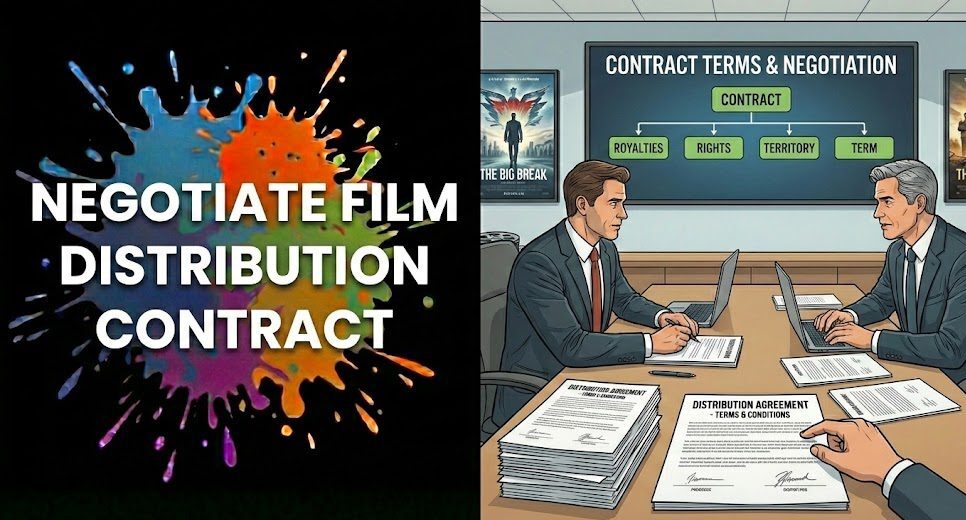
The standard waterfall structure determines who gets paid and when. At the top sit Collection Account Management (CAM) fees and Guild Residuals. Following these are the Distribution Fees and Expenses. Only after these “off-the-top” deductions does the remaining revenue flow to the Equity Investors. Producers must carefully negotiate “corridors”—a percentage of revenue that flows to producers or talent regardless of whether the investors have fully recouped—to maintain operational cash flow during long distribution cycles.
Analyze recent content licensing deals for your genre:
Impact of Weaponized Distribution on ROI
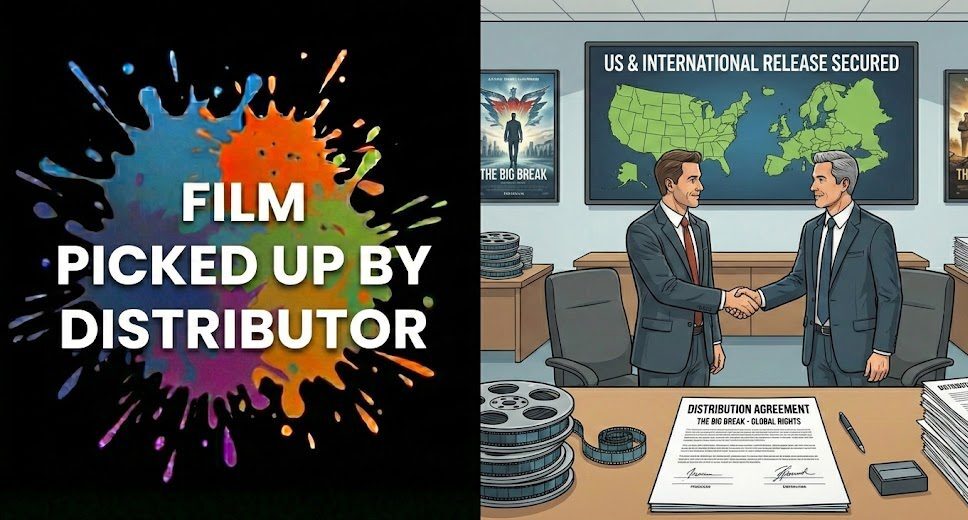
The industry’s move toward “Weaponized Distribution”—licensing content to rival platforms after an initial exclusive window—is a game-changer for equity recoupment. Major players like Netflix and Warner Bros. Discovery are now licensing “sunk” assets to generate fresh cash flow. For independent producers, this means the recoupment tail is getting longer but potentially more lucrative, provided the rights are structured to permit these rotational windows.
“The content licensing model has shifted from a Walled Garden to a Weaponized Distribution era. For producers, the key to faster recoupment isn’t just a big initial sale, but the ability to cycle IP through multiple platforms in rapid succession.”
Why Do Producers Rely on Supply Chain Intelligence?
In an opaque market, missing a licensing window is a direct financial loss. Vitrina AI provides the “digital lighthouse” needed to navigate this landscape. By tracking 1.6M+ titles and 140,000+ companies, Vitrina enables producers to qualify distributors based on their verified track record and current “appetite” for specific genres. This data-driven due diligence reduces the risk of working with underperforming partners and accelerates the path to the true break-even point.
Vet your potential distribution partners with data:
Frequently Asked Questions
Quick answers to the most common queries about equity recoupment and break-even analysis.
What is a standard recoupment percentage for investors?
What comes first in a film waterfall?
Does break-even include marketing costs?
What are deferments in recoupment?
How does Vitrina help with financial due diligence?
What is the “Cost of Money” in calculations?
Moving Forward
The transition from relationship-driven finance to data-powered supply chain intelligence is no longer optional for independent producers. By mastering the technicalities of the recoupment waterfall and utilizing real-time Deals Intelligence, you can transform your financial models from speculative documents into credible roadmaps for investor success.
Whether you are an independent producer looking to secure bridge financing, or a financial strategist trying to optimize project ROI, the key is the same: actionable data drives deal velocity.
Outlook: Over the next 18 months, expect a surge in “Authorized Data” markets for AI, creating entirely new secondary revenue windows for back-catalog recoupment.
About the Author
Written by the Vitrina Editorial Team, specializing in entertainment supply chain intelligence and market transformation. With decades of experience mapping the global production landscape, we provide the data-driven insights needed to navigate the modern M&E ecosystem. Connect on Vitrina.