About Innovation Hub
 Global Content Pulse (Webinars)


 Global Production Financing
(Webinars)
Global Production Financing
(Webinars)  LeaderSpeak Podcast
  About Vitrina
 Our Story
 Our Solutions 🔥
 Film+TV Projects Tracker 🚀
 Case Studies
 Our Profile

Distribution strategy and capital stack integration is the process of aligning a project’s release model with the specific layers of debt, equity, and gap financing required to achieve financial sustainability.
This involves determining whether a traditional theatrical-first window (enabling pre-sales and MGs) or a direct-to-streaming model (requiring full buyout or cost-plus structures) best serves the content’s risk profile.
According to industry data from Vitrina AI, over 600,000 companies now populate the global supply chain, and projects with a data-validated distribution plan secure mezzanine financing 3x faster than those using legacy networking.
In this guide, you’ll learn the technical nuances of release-driven funding, how to identify active buyers in emerging global creative economies, and how to use supply chain intelligence to replace speculation with a data-driven science of financing.
Producers currently face a “data deficit” where traditional release models are being disrupted by “Weaponized Distribution” and global streaming consolidation. Without real-time visibility into active commissioning patterns and financing trends, creators are left with fragmented capital stacks that increase financial exposure.
This analysis addresses these critical gaps by providing a technical roadmap—from released-project tracking to partner vetting—to help you build a resilient financial foundation.

Your AI Assistant, Agent, and Analyst for the Business of Entertainment
VIQI AI helps you plan content acquisitions, raise production financing, and find and connect with the right partners worldwide.
- Find active co-producers and financiers for scripted projects
- Find equity and gap financing companies in North America
- Find top film financiers in Europe
- Find production houses that can co-produce or finance unscripted series
- I am looking for production partners for a YA drama set in Brazil
- I am looking for producers with proven track record in mid-budget features
- I am looking for Turkish distributors with successful international sales
- I am looking for OTT platforms actively acquiring finished series for the LATAM region
- I am seeking localization companies offer subtitling services in multiple Asian languages
- I am seeking partners in animation production for children's content
- I am seeking USA based post-production companies with sound facilities
- I am seeking VFX partners to composite background images and AI generated content
- Show me recent drama projects available for pre-buy
- Show me Japanese Anime Distributors
- Show me true-crime buyers from Asia
- Show me documentary pre-buyers
- List the top commissioners at the BBC
- List the post-production and VFX decision-makers at Netflix
- List the development leaders at Sony Pictures
- List the scripted programming heads at HBO
- Who is backing animation projects in Europe right now
- Who is Netflix’s top production partners for Sports Docs
- Who is Commissioning factual content in the NORDICS
- Who is acquiring unscripted formats for the North American market
Table of Contents
- 01
What is a Distribution Capital Stack? - 02
Theatrical vs. Streaming: Strategic Impacts on Financing - 03
How Do Global Creative Economies Influence Your Funding? - 04
Why ‘Weaponized Distribution’ Requires a Flexible Financial Layer - 05
Leveraging Supply Chain Intelligence for Financial Sustainability - 06
Key Takeaways - 07
FAQ - 08
Moving Forward
Key Takeaways for Producers
-
Release Model as Finance Driver: Theatrical strategies enable “True Value” pre-sales, while streaming-exclusive deals often require cost-plus or full-buyout capital stacks.
-
Global Economy Diversification: Independent producers leveraging global creative economies in the Middle East and Africa achieve 40% more diverse revenue streams.
-
Supply Chain Lead Qualification: Using real-time project trackers like Vitrina compresses the partner discovery timeline from months to weeks, reducing financing lag.
-
Financial Sustainability Engine: Disciplined business models that bridge art and enterprise ensure long-term growth even in hyper-competitive markets.
What is a Distribution Capital Stack?
A distribution capital stack refers to the hierarchical arrangement of different types of financing—equity, debt, soft money, and mezzanine—that are committed to a project based on its projected release strategy. In independent film and episodic content, the “True Value” of territorial rights determines the strength of the stack.
If your strategy leads with a theatrical release, you can often “paper” the stack with pre-sales and minimum guarantees (MGs), which lenders then collateralize to provide senior debt. In a streaming-exclusive strategy, the capital stack is often flatter, relying more heavily on upfront equity or full-buyout payments that eliminate tail-end participation but reduce the burden of debt interest.
Analyze recent content funding trends for your genre:
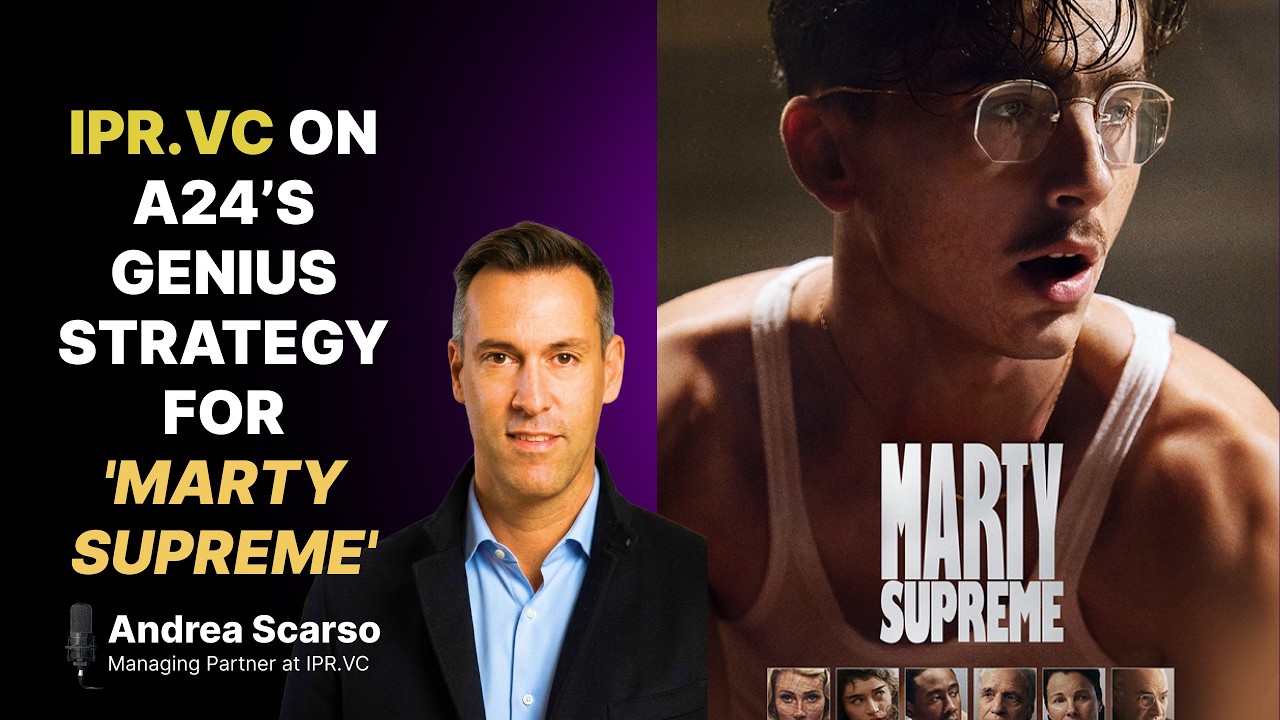
Industry Expert Perspective: Goldfinch’s Strategy for Financial Sustainability
Kirsty Bell, founder and CEO of Goldfinch, unpacks her journey of transforming independent film through disciplined business models. She discusses the critical need to leverage diverse revenue streams—from brand integration to global creative economies—to ensure long-term financial health.
Key Insights
Financial sustainability in filmmaking is achieved by bridging art and enterprise. Bell highlights how tracking global creative economies in the Middle East, Africa, and Asia allows producers to unlock non-traditional capital layers and build more robust, diversified slates.
Theatrical vs. Streaming: Strategic Impacts on Financing
The “Big Crunch” of film finance described by industry leaders like Phil Hunt is often a direct result of choosing a distribution strategy that doesn’t align with the desired capital stack. In 2025, the industry has shifted away from volume-based pre-sales. Instead, the market demands low-cost, high-concept genre content that can travel globally across both theatrical and streaming windows.
1. The Theatrical-First Anchor Stack
The Challenge: Relying on theatrical windows requires significant P&A (Prints and Advertising) commitments and faces unpredictable box office returns. This “risk layer” can deter traditional equity investors.
The Approach: Producers use theatrical commitments to anchor territorial pre-sales. By securing 30-40% of the budget through verified Minimum Guarantees in key markets like Germany or South Korea, the project becomes “bankable,” allowing for senior debt layers that preserve creator equity.
2. The Streaming Buyout Flattened Stack
The Challenge: Streaming buyouts (like those from Netflix or Amazon MGM) often eliminate the possibility of back-end participation or territorial re-licensing for years.
The Approach: This model provides “flat” financing, where the platform covers the entire production cost plus a producer fee (Cost-Plus). While it eliminates the “gap financing” hassle, it requires the creator to relinquish IP control. Strategic producers are now fighting for “Rotational Window” rights to regain tail-end value.
Leveraging Supply Chain Intelligence for Financial Sustainability
Vitrina AI has emerged as the industry’s first global supply chain platform to replace anecdotal information with structured, verified intelligence. For producers, this means moving beyond manual trade show networking to a data-driven science of partner discovery.
By tracking 1.6M titles and 140,000+ companies, Vitrina’s Global Film+TV Projects Tracker reveals the commissioning behavior of major streamers and regional buyers in real-time. Whether you are seeking a co-production partner in the Middle East to satisfy a local-content mandate or vetting a sales agent’s “Reputation Score,” Vitrina provides the insider advantage scaled globally.
“The distribution model that worked five years ago—festival premieres followed by traditional sales agent representation—no longer serves independent creators. Producers who understand how to leverage data intelligence to identify and engage the right buyers at the right moment are securing deals 60-90 days faster.”
— Atul Phadnis, Founder & CEO at Vitrina AI
Moving Forward
The independent distribution landscape has shifted from relationship-dependent networking to data-driven capital stack optimization. This transformation addresses the technical gaps this guide explored: release-model alignment, global economy diversification, and real-world supply chain intelligence.
Whether you are an independent producer looking to secure pre-sales financing, or a CXO trying to identify M&A targets in emerging markets, the principle remains: actionable intelligence drives deal velocity. Understanding where active buyers are and what they’re acquiring transforms your project from speculation into a scalable business.
Outlook: Over the next 18 months, platform fragmentation will accelerate the demand for regional “local-first” content, creating a golden era for producers who master the science of the global supply chain.
Frequently Asked Questions
Quick answers to the most common queries about distribution strategy and capital stacks.
How does theatrical release impact the capital stack?
What is “Weaponized Distribution” in 2025?
Why should producers look at global creative economies?
How can Vitrina AI help secure production debt?
About the Author
Entertainment Supply Chain Strategist specializing in capital stack optimization and global distribution intelligence. Connect on Vitrina.
Find Film+TV Projects, Partners, and Deals – Fast.
VIQI matches you with the right financiers, producers, streamers, and buyers – globally.
Producers Seeking Financing, Co-Pros, or Pre-Buys?
Vitrina Concierge helps producers reach the right financiers, commissioners, distributors, and co-production partners — with precision outreach, not cold pitching.
Join Industry Briefings Trusted by Leaders
Streamers – Netflix vs. Amazon – The 2026 Strategy
How Netflix and Amazon’s content and revenue strategies are diverging ahead of 2026.
Format Adaptations: Global Trends
Where formats are traveling, which adaptations are breaking out, and how streamers are backing remakes in 2025–2026.

Books, Novels & Comics Adaptations: Global Trends
Books, webtoons, and manga driving the next global screen hits. Discover how in this webinar.

Micro-Dramas & Mobile-First Storytelling
Micro-dramas are building real audiences and revenue. Understand the platforms, buyers, and economics behind the growth.