

 Companies
  Content
 Global Content Pulse (Webinar)

 Global Production Financing (Webinar)
  LeaderSpeak Podcast
  Latest Projects
 Global Trends
 About Projects Tracker
 About Vitrina
 Our Story
 Our Solutions 🔥
 Case Studies
 Our Profile
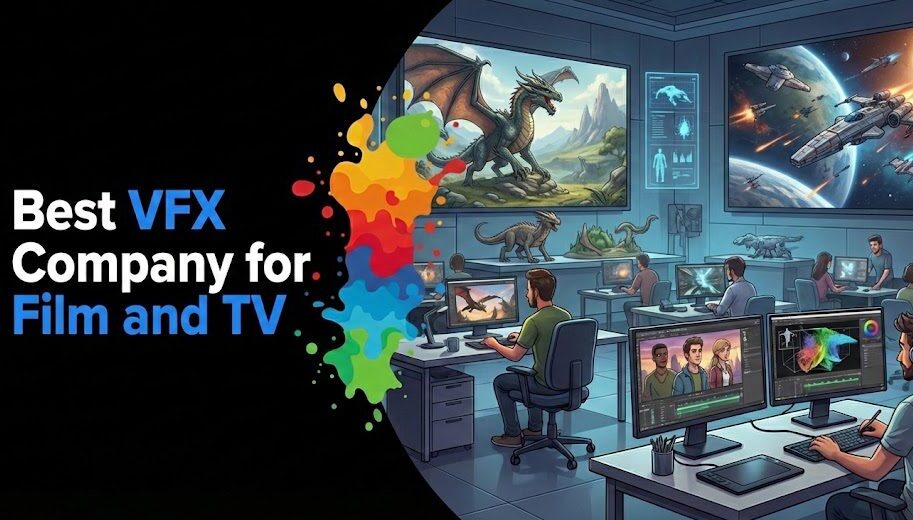
The best VFX company for film and TV is a specialized vendor that aligns technical capability, budget efficiency, and proven project turnaround times with specific genre requirements.
Sourcing the right partner involves a multi-stage process of portfolio verification, technical due diligence, and capacity assessment across global supply chains.
According to industry data, the global VFX market reached $18.2 billion in 2024, with demand increasingly concentrated in high-end episodic streaming content.
In this guide, you will learn how to transition from anecdotal networking to data-driven vendor selection using supply chain intelligence frameworks.
While traditional lists often focus on general prestige, they frequently fail to address the granular technical gaps and capacity fluctuations that actually dictate project success for acquisition leads.
This analysis fills those gaps by providing a comparative framework for vetting global studios and leveraging real-time intelligence to ensure your project lands with the ideal technical partner.
Table of Contents
Key Takeaways for VFX Sourcing Leads
-
Specialization Over Scale: The best VFX company for film often specializes in specific technical pipelines (e.g., creature work vs. environment) rather than general services.
-
Verified Project Trackers: Using real-time supply chain intelligence allows you to identify which studios are currently in post-production and available for new bids.
-
Data-Driven Vetting: Move beyond static lists to dynamic profiling, assessing a company’s recent collaboration history and relationship scores with major streamers.
What Defines the “Best” VFX Company for Your Project?
The “best” VFX company is not a static ranking; it is a moving target defined by the intersection of creative requirements, technical scalability, and fiscal responsibility. For a tentpole feature, the best partner might be a Tier-1 global studio with thousands of artists. Conversely, for a high-concept indie thriller, the best choice is often a specialized boutique that can provide director-level proximity and agile iterations.
This involves evaluating three critical pillars: Pipeline Maturity, Portfolio Alignment, and Operational Resilience. High-performing acquisition leads no longer rely on word-of-mouth; they utilize supply chain intelligence to verify a vendor’s active capacity and recent success on similar budget levels.
Find a specialized VFX company with proven experience in your genre:
The Comparative Vetting Framework: Beyond the Reel
Vetting a VFX company based solely on a showreel is a strategic error. Reels are carefully curated highlights that rarely reflect the operational friction of a 12-month production cycle. To identify the best company for film and TV, acquisition leads must evaluate the following technical and business metrics.
- Technology Stack & R&D: Does the studio use proprietary tools for water simulation, hair grooming, or lighting? Proprietary tech often signifies a company that can solve complex creative problems faster than those relying on off-the-shelf software.
- Scalability Index: How quickly can the studio ramp up from 50 to 200 artists? Look for studios with established global offices or verified cloud-based pipelines that facilitate follow-the-sun production models.
- Communication Protocol: The best companies for episodic TV prioritize weekly iterative reviews. Vetting the VFX Supervisor’s communication style is as critical as vetting the artists’ skills.
Industry Expert Perspective: Framestore’s John Kilshaw
Discover how top-tier VFX companies like Framestore collaborate with major studios like Netflix to deliver world-class episodic content. This perspective highlights the importance of technical due diligence in complex global supply chains.
John Kilshaw dives into the art of collaboration with studios like Netflix, bringing to life shows such as One Piece and Avatar: The Last Airbender. He shares his journey from DNEG to leading global episodic VFX teams, emphasizing the shift toward integrated production pipelines.
How to Conduct Technical Due Diligence Globally
Global sourcing introduces complexities in data security, tax incentive compliance, and pipeline interoperability. Conducting due diligence on a studio in South Korea or Brazil requires more than a background check; it requires verified intelligence on their history with major international platforms.
With platforms like Vitrina AI, executives can access Company & People Intelligence, mapping the relationships between studios and 5 million verified professionals. This allows you to verify if a studio’s current team actually executed the projects listed on their profile, eliminating the risk of hiring a “legacy brand” whose key talent has already migrated.
Regional vs. Global: Where to Source Your VFX Hub
The geographical landscape of VFX is shifting. While London and Vancouver remain dominant, emerging hubs in India, the Middle East, and Brazil offer significant cost advantages and untapped creative energy. For example, India’s regional markets are no longer just for rotoscoping; they are delivering full-service CGI for global blockbusters.
Strategic intelligence reveals that the “best” company might be one that leverages these regional hubs to provide competitive pricing while maintaining Tier-1 project management. Identifying these hybrid models early in the development pipeline allows acquisition leads to optimize budgets by 30-40% without compromising visual fidelity.
Analyze regional VFX trends and tax incentive hubs:
Case Study: High-Speed Vendor Selection in Action
Act 1: The Situation
A mid-tier production house based in London was greenlit for a 10-episode supernatural series. With a tight 6-month post-production window and a requirement for complex atmospheric effects, the team faced a “data trust deficit.” Traditional networking yielded only three over-capacity vendors, leaving the project at significant financial and operational risk.
Act 2: The Solution
The team utilized Vitrina’s Global Film+TV Projects Tracker to identify studios that had recently wrapped similar projects. They filtered for “Post-Production” status across 140,000+ companies, identifying a boutique studio in Mexico City (Dinamita Post) with an unadvertised capacity window. Within 48 hours, they used VIQI AI to verify the studio’s specialized reputation for atmospheric CGI.
Act 3: The Results
The project was completed on time with a 22% cost saving compared to UK-based Tier-1 quotes. Lead qualification time dropped from 3 weeks of manual outreach to just 4 days of data-driven filtering. Beyond the ROI, the producer noted that the “transparency of the studio’s track record allowed for immediate creative trust.”
Moving Forward
The search for the best VFX company has evolved from a subjective “black box” to a verifiable, data-driven science. By addressing the critical gaps in comparative analysis and technical vetting, acquisition leads can now secure partners with surgical precision.
Whether you are a VFX Studio Lead looking to benchmark your competitive positioning, or an Acquisition Lead trying to find the ideal technical hub in an emerging market, supply chain intelligence is the common denominator for success.
Outlook: Over the next 18 months, the authorized use of Generative AI tools will become a core vetting criterion, separating the “best” agile studios from legacy providers.
Frequently Asked Questions
Quick answers to the most common queries about hiring the best VFX companies.
How much does a top VFX company cost per shot?
How do I hire a VFX studio for a Netflix project?
What is the best way to vet a new VFX vendor?
About the Author
Vitrina Intelligence Team specializes in mapping global entertainment supply chains. With over 15 years of experience in technical vendor sourcing and acquisition strategy, we help studios find the “insider advantage” through data. Connect on Vitrina.