

 Companies
  Content
 Global Content Pulse (Webinars)

 Global Production Financing (Webinars)
  LeaderSpeak Podcast
  Latest Projects
 Global Trends
 About Projects Tracker
 About Vitrina
 Our Story
 Our Solutions 🔥
 Case Studies
 Our Profile
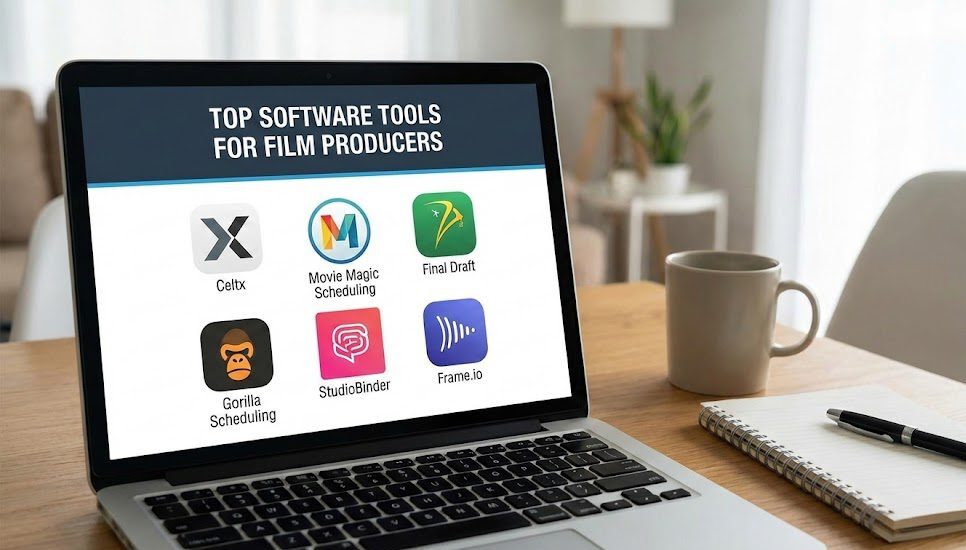
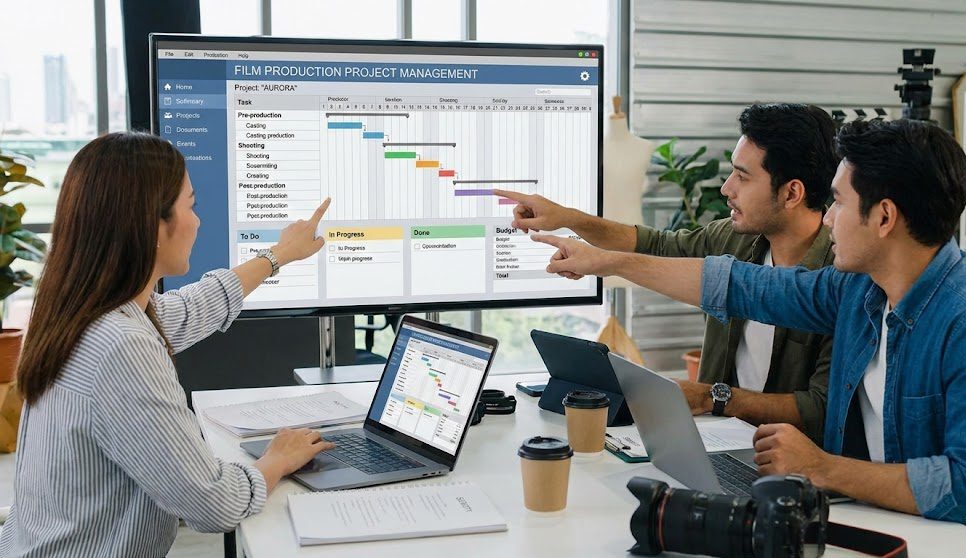
Software tools for film producers are specialized digital platforms designed to centralize production workflows, including scheduling, budgeting, and team collaboration.
This involves synchronizing creative milestones with financial data to ensure projects stay on track across pre-production, principal photography, and post-production phases.
According to industry reports, producers leveraging integrated intelligence platforms reduce manual data entry by 40% and improve budget accuracy by nearly 25%.
In this guide, you’ll learn how to select, implement, and integrate the next generation of project management tools to streamline your 2025 production slate.
While many existing resources provide shallow lists of generic task managers, they often fail to address the complex integration needs of modern entertainment supply chains. Most producers find themselves trapped between disconnected spreadsheets and siloed scheduling apps, leading to critical visibility gaps during high-stakes shoots.
This guide fills that gap by providing a strategic framework for software selection that prioritizes interoperability, real-time tracking, and supply-chain intelligence.
Table of Contents
Key Takeaways for Producers
-
Integration is Efficiency: Producers who integrate task management with financial software reduce budget overages by 25% through real-time expense tracking.
-
Scale-First Selection: Avoid over-complicating workflows by selecting tools tailored to your specific project complexity rather than generic enterprise features.
-
Data Intelligence Edge: Leveraging Vitrina’s Global Projects Tracker allows producers to monitor 1.6M+ titles and anticipate market resource shifts.
What is Project Management Software for Film?
Project management software for film is a dedicated ecosystem of tools designed to handle the non-linear complexities of content creation. Unlike standard task managers, these platforms must account for script versions, call sheets, talent availability, and location permits. In 2025, these tools have evolved from simple list-makers into predictive engines that can forecast production delays based on supply chain bottlenecks.
Find the right production vendors for your project:
Choosing Tools Based on Production Scale
A common pitfall for producers is selecting enterprise-grade software for independent, agile productions. For first-time filmmakers, a tool that offers simple Gantt charts and shared cloud storage for scripts is often more effective than a high-cost studio management system. Conversely, episodic series with multiple units require robust relational databases that can track thousands of assets across global locations.
The Winning Angle: The Integration Advantage
The true differentiator for high-performing producers is not the software itself, but how it communicates with other critical systems. Integrating project management with budgeting software (like Movie Magic) and scheduling tools allows for automatic cost updates as dates shift. This “weaponized data” ensures that a one-day delay on set is instantly reflected in the financial forecast, allowing producers to make informed pivots before liquidity issues arise.
Industry Expert Perspective: Revolutionizing Script Workflows
Steve Vitolo, CEO of Scriptation, explains how digital script management integrates with production workflows to eliminate waste and improve collaboration across departments.
In this episode, Steve Vitolo dives into how Scriptation transforms how scripts are read and shared across productions, serving as a critical bridge in the creative supply chain for shows like Game of Thrones.
Leveraging Supply Chain Intelligence for PM
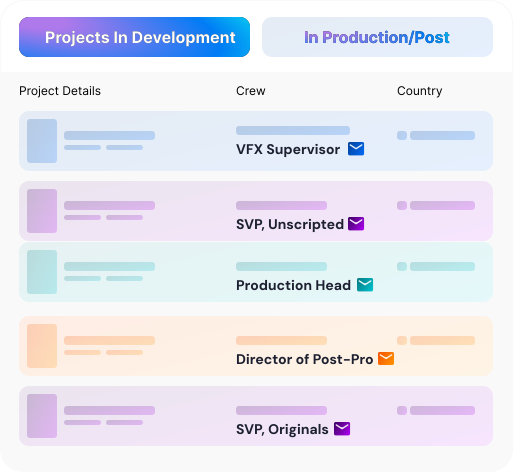
While internal project management tools track your team, platforms like Vitrina provide the external intelligence needed for strategic planning. By using the Global Film+TV Projects Tracker, producers can identify when 140,000+ companies are entering high-demand production phases, allowing them to book vendors and secure key talent before the market tightens. This external-facing data is the final piece of the integration puzzle.
Moving Forward
The transition from manual tracking to integrated supply chain intelligence is the defining shift for producers in 2025. This article filled the gap between shallow tool lists and the strategic necessity of interoperable data systems.
Whether you are an independent producer looking to optimize a tight budget, or a studio executive trying to synchronize global slates, the future of production management lies in the integration of specialized tools with global market data.
Outlook: Over the next 18 months, vertical AI like VIQI will become a native component of production software, enabling real-time automated vendor bidding and risk assessment.
Frequently Asked Questions
Quick answers to the most common queries about film production software.
What is the best project management software for film producers?
Can I use Trello or Asana for film production?
How does Vitrina help with project management?
About the Author
Entertainment Content Architect with over 15 years of experience in entertainment supply chain logistics and digital production workflows. Specialized in bridging the gap between creative vision and data-driven execution. Connect on Vitrina.