

 Companies
  Content
 Global Content Pulse (Webinars)

 Global Production Financing (Webinars)
  LeaderSpeak Podcast
  Latest Projects
 Global Trends
 About Projects Tracker
 About Vitrina
 Our Story
 Our Solutions 🔥
 Case Studies
 Our Profile
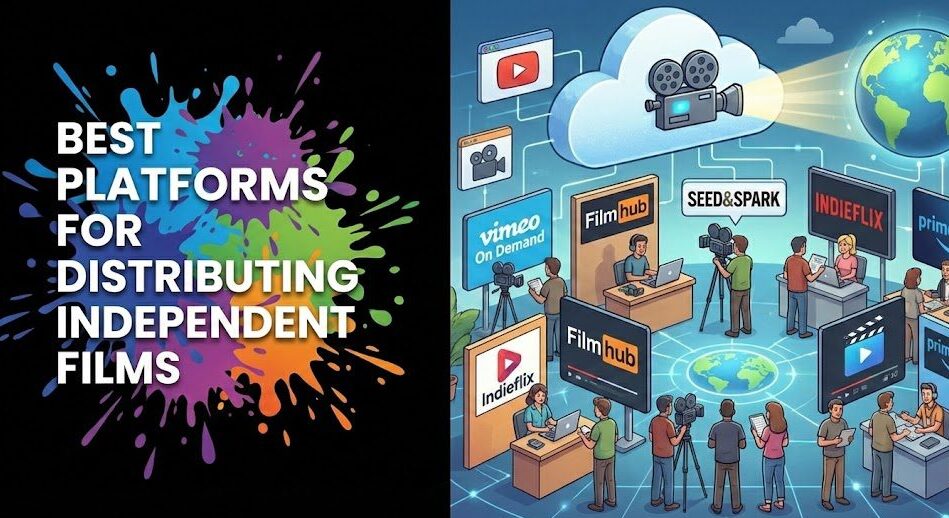
The best platforms for distributing independent films in 2025 have shifted from broad “walled gardens” to high-yield niche environments like Tubi, MUBI, and regional FAST channels.
This transition involves moving beyond traditional theatrical-only models toward a multi-window strategy that prioritizes AVOD (Ad-supported Video on Demand) and specialized SVOD (Subscription Video on Demand) services.
According to recent market analysis, global E&M revenue rose by 5.5% in 2024, yet the “data deficit” remains the biggest barrier for indies seeking to navigate 140,000+ potential distribution partners.
In this guide, you’ll learn how to identify high-probability platforms, optimize your project’s SEO for streaming algorithms, and leverage supply chain intelligence to compress months of research into weeks.
While legacy resources often focus on broad-market players like Netflix or Amazon, they frequently ignore the technical nuances and first-hand experience required to actually close a deal in today’s fragmented landscape.
This analysis fills those critical gaps by providing a deep dive into niche platform mechanics, marketing frameworks, and data-driven partner discovery tools.
Table of Contents
- 01What is the Independent Distribution Landscape in 2025?
- 02The Power of Niche: Why Tubi and MUBI Outperform the Giants
- 03Pros and Cons: Technical Analysis of Major Distribution Channels
- 04SEO and Marketing: Ensuring Your Film is Actually Discoverable
- 05Leveraging Supply Chain Intelligence for Faster Deal Velocity
- 06Key Takeaways
- 07FAQ
Key Takeaways for Producers
-
AVOD is the New King: Ad-supported platforms like Tubi offer immediate scale and long-term revenue potential compared to the high-friction “walled gardens” of SVOD.
-
Niche Platforms Outperform: Specialized curators like MUBI provide high-quality editorial prestige and targeted audiences that broad platforms simply cannot match.
-
SEO is Non-Negotiable: Distribution success is now tied to metadata optimization, requiring filmmakers to treat their film titles and synopses as digital assets.
-
Data Solves the Discovery Gap: Using supply chain platforms like Vitrina allows you to identify active buyers 70% faster than traditional festival-centric networking.
What is the Independent Distribution Landscape in 2025?
Film distribution for independent filmmakers is the process of securing exhibition deals across theatrical, streaming, or digital platforms to monetize completed projects.In 2025, this process has evolved from a simple festival-to-sale pipeline into a complex digital supply chain.Today, “Weaponized Distribution”—licensing content to rival platforms post-release to maximize ARPU—is becoming the norm for both studios and smart indies.
Find active distribution partners for your indie film:
The Power of Niche: Why Tubi and MUBI Outperform the Giants
While Netflix and Amazon Prime Video offer massive reach, they are often inaccessible to one-off indie projects.Niche platforms like Tubi (AVOD) and MUBI (curated SVOD) have become the “holy grail” for independent content.Tubi, for instance, prioritizes engaging narratives and diverse genres for its ad-supported audience, often providing better long-tail revenue than a one-time flat-fee buyout from a major streamer.
Industry Expert Perspective: Inside FilmSharks International: World Sales, Remakes & Production Mastery
Guido Rud, CEO of FilmSharks, discusses how indies can navigate world sales and remake distribution, providing a practical framework for maximizing IP value across borders.
Guido explains the shift in the Ibero-American market, emphasizing that remake distribution and localized world sales are critical for projects that may not fit a global SVOD mandate.
Pros and Cons: Technical Analysis of Major Distribution Channels
Each distribution channel comes with distinct trade-offs.
SVOD (like MUBI) offers high prestige and upfront flat fees, but content discoverability can be lower if you are not featured.
AVOD/FAST (like Tubi or Pluto TV) provides massive scale via ad revenue sharing but requires higher viewership to achieve substantial ROI.
TVOD (like iTunes or Amazon rentals) gives filmmakers direct control over pricing but demands a significant marketing budget to drive traffic.
Identify emerging FAST channels for your content:
SEO and Marketing: Ensuring Your Film is Actually Discoverable
In 2025, a great film isn’t enough; you need an AEO-optimized (Answer Engine Optimization) approach.
Platforms like Tubi and Amazon use algorithms that prioritize projects with “clean” metadata, high-quality SRT files, and optimized artwork.
Filmmakers should start building an email list and social community 6-12 months before release, ensuring that when the film drops, the initial viewership “surge” triggers the platform’s recommendation engine.
Leveraging Supply Chain Intelligence for Faster Deal Velocity
The primary challenge for indies is the “data trust deficit.”
Vetting cross-border partners or finding active acquisition leads is historically a manual, high-risk process.
Vitrina AI industrializes this “insider intelligence” by mapping 30 million industry relationships and tracking 1.6 million projects in real-time.
By using the Global Projects Tracker, producers can identify platforms that recently acquired similar titles, signaling an active appetite for their specific genre and budget range.
Access intelligence on active content buyers:
Moving Forward
The independent film distribution landscape has shifted from relationship-dependent networking to data-driven platform targeting. This transformation addresses the critical gaps in accessible resources and emerging platform coverage. By leveraging supply chain intelligence, filmmakers can now compress months of research into strategic outreach.
Whether you are an independent producer looking to secure pre-sales financing, or a sales agent trying to position catalog titles with emerging FAST channels, actionable intelligence drives deal velocity.
Outlook: Over the next 12-18 months, platform fragmentation will accelerate, making data-driven discovery tools a mandatory component of every production’s distribution strategy.
Frequently Asked Questions
Quick answers to common queries about indie film distribution in 2025.
How can I get my indie film on Tubi?
You can get your movie on Tubi by partnering with distributors or aggregators like Filmhub or Quiver. These partners handle technical requirements and negotiations on your behalf. Ensure your film meets industry standards (HD/5.1 audio) and prepare compelling artwork to enhance visibility.
What is the difference between AVOD and SVOD?
AVOD (Ad-supported Video on Demand) is free for viewers but generates revenue via ads (e.g., Tubi). SVOD (Subscription Video on Demand) requires a recurring fee for access (e.g., Netflix, MUBI). For indies, AVOD often offers faster scale and better long-tail revenue sharing models.
Do I need a sales agent for digital distribution?
While not strictly necessary for self-distribution via aggregators, a sales agent can secure higher-tier deals and international licenses. However, data platforms like Vitrina now allow filmmakers to directly identify and pitch to buyers, bypassing traditional gatekeepers for digital-first releases.
How does SEO affect my film’s distribution?
SEO impacts discoverability on platforms like Amazon and Google. By optimizing your film title, meta tags, and descriptions with relevant keywords (e.g., “new horror movie 2025”), you increase the chances of ranking in search results and appearing in “suggested” carousels.
What are the typical costs of independent film distribution?
Costs vary but typically include aggregator fees (flat fee or 20% commission), marketing expenses (up to 50% of the launch budget), and legal/insurance costs (E&O insurance). Using data intelligence can reduce the cost of partner discovery by targeting high-probability buyers immediately.
Is a theatrical release still worth it for indies?
A limited theatrical run can boost your film’s profile and trigger better placement in Cable TVOD systems. While often expensive, it generates the reviews and word-of-mouth required to “validate” the project for high-tier streaming platforms.
About the Author
Industry Strategy Lead with 15+ years in global content acquisition and supply chain optimization. Specialist in leveraging data intelligence to drive deal velocity for independent creators. Connect on Vitrina.