About Innovation Hub
 Global Content Pulse (Webinars)


 Global Production Financing
(Webinars)
Global Production Financing
(Webinars)  LeaderSpeak Podcast
  About Vitrina
 Our Story
 Our Solutions 🔥
 Film+TV Projects Tracker 🚀
 Case Studies
 Our Profile

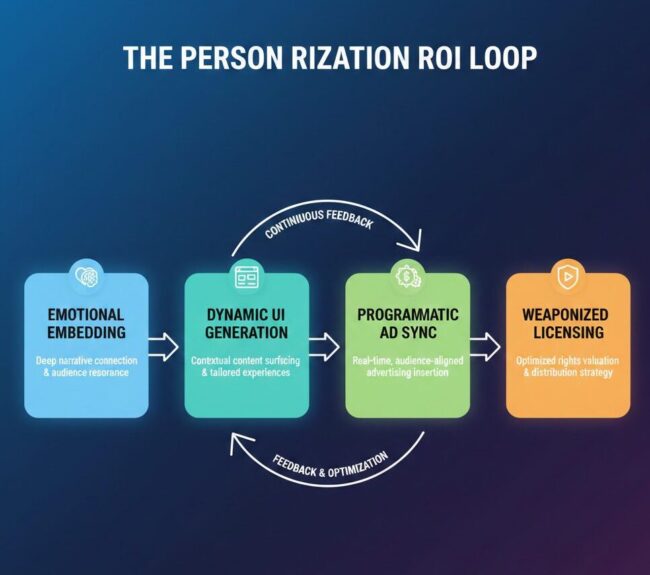
Revolutionizing Marketing Strategies in the 2026 streaming ecosystem has transitioned from a race for subscriber volume to a high-stakes battle for “Precision Retention” and ARPU optimization. As the industry faces the “Fragmentation Paradox”—where content is globally connected yet audience data remains siloed within opaque platforms—senior executives are confronting a critical “Data Deficit.” The reality? Traditional recommendation engines, built on crude “if-this-then-that” logic, are structurally incapable of mitigating the $72B margin erosion caused by subscriber churn and content saturation. But here is the catch: AI-powered personalization is now bypassing the “Timing Trap” by surfacing “Buying Signals” within the viewer’s emotional arc, transforming the platform interface from a static grid into a weaponized marketing engine that anticipates user intent before the first click.
This executive analysis serves as a strategic roadmap into the “Intelligence Layer” of the 2026 supply chain. we will signal the shifts in “Authorized Generative AI” for dynamic UI creation, de-risk the financial dynamics of “Efficiency-First” content curation, and navigate the “Regional Friction” that separates global streamers from localized broadcasters. By auditing the top 10 service leaders currently commanding the personalization landscape, we move from observing market shifts to commanding them through structured, verifiable, real-time intelligence. Let’s be candid: in an era of “Weaponized Distribution,” your personalization layer is either a data-driven science of recoupment or a sunk asset accelerating your platform’s obsolescence.
⚡ Executive Summary
|
Contents
- The Structural Metamorphosis: From Metadata to Emotion
- Authorized Generative AI: Dynamic Thumbnails and UI Reallocation
- Weaponized Distribution: Personalizing the Rotational Window
- Regional Friction: Bypassing Localized Content Hurdles
- Financial Dynamics: ARPU vs. Compute Reallocation
- Top 10 Leaders in AI-Powered Personalization (2026 Rankings)
🎙️ Expert Intelligence: Arash Pendari
“AI is reshaping the entertainment supply chain — from emotional scene analysis to personalized content packaging. Emotion is data.”
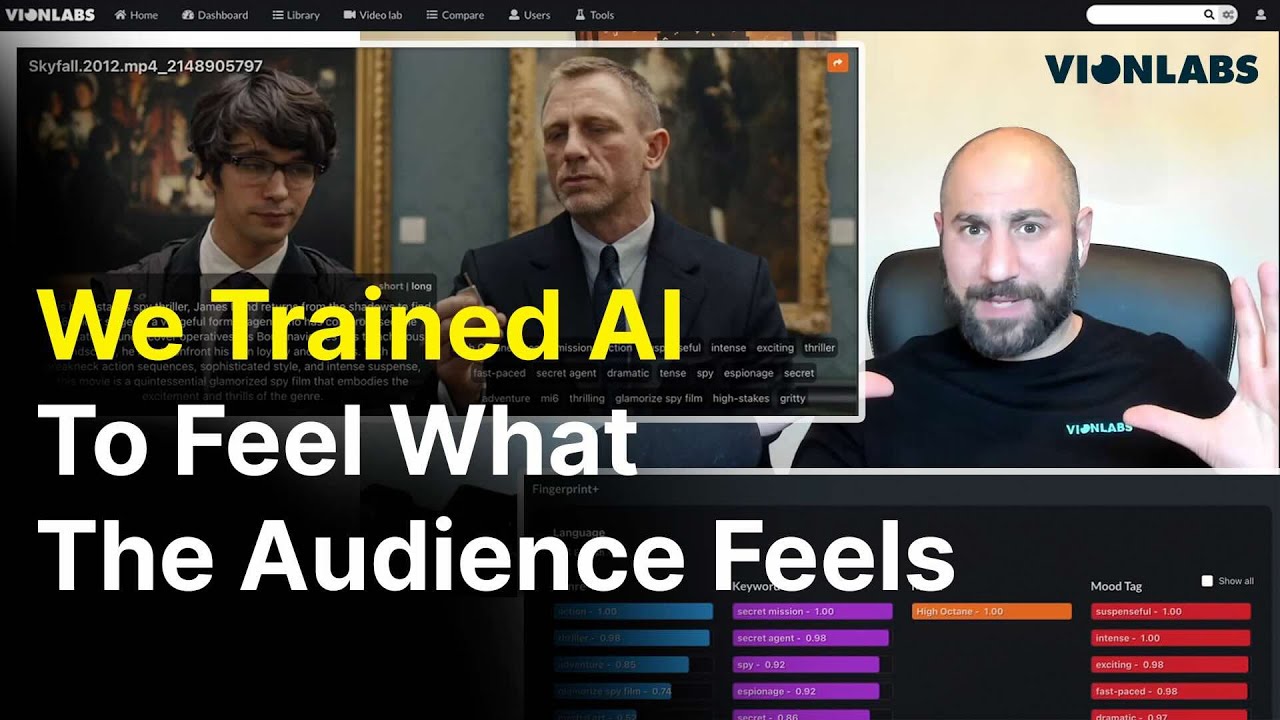
Source: Vitrina Expert Series. Arash Pendari, Founder of Vionlabs, discusses the shift toward emotional embeddings as the primary signal for next-gen personalization.
Revolutionizing Marketing Strategies: From Metadata to Emotion
The global entertainment supply chain is currently witnessing a structural metamorphosis in how “Value” is assigned to viewing data. For decades, personalization was a game of keywords—genre, cast, and director. The reality? This “Flat Metadata” model is structurally incapable of handling the 1.6M+ titles currently tracked in the global production pipeline. In 2026, Revolutionizing Marketing Strategies means moving beyond what a viewer *watched* and into *how* they felt. According to data from Omdia, platforms that integrate emotional scene analysis into their personalization layer see a 24% uplift in long-term subscriber retention.
But here is the catch: most streaming architectures are still trapped in the “Data Deficit.” They lack the intelligence layer required to map the emotional valence of a scene to the specific cognitive state of a localized audience. By leveraging vertical AI tools that perform deep emotional embedding—as signaled by Vionlabs —executives can now surface “Buying Signals” for their content slates before the viewer even knows they want to watch. This is the transition from “Art as a Service” to “Art as a Strategic Data Asset,” where every frame is weaponized to maximize engagement and de-risk the acquisition of high-budget originals.
Let’s be candid: the end of the “Walled Garden” era means your personalization engine must work across platforms. We are seeing a move toward “Unified Personalization Frameworks” where an AI Virtual Agent tracks a user’s cross-platform preferences to signal high-value co-production or pre-buy prospects. This reallocation of intelligence from siloed databases to a centralized “Intelligence Layer” allows for 100% recoupment speed by matching the right content with the right viewer in the right region at the exact peak of market interest.
Surface trending international content slates based on emotional audience scores:
Show me trending international content in the Scripted Drama for discovery
Authorized Generative AI: Dynamic Thumbnails and UI Reallocation
The integration of generative AI into the streaming UI has transitioned from experimental to mission-critical. Revolutionizing Marketing Strategies in 2026 involves the use of “Authorized Generative AI” to create millions of unique thumbnails, trailers, and landing pages in real-time. The reality? The “One-Size-Fits-All” poster is dead. If your platform isn’t using AI to generate a localized, demographic-specific trailer for a Korean thriller aimed at a Brazilian audience, you are leaving money on the table. The $1B Disney-OpenAI deal set the operational standard: models must be trained on “Authorized Data” to prevent the IP litigation that plagues scrapable sets.
But here is the catch: the “Data Trust Deficit” remains a major hurdle. Major studios are now issuing cease-and-desist letters to tech providers who cannot prove their training sets are legally clean. Strategic shift? Use vertical AI agents to audit your personalization pipeline, ensuring that every synthetic asset generated for your UI is built on a foundation of verified rights. This de-risks your global expansion and ensures that your project remains eligible for “Weaponized Distribution“—licensing your content to rivals without fear of IP contamination.
The financial dynamics are clear: Opex is being reallocated from manual graphic design to high-fidelity compute assets. By automating the localization of UI assets through emotional dubbing and synthetic lip-syncing (pioneered by companies like Deepdub and Neural Garage), platforms can globalize a content slate in days rather than months. The bottom line: in 2026, your UI is a living, breathing sales agent that de-risks your entire content supply chain through hyper-personalized, “Authorized” creativity.
Weaponized Distribution: Personalizing the Rotational Window
We have entered the age of “Weaponized Distribution,” where premium content is licensed to rivals to maximize ARPU after the primary window closes. Revolutionizing Marketing Strategies in this environment requires personalization to extend beyond your own platform. The reality? The “Frenemy Pact” between Amazon and Netflix signals a shift where content moves across ecosystems to reach secondary audience segments. Personalization engines now act as the “Signal Layer,” telling a rights holder exactly when a title has “cooled off” on Platform A and is “primed” for a rotational window on Platform B.
Let’s be candid: exclusivity is a legacy trap that drains margin. By using AI to track competitive slates and licensing activities, strategy teams can identify “Gaps” in a rival’s catalog. If your personalization data shows that users on your platform are increasingly seeking “uplifting reality” content, your AI agent can signal a high-value acquisition opportunity from a boutique regional studio. This is the industrialization of “Insider Intelligence”—transforming the opaque deals of the past into a data-driven science of supply chain optimization.
But here is the catch: the “Timing Trap” still kills deals. Most companies identify acquisition needs six months too late. Vertical AI assistants like VIQI bypass this by tracking daily updates on 1.6M titles across four stages: In-Development, In-Production, Post-Production, and Release. This allows for “Parallel Licensing,” where personalization models predict a title’s future resonance during active production, enabling financiers to engage at the earliest stage. This de-risks the “Efficiency-First” model and ensures that your content finds its highest-value window before the market shifts.
Monitor upcoming competitive slates and licensing activities for your target rivals:
Monitor upcoming competitive slates and licensing activities for Netflix
Regional Friction: Bypassing Localized Content Hurdles
While the demand for content is borderless, viewing habits remain deeply rooted in “Regional Friction.” Localized hurdles—from talent gaps in emerging hubs like Nigeria to the “Audit Traps” of tax rebates in Brazil—often derail a global personalization strategy. The reality? A recommendation algorithm that works in North America will fail in the APAC or MENA regions if it doesn’t account for localized business dynamics and cultural filters. Revolutionizing Marketing Strategies requires an assistant that maps these specialized regional leaders in real-time.
Let’s be candid: the “Fragmentation Paradox” is at its peak in regional markets. CXOs struggle to identify who is *currently* financing scripted formats in India or who is commissioning animation in South Korea. But here is the catch: by using vertical AI trained on Vitrina’s “Census-level” data, platforms can identify “Hard-to-identify” regional specialists who have successfully delivered on “Hero Projects.” This de-risks the co-production discovery process, allowing global streamers to partner with local entities that have a verifiable track record of high-value deals. This is how you surface the “Insider Advantage” in opaque markets.
The strategic shift involves using personalization to bridge the “Cultural Gap.” AI tools that analyze localized sentiment (as demonstrated by providers like Affectiva or Realeyes) allow marketing teams to adjust their slates for regional preferences. For example, if the data signals that Indian audiences respond better to “high-valence” emotional hooks, your personalization layer will prioritize those elements in the APAC UI. This level of granular, data-driven localization is the only way to accelerate growth in the “Big Crunch” era where every subscriber must be fought for with precision.
Financial Dynamics: ARPU vs. Compute Reallocation
The financial dynamics of 2026 are defined by the “Efficiency-First” mandate. As Phil Hunt of Head Gear Films signals, film finance is harder than ever, and revenue windows have collapsed. Revolutionizing Marketing Strategies involves a structural change in how budgets are allocated. The reality? Reallocating Opex from manual “Quality Assurance” to “AI-Driven Automation” is the only path to sustainable margins. Platforms are increasingly moving their metadata generation, thumbnail production, and personalization logic into the cloud-native workflows defined by the MovieLabs 2030 Vision.
But here is the catch: compute costs are the new Opex bottleneck. The strategic ROI of AI personalization comes from its ability to drive “Programmatic Ad Integration.” By using personalization to deliver hyper-targeted ad inventory within the content experience—a model pioneered by the Amazon/Netflix partnership—platforms can increase ARPU by 15-20% without raising subscription fees. This de-risks the platform’s financial model against macroeconomic shifts and ensures that even “Sunk” production assets continue to generate high-yield revenue through ad-supported rotational windows.
The bottom line: in 2026, your personalization strategy is your financial strategy. By identifying which “Emotional scene analysis” triggers the highest conversion rate, you can weaponize your marketing spend to target the 20% of users who drive 80% of your platform’s value. This is the industrialization of “Insider Intelligence”—transforming the opaque networking of the past into a structured, data-powered framework for global content domination. Start your precision outreach today to connect with the right companies that can deliver this intelligence layer at scale.
Top 10 Leaders in AI-Powered Personalization (2026 Rankings)
Revolutionizing Marketing Strategies: The Path Forward
The 2026 streaming landscape has entered a phase of “Data-Powered Framework” where personalization is the definitive signal for financial sustainability. We have analyzed how Revolutionizing Marketing Strategies means moving beyond crude demographics and toward emotional embeddings and “Authorized Generative AI.” The transition from relationship-driven discovery to data-driven science is no longer a luxury; it is the only way to transform the global “Data Deficit” into a strategic “Insider Advantage.” The bottom line: if your personalization layer isn’t weaponized to maximize ARPU across rotational windows, you are building on a foundation of eroding margins.
The Bottom Line: Your immediate path forward is to utilize VIQI and Vitrina’s global database to de-risk your personalization workflow and secure qualified connections before the commissioning windows close. Start your precision outreach today by identifying the right companies and decision-makers for your active projects. Those who align with the verified leaders of the “Intelligence Layer” will command the supply chain and secure their place in the future of entertainment.
Explore Live Intelligence
Monitor upcoming competitive slates and licensing activities for Netflix
Find me active post-production or VFX companies in India specializing in AI
Identify co-pro partners in South Korea currently commissioning scripted formats
Find me active green-lit projects to pitch
Show decision makers for Vionlabs
Strategic FAQ
What is Emotional Personalization in 2026?
Emotional Personalization is a structural metamorphosis in streaming tech where content is indexed via “Emotional Embeddings” rather than crude metadata. It identifies the viewer’s cognitive state through viewing patterns and matches them with scenes that trigger specific emotional valences, increasing engagement by up to 24% and reducing churn slates.
How does “Weaponized Distribution” maximize content ARPU?
Weaponized Distribution is the strategy of licensing high-value content to rivals 18-24 months post-release. AI personalization signals when a title has saturated its primary platform and identifies rotational windows on secondary FAST or SVoD channels where it can reach new audience segments and recoup “sunk” asset costs.
What is the “Timing Trap” in content acquisition?
The Timing Trap occurs when static directories fail to signal when a company is actively seeking partners. AI-driven assistants solve this by tracking daily project updates from development to release, ensuring that outreach for co-productions or pre-buys happens exactly when the acquisition window is at its peak interest.
How does Vitrina identify regional AI leaders?
Vitrina uses a unified data taxonomy and vertical AI to track 140,000+ companies. By mapping 30 million relationships and verified project credits, it surfaces “Hero Projects” and recent deal histories to qualify regional specialists in hubs like Bangalore, Istanbul, and São Paulo that are disrupting the personalization supply chain.