About Innovation Hub
 Global Content Pulse (Webinars)


 Global Production Financing
(Webinars)
Global Production Financing
(Webinars)  LeaderSpeak Podcast
  Global Entertainment Digest (Newsletter)
  About Vitrina
 About VIQI
 Our Story
 Our Solutions 🔥
 Film+TV Projects Tracker 🚀
 Case Studies
 Our Profile
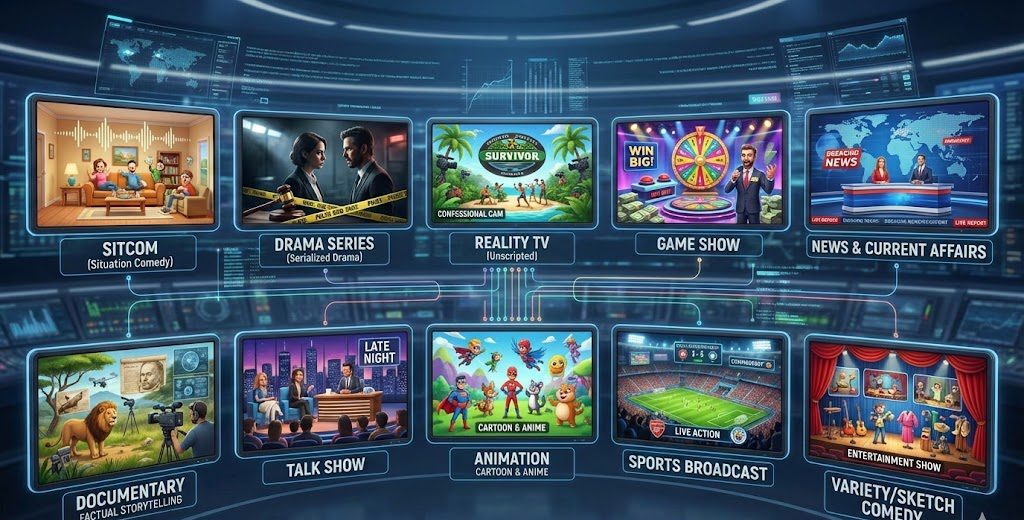
List of TV Formats in Japan refers to the most successful and scalable content blueprints—ranging from high-stakes unscripted competitions to serialized scripted narratives—that define the commercial landscape of the Japan sector in 2026.
For acquisition leads and content buyers, mastering List of TV Formats in Japan is no longer just about creative intuition; it is about navigating a complex, borderless supply chain of 600,000+ companies.
As the industry transitions from relationship-driven models to data-powered frameworks, identifying the right Japan IP requires a tactical understanding of regional linguistic nodes and verifiable partner track records.
Existing resources often provide shallow lists of trending titles but fail to address the underlying “Data Deficit” that prevents professionals from executing deals in high-growth markets.
This guide bridges that gap, providing an architectural blueprint for sourcing, licensing, and distributing List of TV Formats in Japan with maximum efficiency.

Your AI Assistant, Agent, and Analyst for the Business of Entertainment
VIQI AI helps you plan content acquisitions, raise production financing, and find and connect with the right partners worldwide.
- Find active co-producers and financiers for scripted projects
- Find equity and gap financing companies in North America
- Find top film financiers in Europe
- Find production houses that can co-produce or finance unscripted series
- I am looking for production partners for a YA drama set in Brazil
- I am looking for producers with proven track record in mid-budget features
- I am looking for Turkish distributors with successful international sales
- I am looking for OTT platforms actively acquiring finished series for the LATAM region
- I am seeking localization companies offer subtitling services in multiple Asian languages
- I am seeking partners in animation production for children's content
- I am seeking USA based post-production companies with sound facilities
- I am seeking VFX partners to composite background images and AI generated content
- Show me recent drama projects available for pre-buy
- Show me Japanese Anime Distributors
- Show me true-crime buyers from Asia
- Show me documentary pre-buyers
- List the top commissioners at the BBC
- List the post-production and VFX decision-makers at Netflix
- List the development leaders at Sony Pictures
- List the scripted programming heads at HBO
- Who is backing animation projects in Europe right now
- Who is Netflix’s top production partners for Sports Docs
- Who is Commissioning factual content in the NORDICS
- Who is acquiring unscripted formats for the North American market
Table of Contents
Analyzing Success: Popular Examples of List of TV Formats in Japan
To understand the secrets behind the success of the List of TV Formats in Japan, let’s take a closer look at some popular tv formats examples that have defined the market landscape.Below list represents amongst top 10 best tv formats
- The Reality Show Phenomenon: Reality shows’ success lies in the perfect blend of competitive elements, dramatic twists, and relatable human stories. By placing ordinary people in extraordinary situations, these formats create compelling narratives that keep viewers hooked season after season.
- The Crime Drama Craze: Crime dramas have captivated audiences with their complex characters and gripping storylines. These formats excel at creating tension and suspense, leaving viewers desperate to uncover the truth alongside the characters.
- The Sitcom Magic: Sitcom formats rely on humor, relatable characters, and clever writing to create a sense of familiarity and comfort. Audiences are drawn to the laughter and camaraderie these shows offer, making them perennial favorites for long-term licensing.
- The Talk Show Triumph: Talk shows have become staples of daytime and late-night television. These formats offer a platform for informative conversations with celebrities and experts, thriving on a relaxed atmosphere that makes viewers feel part of the conversation.
- The News Show Niche: News shows are trusted sources of information for viewers globally, offering comprehensive coverage of current events. Their success is attributed to journalistic integrity and the ability to deliver complex information in a clear and concise manner.
- The Docuseries Boom: Docuseries like “Making a Murderer” and “The Last Dance” have taken the world by storm. These formats combine deep storytelling with factual information to create truly immersive experiences that drive high digital engagement.
- The Animation Invasion: Animated shows like “The Simpsons” and “Rick and Morty” offer endless possibilities where anything is imaginable. Their success stems from sharp wit, creative storytelling, and relatable characters that transcend age demographics.
- The Sports Show Spectacle: Essential viewing for fans everywhere, sports shows offer comprehensive coverage of latest scores and expert analysis. Their success is attributed to passionate hosts and an exciting atmosphere that creates a sense of communal viewing.
The 2026 Japan Market Dynamics
The landscape of List of TV Formats in Japan is shifting from a fragmented collection of local IPs into a unified global supply chain. In 2026, the primary driver of value is no longer just the script or the celebrity judge, but the reproducibility of the format across linguistic nodes.
Acquisition leads are increasingly looking for Japan content that offers a proven “Bible”—a structured set of rules that ensures brand consistency while allowing for regional localization.
This transition has highlighted a critical “Data Deficit,” where buyers lack verifiable intelligence on which Japan studios actually possess the operational capacity to deliver at scale.
Find trending Japan formats with verified licensing availability:
Vetting Partners for List of TV Formats in Japan
In a borderless market, the risk of “IP friction” is at an all-time high. To successfully license List of TV Formats in Japan, acquisition teams must move beyond subjective networking.
Modern vetting processes utilize reputation scores and verified deal histories to qualify studios.
Whether you are sourcing a high-budget Japan production in a regional hub or a digital-first Japan format for a streamer, transparency in the supply chain is non-negotiable.
Professionals are now leveraging vertical AI to map the relationships between rightsholders and production hubs, ensuring that every partner in the Japan lifecycle is financially and operationally viable.
MGM Alternative:Reinventing Reality TV for a Streaming-First Era
Successful content acquisition in Japan requires more than a good pitch; it requires a digital supply chain that manages assets from production to global distribution with zero error.
Strategic Takeaway: In this episode, Atul Phadnis sits down with Barry Poznick, President of MGM Alternative, the powerhouse behind global unscripted hits from Shark Tank to Survivor. Barry takes us through his journey from a pop-culture-obsessed kid in New York to building iconic formats like Are You Smarter Than a Fifth Grader? and leading MGM’s massive slate of 35+ shows worldwide.
Together, they dive into the evolution of unscripted television, the changing economics of entertainment, and how MGM Alternative is shaping the future of storytelling in the streaming era.
The Economics of Japan Production
As production costs for marquee Japan franchises continue to rise, the emphasis has shifted toward financial sustainability.
Professionals are moving away from speculative “pilot-first” models toward “format-first” models that guarantee a certain level of advertiser and audience confidence.
In 2026, the cost of producing Japan content is often mitigated through co-production hubs where resources are shared across regional linguistic versions of the same show.
Understanding the Average Revenue Per User (ARPU) and the licensing fees for Japan in regional markets is now a prerequisite for any senior-level acquisition strategy.
Find co-production partners and financing for Japan projects:
Weaponized Distribution: Scaling Japan Globally
The most successful List of TV Formats in Japan are those that embrace “Weaponized Distribution.”
This strategy involves moving beyond single-platform silos and implementing rotational windowing. By licensing premium Japan IP to rival platforms 18-24 months post-original release, companies are maximizing ROI on “sunk” production assets.
For acquisition leads, this means analyzing a Japan format not just for its primary broadcaster, but for its potential as a global catalog asset.
This “co-opetition” model is transforming how Japan content is valued, emphasizing long-tail licensing revenue over short-term exclusivity.
Optimizing the Licensing Deal Flow
To master List of TV Formats in Japan, you must optimize your deal velocity. This requires a precision outreach strategy that targets the correct decision-makers across linguistic and regional nodes.
Instead of blanket pitches, acquisition leads are using data-ready feeds to automatically enrich their CRM systems with metadata on potential Japan partners.
Verifying rightsholders through a centralized global lighthouse ensures that you are engaging with credible partners, reducing the time spent on due diligence from months to days.
In the 2026 market, the winners are those who can identify trending Japan content and execute licensing deals with data-backed confidence.
Moving Forward
The transition toward List of TV Formats in Japan represents a fundamental shift in how the entertainment supply chain operates. By addressing the “Data Deficit” and implementing data-powered partner discovery, content professionals can navigate the complexities of regional licensing with unprecedented speed. The future of Japan content is not just about the narrative—it is about the strategic intelligence that powers its global lifecycle.
Whether you are scaling a regional hit or sourcing a global franchise, the rule for 2026 remains: Actionable data is the primary driver of ROI.
Frequently Asked Questions
What is the “Data Deficit” in Japan licensing?
How does “Weaponized Distribution” apply to Japan?
Why is format reproducibility important for Japan?
How do acquisition leads qualify regional Japan partners?
What is the role of VIQI in Japan acquisition?
Can CRM integration speed up Japan deals?
What is a “Digital Lighthouse” for Japan?
Is the Japan supply chain global or regional?
“The content supply chain is no longer an abstract concept; it is the competitive frontier for 2026. Those who master the data will master the market.”
About the Author
Market Intelligence Specialist at Vitrina AI, mapping the global entertainment supply chain and digital IP transformation.
Vitrina.
Find Film+TV Projects, Partners, and Deals – Fast.
VIQI matches you with the right financiers, producers, streamers, and buyers – globally.
Producers Seeking Financing & Partnerships?
Book Your Free Concierge Outreach Consultation
(To know more about Vitrina Concierge Outreach Solutions click here)
Join Industry Briefings Trusted by Leaders

The Mid-Budget Comeback: Why Mid-Budget Films Is the Smartest Bet in the Room
Mid-budget films are attracting new capital. See why this segment is becoming one of the strongest bets in Film today.

Franchise Fatigue vs. IP Dependency: What Studios Should Be Betting On Now
s franchise performance softens, where will the next generation of valuable IP come from? Join the briefing.

Unscripted Is Eating the World: The Multi-Billion Reality and Format Boom
Unscripted is the new prestige — inside the $19.8B global format boom reshaping how streaming platforms compete.

How Co-Productions and Regional IP Are Reshaping Global Drama
As global drama evolves, which stories travel, which stay local, and how are they getting financed?