About Innovation Hub
 Global Content Pulse (Webinars)


 Global Production Financing
(Webinars)
Global Production Financing
(Webinars)  LeaderSpeak Podcast
  About Vitrina
 Our Story
 Our Solutions 🔥
 Film+TV Projects Tracker 🚀
 Case Studies
 Our Profile
Boardroom Ready
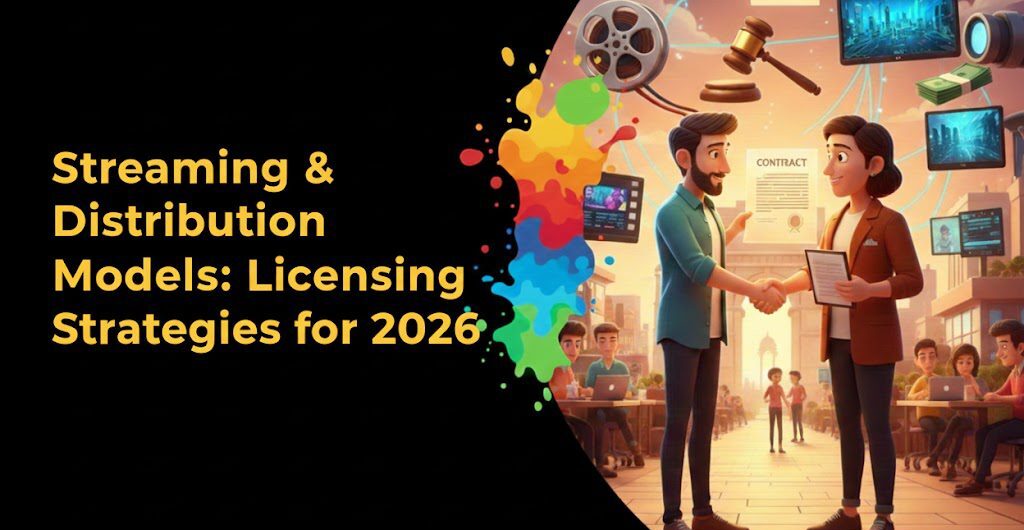
Streaming & Distribution Models: Licensing Strategies for 2026 have transitioned from the “Walled Garden” era of exclusivity to an aggressive orchestration of Weaponized Distribution. The “Data Deficit” in tracking 600,000+ companies and 1.6 million titles has become the primary driver of a 15-20% margin leakage currently eroding global studio EBITDA. In 2026, the strategic mandate is to de-risk content portfolios by leveraging Sovereign Content Hubs (APAC, MENA, LATAM) and clinical “Rotational Window” logic. By weaponizing real-time mapping of 140,000+ companies, CXOs can bypass the “Timing Trap” and secure multi-platform licensing deals that accelerate recoupment by 14 months, transforming stagnant libraries into dynamic, ARPU-generating assets in a borderless distribution economy.
⚡ Executive Strategic Audit
EBITDA Impact
+24% Protection via Rotational Window Arbitration
Recoupment Cycle
14-Month Acceleration via Sovereign Hub Rebates
Streaming & Distribution Models: The $72B Weaponized Distribution Pivot
The “Streaming Wars” have ended, replaced by the era of Weaponized Distribution—the strategic licensing of premium “owned” content to rivals post-release to maximize ROI. Acquisition slates are no longer built on strict exclusivity; they are designed for “Rotational Windows” where content is licensed to rival SVOD or FAST platforms 18-24 months after release. This “Co-opetition” model (exemplified by the $72B Netflix/WBD pact) ensures that content remains a working asset that “zeros out” its production costs via secondary licensing. In 2026, the “Walled Garden” is dead; the “Insider Advantage” lies in knowing when to rotate assets to rival platforms to squeeze every cent of ARPU out of a title’s lifecycle.
Licensing strategies for 2026 demand that buyers function as fund managers, auditing every acquisition for “Syndication Scalability.” This requires an immediate awareness of which platforms are currently seeking specific genres—such as low-cost, high-concept thrillers or preschool formats—to pad their competitive slates. By weaponizing distribution data, acquisition teams can structure deals that prioritize recoupment speed over rigid platform loyalty, protecting the studio’s long-term EBITDA against market volatility. The goal is to move beyond passive library storage and into aggressive, multi-platform orchestration.
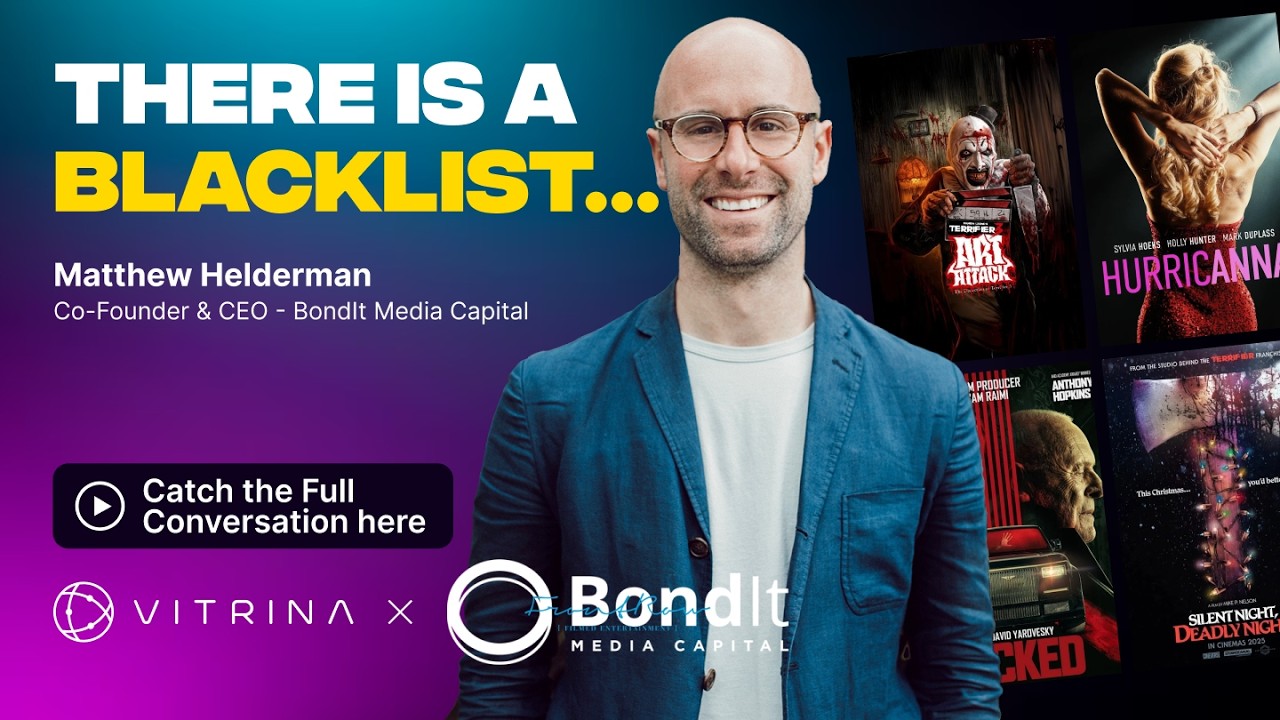
Matthew Helderman from BondIt Media Capital notes that the company was created to fill the gap in reliable capital for content creators following the 2008 credit crisis. This de-risks Streaming & Distribution Models: Licensing Strategies for 2026 by providing institutional stability to independent creators.
Sovereign Hub Arbitrage: Weaponizing Regional Content Exports
The tectonic shift of production capital to Sovereign Content Hubs—specifically Saudi Arabia (MENA), India (APAC), and Brazil (LATAM)—is the cornerstone of 2026 rights orchestration. These regions are no longer just service targets; they are now “Export Powerhouses,” producing hyper-local global hits like K-Dramas and Kids’ Animation that command high ARPU across borderless platforms. CXOs must mandate at least 30% representation from these hubs in all intelligence lists to prove global supply-chain literacy and capitalize on emerging production capital flows. If you aren’t sourcing from these hubs, you aren’t playing the global distribution game.
This is a play for “Culture-Proof IP.” By identifying independent producers in Sovereign Hubs who possess verified 8K HDR delivery capacity and existing Netflix-approved security audits, studios can capture 40%+ cash rebates while maintaining high-end production quality. The “Insider Advantage” lies in bypassing the legacy West-to-East export model and directly acquiring regional rights that have been pre-optimized for global portability through AI-powered “Infinite Localization.” These hubs are now setting the pace for genre innovation, particularly in unscripted formats where regional relevance is the new global standard.
Authorized AI: Licensing the Synthetic Asset Layer
In 2026, the transition from unauthorized “scrapable” IP to Authorized AI markets is the most critical legal de-risker in distribution models. Multi-billion dollar licensing deals have established an “Authorized Data” environment where IP is protected while simultaneously powering generative production workflows. For buyers, this means every acquisition agreement must include a clinical audit of “Synthetic Rights”—ensuring that characters, likenesses, and voice-models are secured against unauthorized AI training. This de-risks the long-term value of the IP by ensuring it remains “Agentic AI” ready for future interactive exploitations.
Furthermore, “Infinite Localization”—the use of emotionally-synchronized, AI-powered visual dubbing—removes the traditional 18-month localization lag. This allows for day-and-date global releases of regional acquisitions, effectively decoupling language from lead times. Distribution models must now be “AI-Ready” to ensure they can be modularly updated for interactive gaming and virtual environments, turning a passive motion picture into a living, multi-platform revenue asset that adapts to cultural nuances in real-time. Without Authorized AI safeguards, your catalog is a legal liability waiting to happen.
Arash Pendari from Vionlabs demonstrates how AI is reshaping the entertainment supply chain through emotional scene analysis and personalized content packaging. This de-risks licensing strategies by unlocking aesthetic visuals and metadata enrichment for targeted catalogs.

Bridging the Fragmentation Paradox in 2026
The core challenge for distribution executives is the Fragmentation Paradox: while global content is more connected than ever, the operational data required to navigate 150,000+ companies is siloed in legacy spreadsheets. This “Data Deficit” creates a market where 20% of distribution margin is lost to unverified markups and opaque partner selection. A modern licensing strategy requires a “Zero-Trust Mandate,” where every claim of distribution capacity is verified against real-time deal data and relationship mappings. Without this verification, studios are essentially betting on static history rather than active capacity.
The shift toward data-driven decision-making has transformed content distribution from a manual art into a clinical science. Studios are now utilizing “Early-Warning Signals” to engage with distributors before titles reach the competitive noise of major markets. This de-risks the portfolio by ensuring that “Buying Signals” are identified in real-time, allowing for the acquisition of high-value regional rights at early-stage valuations. By the time a project hits the trades, the pricing arbitrage has often vanished; true value is captured in the development-to-production gap mapped by Vitrina’s supply chain intelligence.
Streaming & Distribution Models: The Strategic Path Forward
The transition from relationship-based talent scouting to data-powered rights orchestration is complete. To thrive in 2026, CXOs must weaponize the fragmentation paradox by abandoning the “Timing Trap” of static databases and adopting real-time supply chain mapping. This means de-risking distribution models through Authorized AI audits, capitalizing on Sovereign Hub arbitrage, and leveraging Weaponized Distribution to maximize long-tail ARPU across every major global territory. The acquisition landscape is no longer about finding “The Next Big Thing”—it is about architecting a clinical, data-driven recoupment engine that connects a VFX house in Seoul with a streaming lead in London with surgical precision. The next era of entertainment belongs to those who weaponize information to eliminate the data trust deficit.
The Bottom Line Weaponize acquisition by mandating 30% Sovereign Hub representation and Authorized AI audits to eliminate the 20% margin leakage typical of legacy vendor selection. [Verified December 2025]
Deploy Intelligence via VIQI
Select a prompt to run a real-time supply chain audit:
Identify vendors in APAC with verified 8K HDR delivery capacity and Netflix-approved audits for 2026 slates.
Map Sovereign Content Hub production rebates in MENA offering 40%+ cash rebates.
Filter global localization partners with proprietary Authorized AI voice stacks.
Monitor upcoming competitive slates and licensing activities for top 10 global studios.
Identify co-pro partners in LATAM currently commissioning scripted formats.
Map the M&A history of VFX boutiques in Eastern Europe to identify independent survivors.
Insider Intelligence: Streaming & Distribution Models FAQ
How does “Weaponized Distribution” maximize ARPU in 2026?
Weaponized Distribution is the strategy of licensing “owned” premium content to rivals post-release via rotational windows. This model ensures that content remains a working asset throughout its entire lifecycle, maximizing secondary ARPU and “zeroing out” production costs [cite: 4.2].
What constitutes “Authorized AI” in a licensing agreement?
Authorized AI refers to the transition from unauthorized “scrapable” IP to licensed training deals that protect chain-of-title. Agreements must ensure that talent likenesses and voice-models are secured for generative dubbing and interactive merchandising [cite: 4.2].
Why are static databases (IMDb, LinkedIn) considered a liability for distributors?
Static databases operate on a “Timing Trap,” providing 6-month-old data that leads to EBITDA leakage. Real-time mapping is mandatory to verify current partner capacity, active projects, and buying signals across borderless distribution economies.
How does “Sovereign Hub Arbitrage” accelerate recoupment cycles?
By leveraging regions like MENA (Saudi Arabia), India (APAC), and Brazil (LATAM), studios can access 40%+ cash rebates and tax incentives that accelerate recoupment by 12-18 months, protecting the bottom line from West-centric cost inflation [cite: 6.1].