🎥 Entertainment

The Library Deal: Monetizing Existing IP to Fund New Production

2ccb022f56a0d9547307ebc1dc5f80245b5f32819e59ffc9f7c91f82f27c70af?s=96&d=mm&r=g

Author: rutuja kokate

Published: December 1, 2025

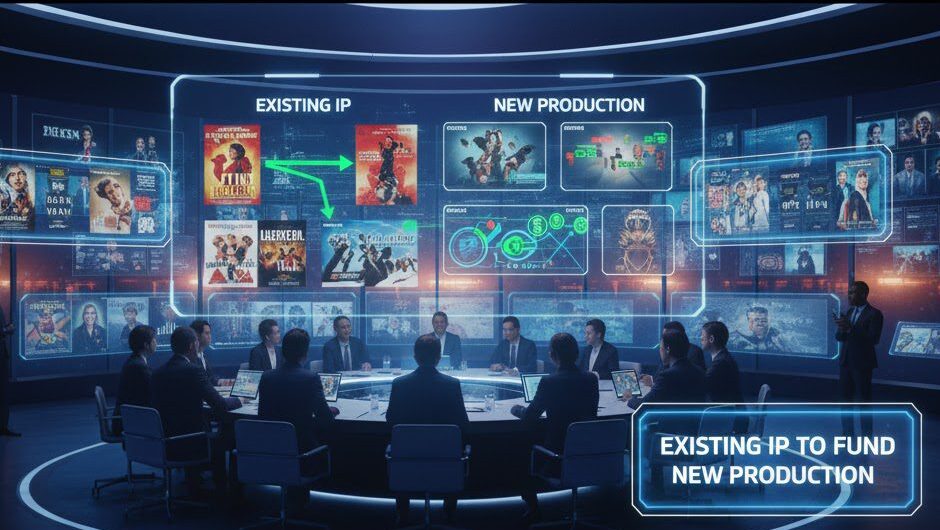
Existing IP to Fund New Production

About This Guide: Library deals involve the strategic monetization of existing content catalogs through various transaction structures including outright sales, licensing agreements, and revenue-sharing partnerships. This comprehensive analysis examines how content owners can leverage existing IP to fund new production, drawing insights from Vitrina’s database of library transactions, content valuations, and financing structures across global markets to provide strategic intelligence for producers, distributors, and content investors navigating these complex deals.

Understanding Library Deal Fundamentals

Library deals represent a sophisticated approach to content monetization that goes far beyond simple catalog sales. These transactions involve strategic partnerships between content owners and distributors, streaming platforms, or investment funds seeking to acquire or license existing intellectual property for various commercial purposes.

The fundamental appeal of library deals lies in their ability to unlock immediate value from completed content while providing buyers with proven assets that have established market performance data.

Unlike development financing based on projections and assumptions, library deals involve tangible assets with known audience appeal, revenue history, and market positioning.

Modern library deals encompass various transaction structures, from outright catalog purchases to complex revenue-sharing arrangements that provide ongoing income streams. The optimal structure depends on content quality, market demand, buyer objectives, and seller financing needs.

Valuation Methods & Asset Assessment

Revenue-Based Valuation Models:

Content valuation begins with comprehensive revenue analysis across all distribution channels and territories. Historical performance provides the foundation for future projections, with adjustments for market evolution and platform changes.

 Trailing Revenue Analysis: 3-5 year revenue history across all platforms and territories
 Revenue Multiple Application: Industry multiples of 2-8x annual revenue depending on content type
 Platform-Specific Performance: Streaming, theatrical, home video, and broadcast revenue breakdown
 Geographic Revenue Distribution: Territory-by-territory performance analysis and projections

Comparable Transaction Analysis:

Market comparables provide crucial benchmarks for library valuations, though finding truly comparable transactions requires careful analysis of content type, vintage, and market conditions.

Recent market transactions show significant variation by content category. Premium scripted series command 6-10x annual revenue multiples, while feature film libraries typically trade at 3-5x multiples. Unscripted content and documentaries generally receive 2-4x multiples, reflecting their more limited international appeal.

Discounted Cash Flow Modeling:

DCF analysis projects future revenue streams across the remaining economic life of content, typically 10-20 years for premium content. Key variables include revenue decay rates, platform evolution, and market competition.

 Revenue Decay Assumptions: Annual decline rates of 10-25% depending on content type
 Platform Migration: Shifting revenue from traditional to streaming platforms
 Discount Rate Application: 8-15% rates reflecting content investment risk
 Terminal Value Calculations: Residual value after primary exploitation period

Content Quality Assessment:

Qualitative factors significantly impact valuations beyond pure financial metrics. Star power, production values, genre appeal, and cultural relevance all influence buyer interest and pricing.

Premium content with A-list talent and high production values commands significant premiums, often 50-100% above comparable lower-budget content. Genre preferences vary by buyer, with action, thriller, and horror content typically receiving higher valuations for international sales.

Rights and Legal Analysis:

Comprehensive rights analysis ensures clear title and identifies any encumbrances that might affect value. Chain of title issues, outstanding obligations, and territorial restrictions can significantly impact deal feasibility and pricing.

 Rights Clearance: Music, talent, and third-party rights verification
 Territory Availability: Clear rights in target territories and platforms
 Encumbrance Analysis: Existing distribution agreements and revenue commitments
 Legal Opinion Requirements: Professional legal verification of rights ownership

Ready to conduct comprehensive content valuation and rights analysis? Access Vitrina’s valuation tools and connect with entertainment legal specialists.


Deal Structures & Transaction Types

Outright Purchase Transactions:

Complete catalog sales provide immediate liquidity but eliminate future revenue participation. These deals work best for content owners needing maximum immediate capital or seeking to exit specific content categories.

Purchase prices typically range from 3-7x annual revenue for quality content, with payment structures varying from lump sum to installments over 12-36 months. Buyers assume all future revenue risk and opportunity, making thorough due diligence critical for both parties.

Revenue-Sharing Partnerships:

Revenue-sharing structures allow content owners to maintain ongoing participation while providing buyers with lower upfront investment requirements. These deals often achieve higher total valuations than outright sales but involve longer-term relationships and ongoing management.

 Upfront Payment: 30-60% of estimated value paid immediately
 Revenue Splits: 50-70% to buyer, 30-50% to content owner after recoupment
 Recoupment Terms: Buyer recoups investment plus 15-25% premium before sharing
 Performance Guarantees: Minimum annual revenue guarantees protecting content owner interests

Licensing and Distribution Agreements:

Strategic licensing deals provide content owners with immediate advances while maintaining ownership and long-term control. These structures work particularly well for premium content with strong ongoing revenue potential.

Licensing advances typically represent 40-70% of projected revenue over the license term, with the content owner retaining rights reversion and ongoing revenue participation. Terms generally range from 5-15 years depending on content type and market conditions.

Hybrid Financing Structures:

Sophisticated deals combine multiple elements to optimize both immediate cash flow and long-term value. These might include partial sales, licensing components, and development financing for new content.

A typical hybrid structure might involve selling 60% of catalog rights for immediate cash while licensing the remaining 40% for ongoing revenue participation. The immediate proceeds fund new production, while retained rights provide ongoing cash flow and upside potential.

Platform-Specific Deals:

Streaming platforms increasingly seek exclusive content through various deal structures. These range from traditional licensing to output deals that include both library content and future production commitments.

 Exclusive Licensing: Premium pricing for platform exclusivity, typically 25-50% above non-exclusive deals
 Output Agreements: Combined library and future content deals providing ongoing production financing
 First-Look Arrangements: Library deals coupled with development and production partnerships
 Co-Production Structures: Joint investment in new content using library assets as collateral

International Territory Strategies:

Global library monetization often involves territory-by-territory deals optimized for local market conditions and buyer preferences. This approach can maximize total value but requires sophisticated coordination and management.

Major territories like Germany, UK, and France might command 15-25% of total global value each, while smaller territories contribute 2-5% individually. Coordinated global campaigns can achieve 20-30% higher total valuations than piecemeal approaches.

Looking to structure optimal library deals for your content portfolio? Use Vitrina’s deal structuring tools and connect with experienced transaction specialists.


Buyer Landscape & Market Demand

Streaming Platform Acquisitions:

Major streaming platforms represent the most active and highest-paying segment of the library market. Netflix, Amazon Prime, Disney+, and other global platforms are aggressively acquiring content to differentiate their offerings and reduce dependence on licensed content.

Amazon Prime emphasizes genre content and international productions that complement their global expansion. Disney+ prioritizes family-friendly content and established franchises that align with their brand positioning.

 Netflix: $50M-500M+ deals for premium libraries, 3-7 year exclusive terms preferred
 Amazon Prime: $20M-200M+ focus on genre content and international productions
 Disney+: $30M-300M+ emphasis on family content and franchise potential
 Apple TV+: $25M-150M+ selective acquisitions of prestige content

Traditional Media Companies:

Legacy media companies are actively acquiring content libraries to support their streaming initiatives and fill programming gaps. These buyers often pay competitive prices while offering different deal structures than pure-play streaming platforms.

Warner Bros Discovery, NBCUniversal, and Paramount are particularly active in library acquisitions, seeking content that complements their existing portfolios and supports their direct-to-consumer strategies. These companies often prefer longer-term partnerships that include development components.

International Distributors:

Regional distributors and broadcasters continue to represent significant library buyers, particularly for content with strong local appeal or proven international performance. These buyers often focus on specific genres or content types that align with their market positioning.

European distributors like StudioCanal, Mediawan, and Fremantle are active library acquirers, often paying $10M-100M+ for quality content packages. Asian buyers including CJ ENM and Nippon TV are increasingly aggressive in acquiring Western content for local adaptation and distribution.

Investment Funds and Financial Buyers:

Specialized content investment funds have emerged as major library buyers, bringing financial engineering expertise and longer investment horizons to content acquisitions. These buyers often structure deals differently than traditional media companies.

 Content Funds: $25M-250M+ deals with 5-10 year investment horizons
 Private Equity: Focus on cash-generating assets with predictable returns
 Debt Funds: Asset-backed lending using content libraries as collateral
 Pension Funds: Long-term investors seeking stable, income-generating assets

Emerging Market Buyers:

Buyers from emerging markets are becoming increasingly active in library acquisitions, seeking proven Western content for local distribution and adaptation. These buyers often focus on specific content types that resonate with local audiences.

Middle Eastern, Latin American, and Southeast Asian buyers are particularly active, often paying competitive prices for content that can be adapted or dubbed for local markets. These deals frequently include format rights and remake opportunities.

Technology and Platform Companies:

Non-traditional buyers including technology companies, telecommunications providers, and platform aggregators are entering the content acquisition market to support their broader business strategies.

Companies like Roku, Pluto TV, and Tubi are acquiring free ad-supported content libraries, while telecommunications companies seek content to support their streaming and broadband services. These buyers often structure deals around advertising revenue sharing rather than traditional licensing models.

Want to identify active library buyers and analyze market demand trends? Explore Vitrina’s buyer intelligence platform and market analysis tools.


Financing Integration & Production Funding

Production Finance Coordination:

Library deals can provide immediate production financing through various structures that leverage existing content value. The key lies in coordinating library monetization with production cash flow needs and financing requirements.

Successful integration requires careful timing of library transactions with production schedules. Deals structured with milestone payments can align with production cash flow needs, while lump sum transactions provide maximum flexibility for production financing and working capital management.

Bank Financing Enhancement:

Library assets serve as excellent collateral for production loans, often enabling higher loan-to-value ratios and better terms than unsecured financing. Banks view content libraries as tangible assets with established revenue streams, reducing lending risk significantly.

 Loan-to-Value Ratios: 60-80% of appraised library value for quality content
 Interest Rate Benefits: 2-4% lower rates compared to unsecured production loans
 Collateral Requirements: Comprehensive rights verification and insurance coverage
 Recourse Limitations: Non-recourse or limited recourse structures available

Gap Financing Solutions:

Library deals can eliminate or reduce gap financing requirements by providing immediate cash that would otherwise need to be borrowed at higher rates. This approach can save 5-15% in total financing costs while reducing production risk.

Strategic library monetization can cover 30-70% of production budgets, significantly reducing external financing requirements. The remaining production costs can often be financed through traditional pre-sales, tax incentives, and equity investment at more favorable terms.

Multi-Project Portfolio Financing:

Sophisticated financing structures use library assets to support multiple production projects through revolving credit facilities or development funds. These approaches provide ongoing production capacity while maximizing library asset utilization.

Portfolio financing might involve establishing a $50M-200M production fund backed by library assets, enabling continuous production activity without project-by-project financing. This approach provides operational flexibility while optimizing capital efficiency.

Tax and Accounting Optimization:

Library monetization offers various tax planning opportunities that can enhance overall transaction value. Proper structuring can optimize tax treatment for both immediate proceeds and ongoing revenue streams.

 Capital Gains Treatment: Structuring sales for favorable capital gains tax rates
 Installment Sales: Spreading tax liability over multiple years through payment scheduling
 Like-Kind Exchanges: Using proceeds to acquire similar assets with tax deferral benefits
 International Structures: Cross-border optimization for multinational content owners

Risk Management Integration:

Library deals can reduce overall production portfolio risk by providing diversified revenue streams and reducing dependence on individual project performance. This risk reduction often enables more aggressive production strategies and higher leverage ratios.

Established library revenue provides stable cash flow that can support higher-risk development projects and experimental content. This approach enables content companies to maintain both stable income and growth potential through balanced portfolio management.

Ready to integrate library monetization with production financing strategies? Connect with Vitrina’s network of entertainment finance specialists and transaction advisors.


Negotiation Strategies & Value Optimization

Market Timing and Positioning:

Successful library negotiations require careful market timing and strategic positioning to maximize buyer interest and competition. Content owners should monitor market conditions, buyer activity, and competitive transactions to optimize deal timing.

Peak buying periods typically occur during Q4 budget cycles and major market events like Cannes, AFM, and MIPCOM. However, off-season negotiations can sometimes yield better terms due to reduced competition and more focused buyer attention.

Competitive Bidding Processes:

Structured auction processes can significantly increase library valuations by creating buyer competition and market validation. Professional sales processes typically achieve 15-30% higher valuations than bilateral negotiations.

 Buyer Identification: Target 8-15 qualified buyers for competitive process
 Information Management: Controlled data room access with staged information release
 Bid Structure: Clear bid requirements and evaluation criteria
 Timeline Management: 6-12 week process balancing thoroughness with urgency

Value Enhancement Strategies:

Content owners can implement various strategies to enhance library value before market entry. These might include rights clearance, remastering, format creation, or strategic packaging with development projects.

Rights clearance and chain of title cleanup can increase valuations by 10-25% by eliminating buyer concerns and enabling broader exploitation. High-definition remastering and format updates can add significant value for older content with ongoing commercial potential.

Deal Structure Optimization:

Sophisticated deal structuring can optimize both immediate proceeds and long-term value through creative approaches to risk allocation, payment timing, and ongoing participation.

Structures that provide buyers with operational control while maintaining seller upside participation often achieve the highest total valuations. These might include management agreements, joint ventures, or profit-sharing arrangements that align interests.

Due Diligence Management:

Efficient due diligence processes can accelerate transactions while maintaining buyer confidence. Well-organized data rooms and proactive information provision demonstrate professionalism and reduce transaction risk.

 Documentation Organization: Comprehensive rights, financial, and legal documentation
 Professional Presentation: High-quality marketing materials and financial analysis
 Responsive Management: Quick response to buyer inquiries and requests
 Legal Coordination: Experienced entertainment counsel managing legal aspects

Negotiation Leverage Points:

Understanding buyer motivations and constraints enables more effective negotiation strategies. Different buyer types have varying priorities that can be leveraged for optimal deal terms.

Streaming platforms often prioritize speed and exclusivity over price optimization, while financial buyers focus on return metrics and risk management. Traditional distributors emphasize long-term relationships and ongoing business opportunities.

Looking to optimize library deal negotiations and maximize transaction value? Access Vitrina’s negotiation strategy resources and experienced deal advisors.


Execution Best Practices & Risk Management

Professional Team Assembly:

Successful library transactions require experienced professional teams including entertainment lawyers, accountants, valuation specialists, and transaction advisors. The complexity of rights, contracts, and market dynamics demands specialized expertise.

Due Diligence Preparation:

Comprehensive due diligence preparation accelerates transactions and maximizes valuations. Content owners should organize all rights documentation, financial records, and legal materials before market entry.

 Rights Documentation: Complete chain of title, talent agreements, and clearance records
 Financial Records: Revenue history, cost documentation, and profit/loss statements
 Legal Compliance: Regulatory compliance, union obligations, and outstanding liabilities
 Technical Materials: Master materials, delivery requirements, and format specifications

Risk Assessment and Mitigation:

Library transactions involve various risks that must be identified and managed throughout the process. These include rights defects, buyer credit risk, market timing, and execution challenges.

Rights and title insurance can protect against unknown defects while providing buyer confidence. Comprehensive representations and warranties, backed by appropriate insurance coverage, facilitate smoother transactions and higher valuations.

Transaction Documentation:

Professional transaction documentation protects both parties while ensuring smooth deal execution. Key documents include purchase agreements, assignment instruments, and delivery schedules.

Documentation should address all material terms including payment schedules, delivery requirements, representations and warranties, and post-closing obligations. Clear dispute resolution mechanisms and governing law provisions prevent future conflicts.

Post-Transaction Management:

Successful library deals require ongoing management of delivery obligations, revenue reporting, and relationship maintenance. Content owners must fulfill all contractual commitments while buyers must manage acquired assets effectively.

 Delivery Coordination: Systematic delivery of all required materials and documentation
 Revenue Reporting: Ongoing financial reporting and audit cooperation as required
 Relationship Management: Maintaining positive relationships for future opportunities
 Performance Monitoring: Tracking asset performance and market developments

Tax and Accounting Implementation:

Proper tax and accounting treatment requires careful coordination with qualified professionals. Library sales can have significant tax implications that must be planned and managed appropriately.

Installment sale treatment, like-kind exchanges, and international structuring can optimize tax outcomes. Professional tax advice is essential for complex transactions involving multiple jurisdictions or sophisticated structures.

Market Intelligence and Optimization:

Ongoing market intelligence helps optimize both current transactions and future opportunities. Understanding buyer behavior, market trends, and competitive dynamics enables better decision-making.

Regular market analysis should track buyer activity, transaction multiples, and structural trends. This intelligence informs both immediate negotiation strategies and longer-term portfolio management decisions.

Success Measurement and Learning:

Systematic evaluation of transaction outcomes enables continuous improvement in library monetization strategies. Key metrics include achieved multiples, transaction timing, and post-deal performance.

 Valuation Achievement: Actual proceeds vs. initial expectations and market comparables
 Process Efficiency: Transaction timeline, costs, and execution quality
 Strategic Outcomes: Impact on production financing and business development
 Relationship Development: New partnerships and future opportunity creation

Ready to execute professional library transactions with comprehensive risk management? Connect with Vitrina’s network of transaction specialists and experienced entertainment professionals.

Conclusion

Library deals represent one of the most powerful yet sophisticated financing tools available to content creators, offering the ability to transform existing intellectual property into immediate production capital while maintaining strategic flexibility for future growth.

The key to success lies in understanding that these transactions extend far beyond simple asset sales to encompass complex strategic partnerships that can reshape entire business models.

The modern library market offers unprecedented opportunities for content monetization, driven by streaming platform expansion, international market growth, and increasing demand for proven content with established audience appeal.

However, maximizing value requires sophisticated approach to valuation, deal structuring, and market positioning that goes well beyond traditional distribution strategies.

As streaming platforms continue expanding globally and new buyers enter the market, the opportunities for strategic library monetization will only increase. The winners will be those who understand how to leverage existing assets strategically while building sustainable production and distribution capabilities for long-term success.

Ready to unlock the value of your content library and fund new production opportunities? Explore Vitrina’s comprehensive library monetization platform and connect with experienced transaction professionals.

Frequently Asked Questions

Premium scripted series with A-list talent and high production values command the highest multiples (6-10x annual revenue), followed by feature film packages with strong international appeal (3-5x multiples). Genre content including action, thriller, and horror typically receives premium pricing due to strong global demand.

Professional library transactions typically require 4-8 months from initial market preparation to closing. This includes 6-8 weeks for buyer identification and bidding, 4-6 weeks for due diligence, and 6-10 weeks for documentation and closing. Complex deals involving multiple buyers or territories may extend to 12+ months.

Primary risks include rights defects, buyer credit risk, and market timing challenges. Mitigation strategies include comprehensive rights and title insurance, thorough buyer financial due diligence, professional legal representation, and appropriate transaction structuring with security provisions and payment guarantees.

Library deals often provide cheaper capital than traditional production financing, with effective costs of 8-15% compared to 15-25% for gap financing or high-risk production loans. They also offer greater flexibility since proceeds aren’t tied to specific projects, enabling more strategic capital allocation and faster development cycles.

Not a Vitrina Member? Apply Now!

Vitrina tracks global Film & TV projects, partners, and deals—used to find vendors, financiers, commissioners, licensors, and licensees

Vitrina tracks global Film & TV projects, partners, and deals—used to find vendors, financiers, commissioners, licensors, and licensees

Not a Vitrina Member? Apply Now!

Real-Time Intelligence for the Global Film & TV Ecosystem

Vitrina helps studios, streamers, vendors, and financiers track projects, deals, people, and partners—worldwide.

  • Spot in-development and in-production projects early
  • Assess companies with verified profiles and past work
  • Track trends in content, co-pros, and licensing
  • Find key execs, dealmakers, and decision-makers

Who’s Using Vitrina — and How

From studios and streamers to distributors and vendors, see how the industry’s smartest teams use Vitrina to stay ahead.

Find Projects. Secure Partners. Pitch Smart.

  • Track early-stage film & TV projects globally
  • Identify co-producers, financiers, and distributors
  • Use People Intel to outreach decision-makers

Target the Right Projects—Before the Market Does!

  • Spot pre- and post-stage productions across 100+ countries
  • Filter by genre and territory to find relevant leads
  • Outreach to producers, post heads, and studio teams

Uncover Earliest Slate Intel for Competition.

  • Monitor competitor slates, deals, and alliances in real time
  • Track who’s developing what, where, and with whom
  • Receive monthly briefings on trends and strategic shifts